

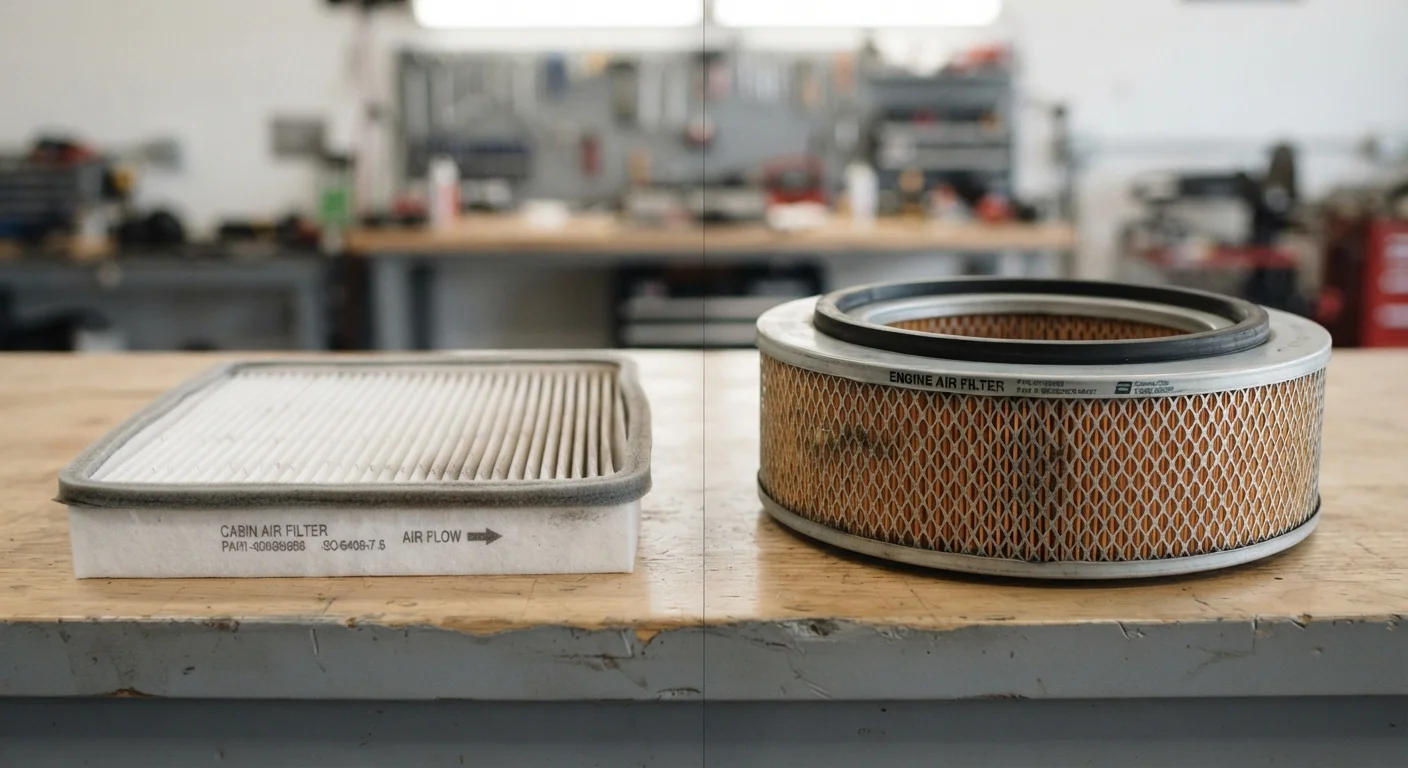
Option A
Cabin Air Filter
The filter that protects the air you breathe inside the car.
Best for: Drivers concerned with interior air quality, allergy sufferers, and anyone using the heating or air conditioning system regularly.
Option B
Engine Air Filter
The filter that keeps contaminants out of your engine.
Best for: All drivers who want to protect engine performance, fuel efficiency, and long-term powertrain health.
What Each Filter Actually Does
Many drivers assume their car has one air filter - or they've heard the term and aren't sure which system it belongs to. In reality, most modern vehicles have two separate air filtration systems serving two completely different purposes.
The cabin air filter is part of your vehicle's HVAC (heating, ventilation, and air conditioning) system. Its job is to clean the air before it flows through your dashboard vents and into the passenger compartment. It catches dust, pollen, exhaust particles, and other airborne debris that would otherwise circulate around you and your passengers. Just as HVAC filters in your home trap airborne particles before they enter living spaces - a concept explored in our guide to home filtration and maintenance - your cabin filter does the same for your car's interior environment.
The engine air filter, by contrast, has nothing to do with the passenger cabin. It sits in the engine bay and filters the air drawn into the engine for combustion. Internal combustion engines need a precise mixture of air and fuel to operate correctly. Without filtration, dust, sand, and other fine particles would enter the combustion chamber, causing wear on pistons, cylinders, and other internal components over time.
| Criterion | Cabin Air Filter | Engine Air Filter |
|---|---|---|
| Primary function | Cleans air entering the cabin | Cleans air entering the engine |
| Location | Behind glove box or dashboard | Engine bay airbox |
| Typical replacement interval | 15,000-25,000 miles | 15,000-30,000 miles |
| Impact if neglected | Poor cabin airflow, worse air quality | Reduced efficiency, potential engine wear |
| Who it protects | Passengers | The engine |
| Interchangeable? | No | No |
Location, Replacement, and Warning Signs
The two filters are also found in very different places. The cabin air filter is typically located behind the glove box, under the dashboard, or beneath a panel near the base of the windshield - accessible without tools in many vehicles. The engine air filter lives in the engine bay inside an airbox - a plastic housing connected to the intake system - and is generally visible when you open the hood.
15,000-25,000 mi
Typical cabin air filter replacement interval
General guidance from automotive service resources; your owner's manual is the authoritative source for your vehicle.
15,000-30,000 mi
Typical engine air filter replacement interval
Intervals can shorten significantly in dusty or heavily polluted driving environments.
Replacement intervals vary by vehicle and driving conditions, but general guidance from automotive service organizations suggests:
- Cabin air filters: roughly every 15,000 to 25,000 miles, or annually
- Engine air filters: roughly every 15,000 to 30,000 miles under normal conditions
Always defer to your owner's manual for the intervals your specific vehicle's manufacturer recommends. Drivers in dusty climates, heavy traffic, or high-pollution urban areas may need to replace both filters more frequently.
Warning signs differ between the two. A failing cabin air filter often shows up as reduced airflow from the vents, musty odors in the cabin, or increased dust settling on interior surfaces. A deteriorating engine air filter may contribute to reduced throttle response, lower fuel efficiency, or a rough-running engine - though these symptoms overlap with other issues, so a proper inspection is always worthwhile.
This article is for general informational purposes only. Always consult your vehicle's owner's manual and a qualified mechanic for maintenance decisions specific to your car.
The content on this site is for informational purposes only and is not a substitute for professional advice. Always consult a qualified professional for guidance specific to your situation.