

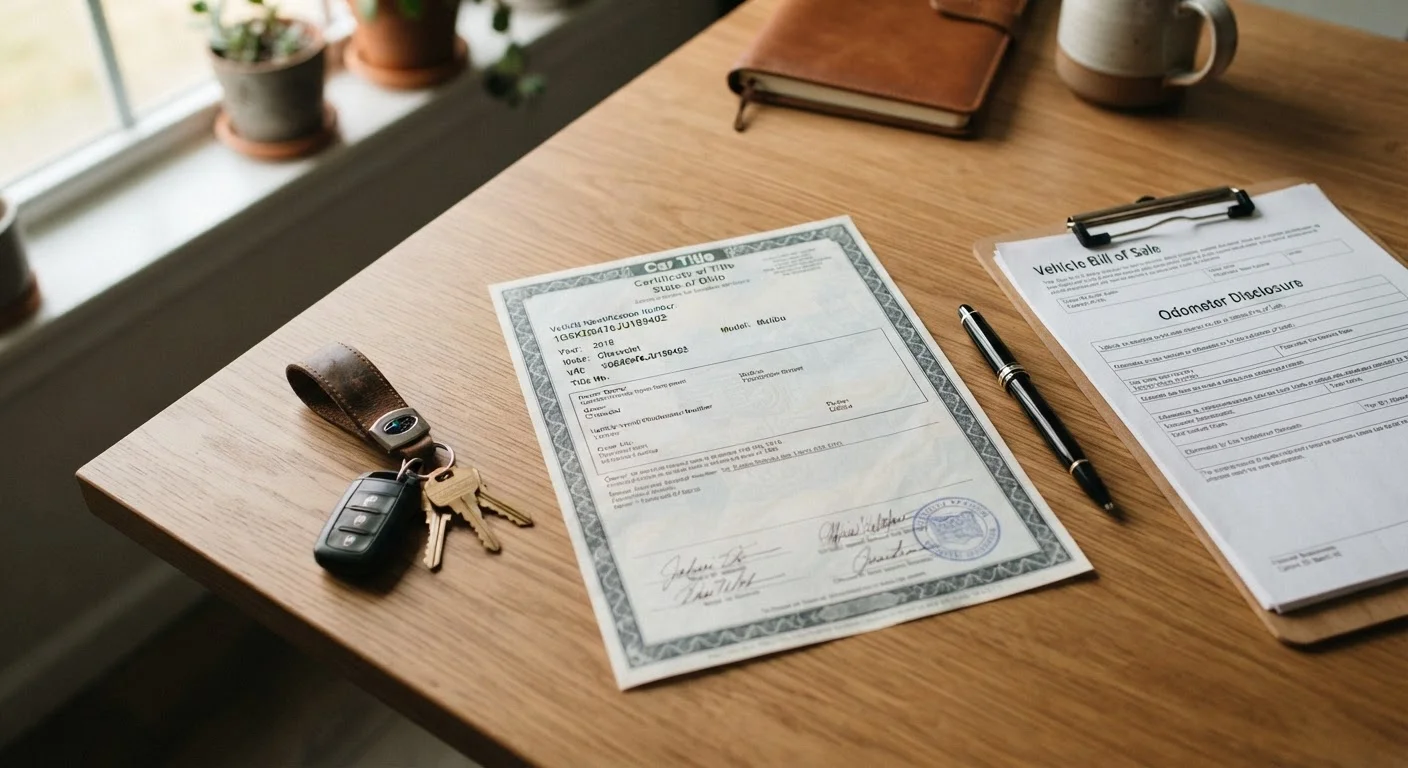
What a Car Title Actually Is
A vehicle title is a legal document issued by your state government that identifies the official owner of a motor vehicle. It includes the vehicle identification number (VIN), make, model, year, and the owner's name and address. When a car changes hands - whether through a private sale, dealership transaction, or gift - that ownership record must be updated through a formal title transfer.
Unlike transferring property to a family member without selling (which involves deeds, trusts, and real estate law), a car title transfer is a relatively contained administrative process - but it's no less legally significant. Failing to complete it ties both parties to potential liability long after the keys have been handed over.
What you will need
Step-by-Step: How to Transfer a Title
The process varies slightly from state to state, but the core steps are consistent. Having all documents ready before meeting with the buyer or visiting the DMV reduces delays significantly.
Confirm the title is clean and in hand
Before any money changes hands, the seller should locate the physical title and verify it's free of active liens. Check the front of the title for any lender name listed as lienholder. If a lien exists, contact the financing institution to obtain a lien release letter or confirm the payoff process. A title that's been lost can be replaced through the state DMV - this takes time, so start early.
Complete the seller's section of the title
The back of most titles includes a section for the seller to fill out. This typically requires the seller's printed name, signature, the sale date, the odometer reading, and the sale price. Write clearly in ink. Any mistake on this section - crossed-out words, white-out, or incorrect information - may make the title unacceptable at the DMV and require a replacement title before the transfer can proceed.
Buyer completes their section and obtains a bill of sale
The buyer fills in their legal name and address as they want it to appear on the new title. If two people are purchasing the vehicle jointly, both names and their relationship ("and" vs. "or" affects future transfer rights) should be listed correctly. Both parties should sign a bill of sale documenting the agreed price, vehicle description, and date of transfer.
Submit the title transfer to your state DMV
The buyer is typically responsible for submitting the completed title, required forms, and applicable fees to the state DMV - either in person, by mail, or through an online portal depending on the state. Most states impose a deadline, commonly between 10 and 30 days from the date of sale, to complete this step. Missing the deadline can result in late penalties. After submitting, the DMV issues a new title in the buyer's name.
Update registration and insurance
Title transfer and vehicle registration are related but separate processes. Once the title is transferred, the buyer must also register the vehicle in their name and obtain valid plates and proof of insurance. Driving an unregistered or uninsured vehicle - even briefly after purchase - carries legal risk. See our overview of vehicle registration by state for state-specific guidance on fees and timelines.
Keep a Bill of Sale as Backup
Even when not required by your state, a written bill of sale provides a clear record of the transaction date, sale price, and both parties' information. This document can protect you if disputes arise later or if the buyer delays completing registration. Store a signed copy in a safe place.
What Can Go Wrong - and Why It Matters
Title transfer mistakes are more common than most drivers expect. Here are the situations that create the most trouble:
- Title washing: When a salvage or flood-damaged title is fraudulently transferred across state lines to obscure its history. Buyers should always verify title status through their state DMV or a vehicle history service.
- Delayed transfer: A buyer who never officially transfers the title leaves the seller's name attached to the vehicle. This can result in the seller receiving toll violations, tax notices, or being contacted by law enforcement.
- Incorrect information: Errors in names, VINs, or odometer readings on the title can cause the DMV to reject the transfer, requiring a duplicate title application that adds weeks to the process.
Do Not Skip the Title Transfer
If you sell a vehicle but the title is never transferred into the buyer's name, you may remain legally tied to that car. Parking violations, tolls, accidents, or even crimes involving the vehicle could be traced back to you as the registered owner. Complete the transfer promptly and keep a copy of the signed title as your proof of sale.
Understanding title transfer is also useful context when exploring how ownership documents work more broadly. Just as title insurance for real estate protects against hidden ownership disputes in property records, verifying a car's title history before purchase protects against inheriting someone else's legal or financial problems.
Liens Must Be Cleared Before Transfer
If the vehicle was financed, the lender holds a lien on the title - meaning they have a legal interest in the car until the loan is paid off. You cannot legally transfer a clean title to a buyer until the lien is released by the lender. Attempting to sell a vehicle with an open lien without disclosing it can have serious legal consequences.
This article is for general informational purposes only. Title transfer requirements differ by state; always verify specific documentation requirements, fees, and deadlines with your state's Department of Motor Vehicles before completing any transaction.
The content on this site is for informational purposes only and is not a substitute for professional advice. Always consult a qualified professional for guidance specific to your situation.