

What Minimum Liability Insurance Is - and Isn't
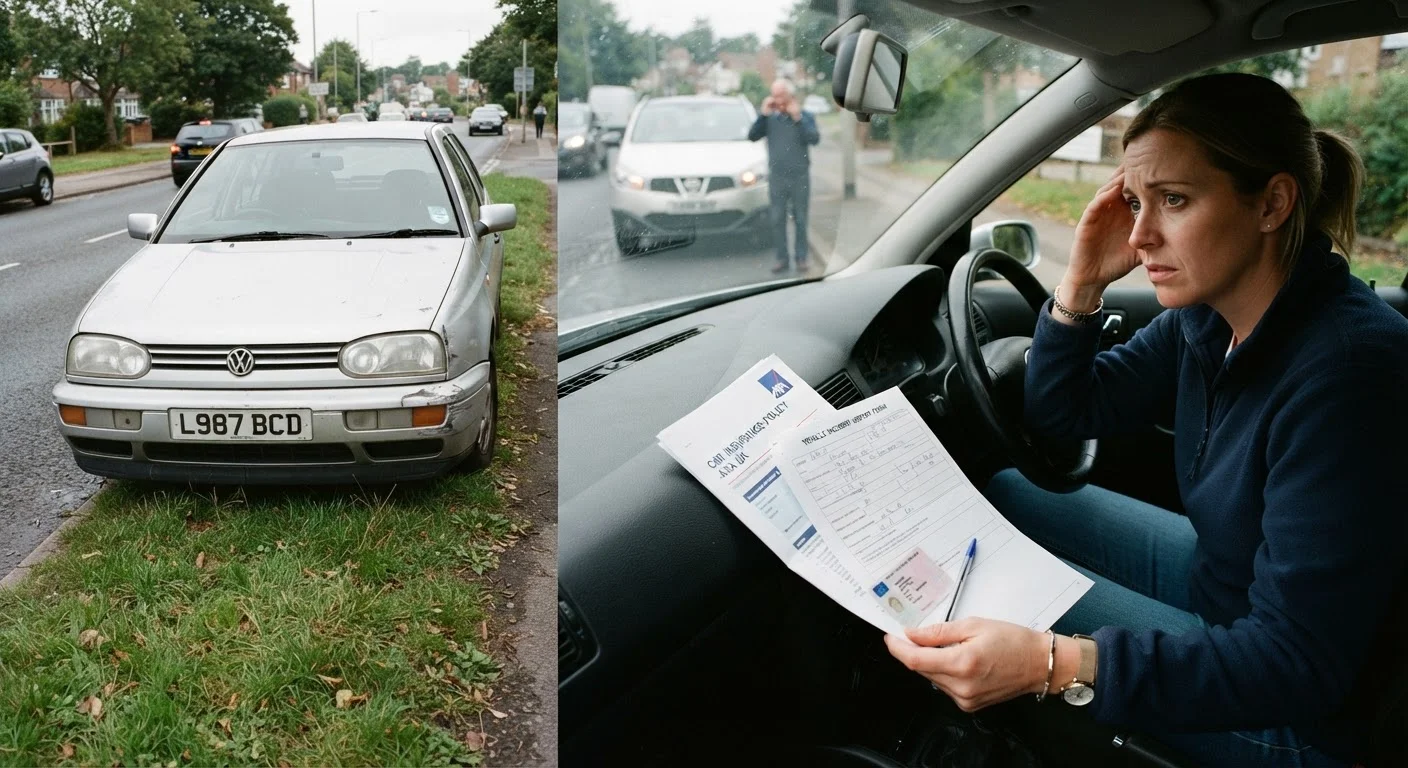
Every state except New Hampshire requires drivers to carry some form of auto liability insurance. The purpose is straightforward: if you cause an accident, liability coverage pays for the harm you inflict on other people - their medical bills and the cost to repair or replace their property. What it does not do is protect you, your passengers, or your own vehicle in any way.
Liability limits are expressed as three numbers, such as 25/50/25. The first two figures represent bodily injury coverage per person and per accident (in thousands of dollars); the third is the property damage limit per accident. A 25/50/25 policy, common in several states, provides at most $25,000 toward one injured person's medical costs, $50,000 total for all injured people in one accident, and $25,000 for property damage.
For a full breakdown of how liability fits alongside other coverage types, see Auto Insurance Coverage Types: What Each One Actually Protects.
Myth
If I have insurance, I'm covered no matter what happens in an accident.
Fact
Minimum liability only covers damages you cause to others. Your own injuries and vehicle damage require separate coverage.
Liability insurance is third-party coverage by design. It exists to make the people you injure financially whole - not to protect you. If you are injured in an accident you caused, your medical bills would need to be paid by your own health insurance or a separate PIP (Personal Injury Protection) policy, depending on your state. Damage to your own car requires collision coverage, which is not part of any state minimum requirement.
Myth
The state minimum is enough coverage for most accidents.
Fact
Minimums reflect a legal floor set by lawmakers, not an assessment of real accident costs - and many minimums are decades old.
Medical costs, vehicle replacement values, and jury awards have all risen substantially since most state minimums were written into law. A serious accident involving multiple injured parties can generate hundreds of thousands of dollars in claims. Carrying only the minimum exposes you to personal liability for anything beyond those limits. Insurance professionals broadly recommend higher limits - such as 100/300/100 - as a more realistic baseline for drivers with assets to protect.
Myth
My liability insurance will cover me if an uninsured driver hits me.
Fact
Liability insurance does not pay for damages caused to you by another driver. That protection requires uninsured motorist (UM) coverage.
Uninsured motorist coverage and underinsured motorist coverage are distinct policy add-ons that are required in some states but entirely optional in others. Without them, if you are struck by a driver who has no insurance - or too little insurance - you bear the cost of your own medical bills and vehicle repairs. Roughly one in eight drivers on American roads is estimated to be uninsured, according to the Insurance Research Council, making this gap a real and common risk.
Myth
Property damage liability will replace the other driver's car if I total it.
Fact
It will pay up to your policy's property damage limit - any amount above that limit is your personal financial responsibility.
If you carry $15,000 in property damage liability and you total a vehicle worth $42,000, your insurer pays $15,000 and you are legally responsible for the remaining $27,000. The other driver can sue to collect that amount, and a court judgment can be enforced against your bank accounts, wages, or other assets. Choosing higher property damage limits is one of the most cost-effective ways to reduce this exposure, since the premium difference between low and moderate limits is often modest.
The Real Financial Exposure Behind the Legal Minimum
State minimums were established decades ago and many have not kept pace with the actual cost of medical care, vehicle repair, or litigation. A single emergency room visit after a moderate collision can easily reach $30,000 to $50,000 - before surgery, rehabilitation, or lost-wage claims are factored in. If your liability limits are exhausted, the injured party has the legal right to pursue your personal assets, including wages and savings, to recover the remainder.
1 in 8
Drivers estimated to be uninsured
According to the Insurance Research Council, approximately one in eight U.S. drivers carries no auto insurance at all.
$10,000
Lowest state property damage minimum
Several states set their mandatory property damage liability floor at just $10,000 - a figure that may not cover even a used vehicle replacement.
Property damage limits tell a similar story. New vehicles routinely cost $35,000 or more. A state minimum of $10,000 in property damage coverage leaves a substantial gap if you total someone's newer car. You would personally owe the difference not covered by your policy.
Drivers who finance or lease their vehicles face additional complexity. Lenders typically require comprehensive and collision coverage well above state minimums - and a totaled financed car can leave you owing more than the vehicle's depreciated value. Gap insurance exists specifically to bridge that shortfall.
Personal Assets Are at Risk Beyond Policy Limits
If an accident judgment exceeds your liability limits, courts can garnish wages or place liens on assets to satisfy the remaining balance. The legal minimum is not a financial ceiling - it is simply the point at which your insurer stops paying and your personal exposure begins. Reviewing your coverage limits regularly, particularly after acquiring significant assets, is a sound financial practice.
Common Misconceptions That Leave Drivers Underprotected
Many drivers operate under the assumption that carrying insurance means they are fully protected. The myths below reflect misunderstandings that are widely shared - and financially dangerous.
Understanding how insurance language works across policy types can also sharpen your judgment. The same principle of reading exclusions carefully applies whether you're evaluating auto, travel insurance, or title insurance: the coverage name rarely tells the whole story.
The content on this site is for informational purposes only and is not a substitute for professional advice. Always consult a qualified professional for guidance specific to your situation.