

Why Weeknight Cooking Breaks Down - and How to Fix the Root Cause
Most weeknight cooking failures aren't caused by lack of motivation or nutrition knowledge. They happen because the gap between a full day's demands and a standing kitchen expectation is simply too large. When there's no plan and no prepped ingredients, the path of least resistance is convenience food - which works occasionally but tends to crowd out balanced eating when it becomes the default.
The fix isn't stricter willpower. It's reducing the number of decisions and steps required at 6 p.m. on a Tuesday. That means shifting meaningful kitchen effort to a lower-pressure time window, stocking ingredients that flex across multiple meals, and accepting that assembly - not from-scratch cooking - is a perfectly legitimate form of home cooking.
This Is General Nutrition Information
The strategies in this article are intended as general healthy-eating guidance for adults, not personalized medical or dietary advice. If you have a specific health condition, food allergy, or nutritional concern, consult a registered dietitian or your healthcare provider before making significant changes to your diet.
These strategies work best when treated as a system rather than a checklist. The goal is to build a repeatable routine that lowers the friction of eating well on an ordinary day - not to achieve an idealized version of home cooking.
Think Components, Not Complete Meals
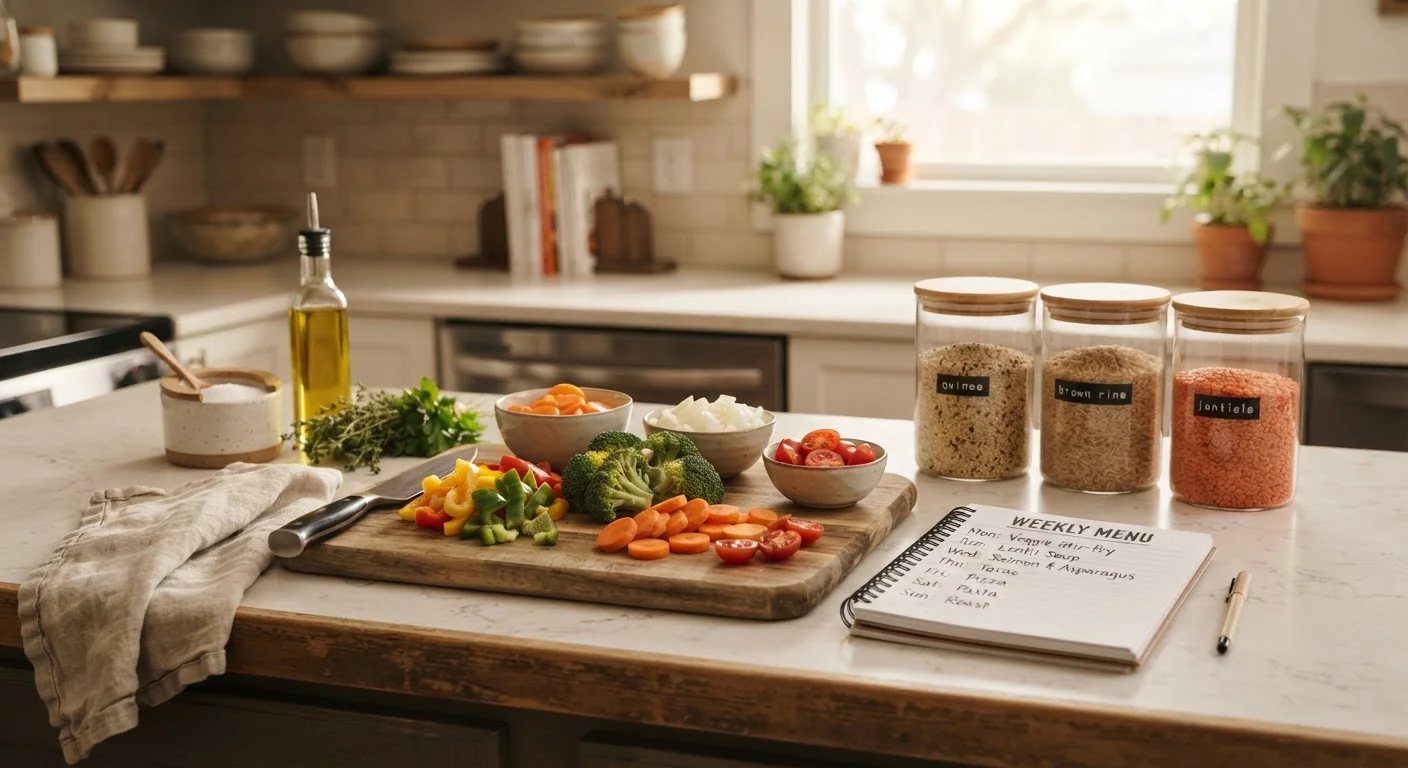
Rather than prepping five finished dinners, prepare interchangeable building blocks - a cooked grain, a roasted vegetable, a protein source, and a simple sauce. Mixing and matching these throughout the week prevents flavor fatigue and reduces the pressure of rigid meal plans.
What You'll Need Before You Start
Getting these strategies to work consistently requires a few practical starting points.
What you will need
You don't need specialty equipment or an elaborate kitchen setup. A reliable set of storage containers and a couple of workhorse pots and pans are the most impactful investments.
Sheet pan
Roasting vegetables and proteins simultaneously at high heat - minimal hands-on time required.
Large pot or Dutch oven
Cooking batches of grains, legumes, or soups that can be portioned and refrigerated.
Airtight storage containers (glass or BPA-free plastic)
Keeping prepped ingredients fresh and organized in the refrigerator and freezer.
Instant-read thermometer
Confirming proteins reach safe internal temperatures during batch cooking.
Slow cooker or pressure cooker
Hands-off cooking of beans, grains, and stews during work hours or overnight.
Step-by-Step: Building Your Time-Efficient Kitchen System
Follow these steps in sequence when you're getting started. Once the habits are established, the system largely runs itself.
Build a consistent weekly grocery list
A predictable shopping routine is the foundation of low-effort weeknight cooking. Identify eight to twelve versatile ingredients your household reliably eats - think whole grains like brown rice or oats, canned beans, eggs, frozen vegetables, and a couple of rotating proteins. Our nutrition-conscious grocery checklist can help you organize these by food group so nothing essential gets overlooked.
Consistency in what you stock eliminates decision fatigue at the store and reduces food waste, since you'll build cooking confidence with the same ingredients week after week.
Choose one prep session per week
Pick a consistent 60-90 minute window - Sunday afternoon, Saturday morning, or any day that reliably works for your schedule - and treat it as a non-negotiable kitchen appointment. During this session, cook your staple grains, roast a tray of vegetables, and prepare at least one protein source. You are not cooking finished meals; you are building components.
If this concept is new to you, our first-timer's meal planning walkthrough covers the core concepts and common early mistakes to avoid.
Prep interchangeable ingredient components
Cook a large batch of one whole grain (quinoa, farro, or brown rice). Roast two trays of whatever vegetables are in season or on sale. Hard-boil a half-dozen eggs or cook a simple protein like baked chicken thighs or a pot of lentils. Store each component separately in labeled containers.
These become the raw material for fast weeknight assembly: grain bowls, stir-fries, grain salads, or tacos. For ideas on incorporating more plant-based components affordably, see our guide on plant-based eating on a budget.
Stock a strategic pantry and freezer
A well-stocked pantry means a backup plan on the nights when nothing goes as expected. Canned tomatoes, low-sodium broth, canned fish, nut butters, dried pasta, and canned or dried legumes can form the base of a nutritious meal in under 20 minutes. Your freezer can hold cooked grains, blanched vegetables, and homemade soups for weeks.
Frozen vegetables in particular are nutritionally comparable to fresh - they're harvested at peak ripeness and frozen quickly - so relying on them regularly is a sound nutritional strategy, not a compromise.
Master three to five simple assembly formulas
Rather than learning dozens of recipes, identify a small set of flexible formulas your household enjoys: grain bowl, sheet-pan dinner, egg-based meal, soup or stew, and a simple protein-plus-vegetable plate. Each formula works with rotating ingredients depending on what's prepped or available.
If you want to increase vegetable variety without changing your entire routine, our article on eating more vegetables without overhauling your diet offers specific, low-friction additions that work within any of these formulas.
Troubleshoot and adjust after the first two weeks
After your first two prep sessions, evaluate honestly: What got eaten? What sat untouched? Which components made weeknight cooking faster? Use that feedback to adjust quantities, swap ingredients that didn't work, or shift your prep day if timing felt off.
Sustainable eating habits are built through iteration, not perfection. Skipping one prep session doesn't undo progress - returning to the routine the following week does. For context on why irregular eating patterns can complicate your goals, see our piece on why skipping meals rarely works as expected.
Food Safety When Batch Cooking
Cooked proteins and grains should be cooled promptly and refrigerated within two hours of cooking. Most cooked foods keep safely in the refrigerator for three to four days. When in doubt, label containers with the date prepared and follow USDA food safety guidelines for storage times.
The content on this site is for informational purposes only and is not a substitute for professional advice. Always consult a qualified professional for guidance specific to your situation.