

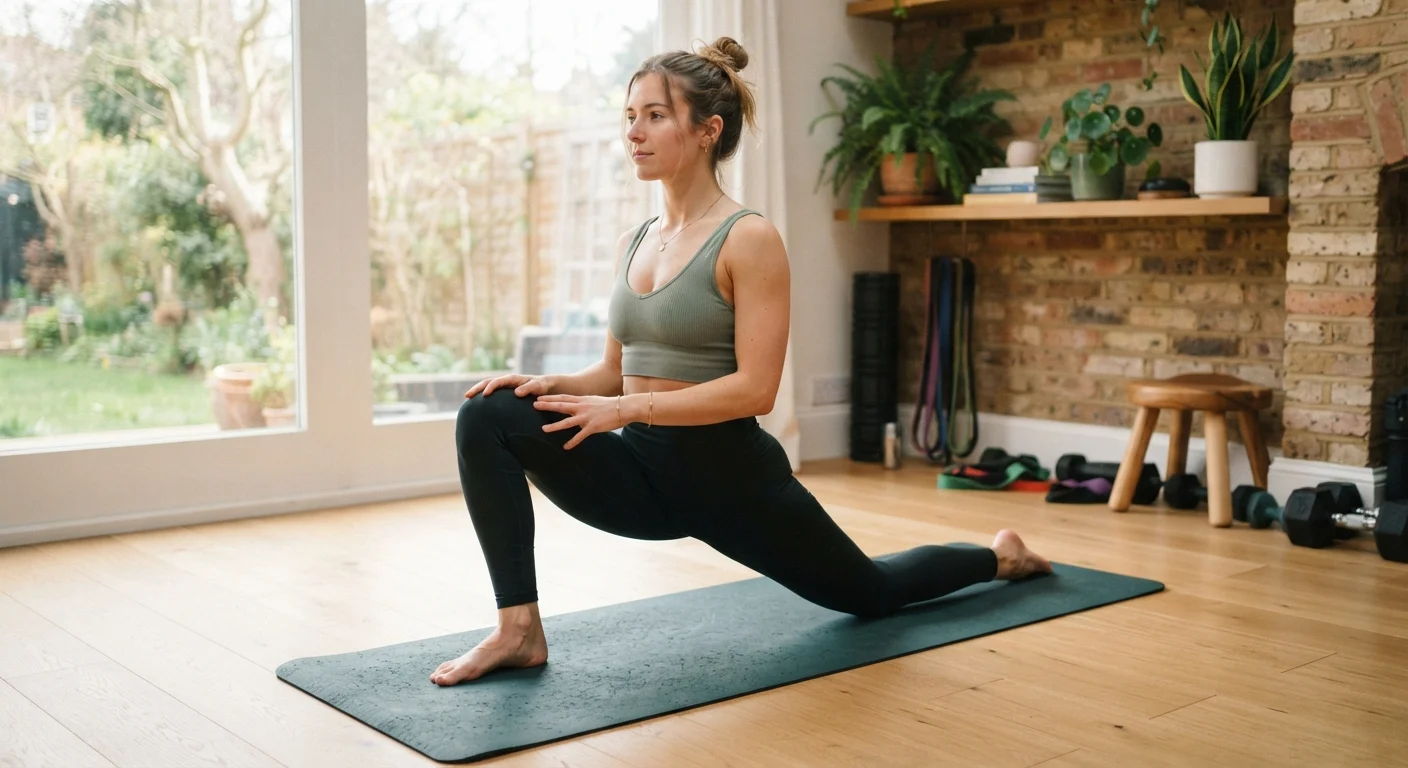
Flexibility, Mobility, and Stretching: What Each Term Actually Means
These three words appear together constantly in fitness content, but they describe meaningfully different things. Conflating them can lead to training gaps - for example, spending time only on passive stretching while neglecting the active joint control that makes movement functional.
Flexibility
The passive ability of a muscle or group of muscles to lengthen through a range of motion. Flexibility is largely a property of the muscle tissue itself and does not guarantee that you can move through that range actively.
Mobility
The ability of a joint to move actively and with control through its full range of motion. Mobility combines flexibility with strength, neuromuscular coordination, and joint health.
Range of Motion (ROM)
The extent of movement available at a given joint, measured in degrees. ROM can be passive (assisted by an external force) or active (produced by the individual's own muscles).
Static Stretching
A technique where a muscle is held in a lengthened position for a set period, typically 15-60 seconds. Commonly used in cool-downs to gradually improve passive flexibility.
Dynamic Stretching
Controlled, movement-based stretches that take a joint through its range of motion repeatedly. Often used in warm-ups to prepare muscles and joints for activity.
Proprioception
The body's ability to sense its own position and movement in space. Strong proprioception is a key contributor to good mobility and injury prevention.
Myofascial Release
A soft-tissue technique - including foam rolling - aimed at reducing tension in the fascia, the connective tissue surrounding muscles. Often used to support recovery and improve movement quality.
Flexibility refers to how far a muscle can lengthen when an external force is applied - such as gravity, a strap, or a partner assisting the stretch. A person can be quite flexible yet still struggle with a squat or overhead reach if their nervous system and supporting muscles cannot control that range.
Mobility goes one step further: it requires that a joint move through its range actively, with stability and control. Think of mobility as flexibility plus strength plus coordination. A dancer may have exceptional hip flexibility but limited shoulder mobility; a powerlifter may have impressive squat depth but tight hip flexors under load.
Stretching is simply a technique - a means of influencing flexibility and, when done dynamically, mobility. It is not a goal in itself but a tool you apply with intention depending on what you need.
How Stretching Fits Into a Well-Rounded Movement Practice
Choosing the right type of stretching at the right time matters. The two most studied forms are static and dynamic stretching, and research generally supports using them differently depending on where you are in a workout.
| Primary distinction | Flexibility is passive muscle length; mobility is active joint control |
| Best time for static stretching | After exercise (cool-down), when muscles are warm (American College of Sports Medicine guidelines) |
| Best time for dynamic stretching | Before exercise (warm-up), to prime joints and muscles |
| Flexibility training frequency | At least 2-3 days per week recommended for adults (ACSM Physical Activity Guidelines) |
| Key factors affecting mobility | Joint structure, muscle length, motor control, and tissue health |
| Mobility vs. flexibility example | High flexibility without strength can still result in poor mobility |
Dynamic stretching - leg swings, hip circles, arm crosses - is appropriate before activity. It elevates heart rate, increases tissue temperature, and rehearses the movement patterns you are about to use. Static stretching performed before intense activity has been associated with temporary reductions in power output in some studies, which is why most exercise scientists now recommend reserving it for cool-downs.
Static stretching after a workout, when muscles are already warm, is a well-supported approach to gradually increasing passive range of motion over time. Consistent practice over weeks is what produces lasting change - occasional stretching rarely translates into meaningful flexibility gains.
Mobility work - joint circles, controlled articular rotations, and loaded stretches - bridges the gap between passive flexibility and the functional movement you need in daily life, sport, or fitness training. See our guide to balancing cardio and strength training for context on how movement modalities complement each other.
This Is General Information, Not Medical Advice
The information in this article is intended for general educational purposes. If you have an injury, chronic condition, or specific movement concerns, please consult a qualified healthcare provider or licensed physical therapist before beginning a new stretching or mobility program.
If you are over 50 or returning to exercise after a break, mobility and flexibility work become especially relevant. Our article on movement after 50 explores how physical priorities shift with age. For those working on consistency, building lasting movement habits offers practical behavioral strategies.
This article is for informational purposes only and does not constitute medical advice. Consult a qualified healthcare professional before beginning any new exercise program, particularly if you have an existing injury or health condition.
The content on this site is for informational purposes only and is not a substitute for professional advice. Always consult a qualified professional for guidance specific to your situation.