

Our Verdict
Digital mental health tools occupy a genuinely useful middle ground - more structured than doing nothing, more accessible than weekly therapy. They work best as a complement to other wellness practices rather than a standalone solution. For mild stress, building daily habits, or bridging gaps in formal care, they have real value; for serious or acute mental health conditions, they are not sufficient on their own.
People seeking low-barrier tools to support everyday mental wellness, manage mild stress, or supplement existing professional care - not those in crisis or requiring clinical diagnosis and treatment.
What Digital Mental Health Tools Actually Are
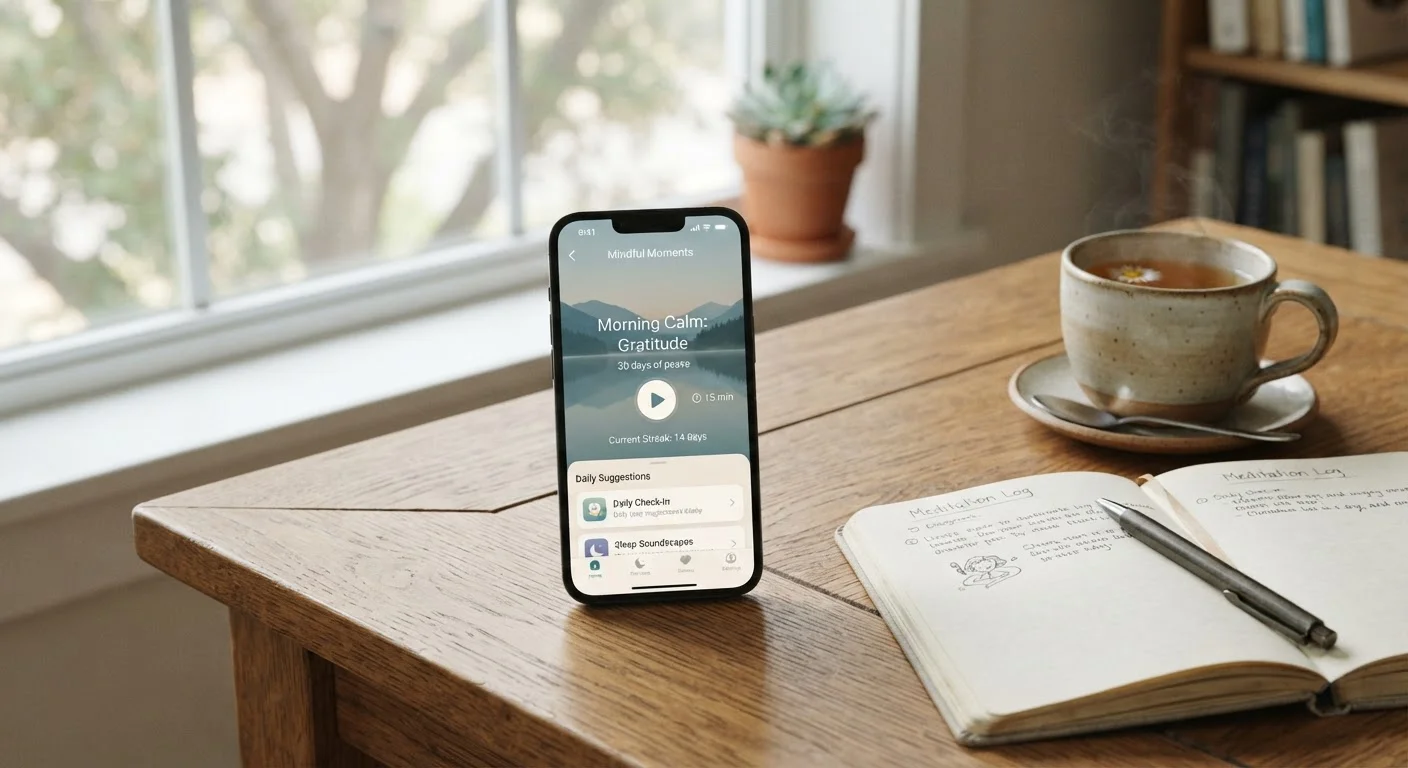
The term digital mental health tools covers a broad range of products: smartphone apps for guided meditation, mood tracking, and cognitive behavioral techniques (CBT); web-based therapy platforms that connect users with licensed counselors; peer support communities; and self-guided psychoeducation resources. Understanding what falls under this umbrella helps set realistic expectations before you download anything.
These tools sit on a spectrum. At one end are general wellness apps focused on relaxation, sleep, or journaling prompts - useful lifestyle aids with no clinical pretension. At the other end are telehealth platforms staffed by licensed therapists, which are genuinely clinical services delivered via a digital channel. Most widely advertised apps fall somewhere in between. Knowing where a tool sits on that spectrum matters enormously. For a plain-language breakdown of related terms, see our mental health glossary.
The Real Advantages
Digital tools have earned their place in the wellness conversation for several legitimate reasons.
Available anytime, anywhere with a smartphone
Unlike scheduled appointments, apps are accessible at 2 a.m. during a sleepless night or during a lunch break. This immediacy can help users apply coping techniques in real time.
Low or no cost compared to formal therapy
Many apps offer free tiers with meaningful functionality. Even premium subscriptions are typically far less expensive than out-of-pocket therapy sessions, lowering the financial barrier to support.
Useful for building consistent daily habits
Mood trackers, guided breathing exercises, and structured journaling prompts can help users establish regular mental wellness practices that accumulate benefit over time.
Reduces stigma by offering a private entry point
Some people feel more comfortable beginning their mental wellness journey through a private app than scheduling a therapy appointment. This can serve as a meaningful first step.
Can supplement and reinforce formal therapy
Apps that incorporate evidence-informed techniques such as CBT or mindfulness can help users practice between professional sessions, potentially making therapy more effective.
Accessibility is the most significant advantage. A person in a rural county with no nearby therapist, or working multiple jobs with no predictable schedule, may find a structured app to be the most realistic starting point available. That matters. Research published in journals such as JMIR Mental Health has found that app-based CBT exercises can reduce symptoms of mild-to-moderate anxiety and depression in some users - though effect sizes vary and self-selection is a persistent confound in such studies.
Used consistently, these tools can also reinforce habits developed in formal therapy, helping users practice skills between sessions. If you're thinking about building a sustainable mental wellness routine, our guide on building a daily mental health routine explores how to structure those efforts effectively.
The Limitations You Should Know
No tool is without drawbacks, and in mental health especially, overstating what an app can do carries real risks.
Not appropriate for serious or acute conditions
Apps are not designed to assess, diagnose, or treat clinical mental health disorders. Relying on them for conditions such as severe depression, bipolar disorder, PTSD, or psychosis in place of professional care can be harmful.
Evidence base is uneven across products
Thousands of mental health apps exist, but only a small fraction have been studied in rigorous clinical trials. Marketing claims frequently outpace the supporting evidence.
Privacy and data security risks are real
Many wellness apps are not covered by HIPAA and may share or sell user data. Sensitive disclosures made within an app may not receive the same legal protections as clinical health records.
Risk of substituting apps for necessary care
If a user experiencing a serious condition manages symptoms with an app instead of seeking professional help, the delay in appropriate treatment can worsen outcomes.
Engagement drops sharply over time
Research consistently shows that most users abandon mental health apps within the first two weeks. Without the accountability that a therapeutic relationship provides, sustained use is difficult.
Cannot replicate the therapeutic relationship
The alliance between a client and therapist is itself one of the strongest predictors of positive outcomes in psychotherapy. No algorithm currently replicates that human connection.
When to Seek Professional Help Instead
Digital tools are designed for wellness support, not clinical intervention. If you are experiencing persistent low mood lasting more than two weeks, significant disruption to daily functioning, or any thoughts of self-harm, please reach out to a licensed mental health professional or contact a crisis line. The 988 Suicide and Crisis Lifeline (call or text 988 in the U.S.) is available around the clock. No app should substitute for this level of care.
It's also worth comparing digital tools against other self-directed approaches. Journaling for mental health, for example, has a distinct evidence base and may complement or even outperform certain app features for some users.
Privacy and Data: A Practical Concern
Mental health data is among the most sensitive personal information that exists. Before using any app, it is reasonable to ask: What data does this app collect? Is it sold to third parties? Is it covered by HIPAA or only general consumer privacy law?
Many wellness apps - as distinct from licensed telehealth platforms - are not classified as medical devices and fall outside HIPAA's protections. Their data practices are governed by their own privacy policies, which vary widely. Reviewing those policies before entering sensitive personal information is a basic precaution. For broader guidance on managing your digital privacy, see our online safety hub.
10,000+
Mental health apps available in major app stores
Estimates from health technology researchers suggest tens of thousands of mental health and wellness apps exist, with only a small fraction having undergone clinical evaluation.
~50%
Users who abandon mental health apps within two weeks
Multiple studies on digital health engagement have found that roughly half of users stop using mental health apps within the first two weeks of downloading them.
Less than 5%
Apps with published clinical trial evidence
Health technology researchers have noted that only a small minority of commercially available mental health apps have been tested in peer-reviewed randomized controlled trials.
How to Use Digital Tools Wisely
The most productive framing is to treat digital mental health tools as one component of a broader self-care approach - not a replacement for professional evaluation when that's warranted. If you are experiencing persistent symptoms, significant functional impairment, or any thoughts of self-harm, please contact a qualified mental health professional or a crisis service. No app substitutes for that.
For everyday stress, mild low mood, or building awareness of your emotional patterns, structured digital tools can add genuine value. Pairing them with periodic self-reflection is a practical strategy - our monthly mental wellness check-in offers a framework for doing exactly that.
Understanding when self-directed tools are appropriate versus when professional support is the right call is itself a skill worth developing. Our article on therapy vs. self-help walks through the distinction in practical terms.
This article is for general informational and educational purposes only and does not constitute medical or mental health advice. If you are experiencing a mental health crisis or have concerns about your mental health, please consult a qualified healthcare or mental health professional.
The content on this site is for informational purposes only and is not a substitute for professional advice. Always consult a qualified professional for guidance specific to your situation.