

The Brain Sounds the Alarm
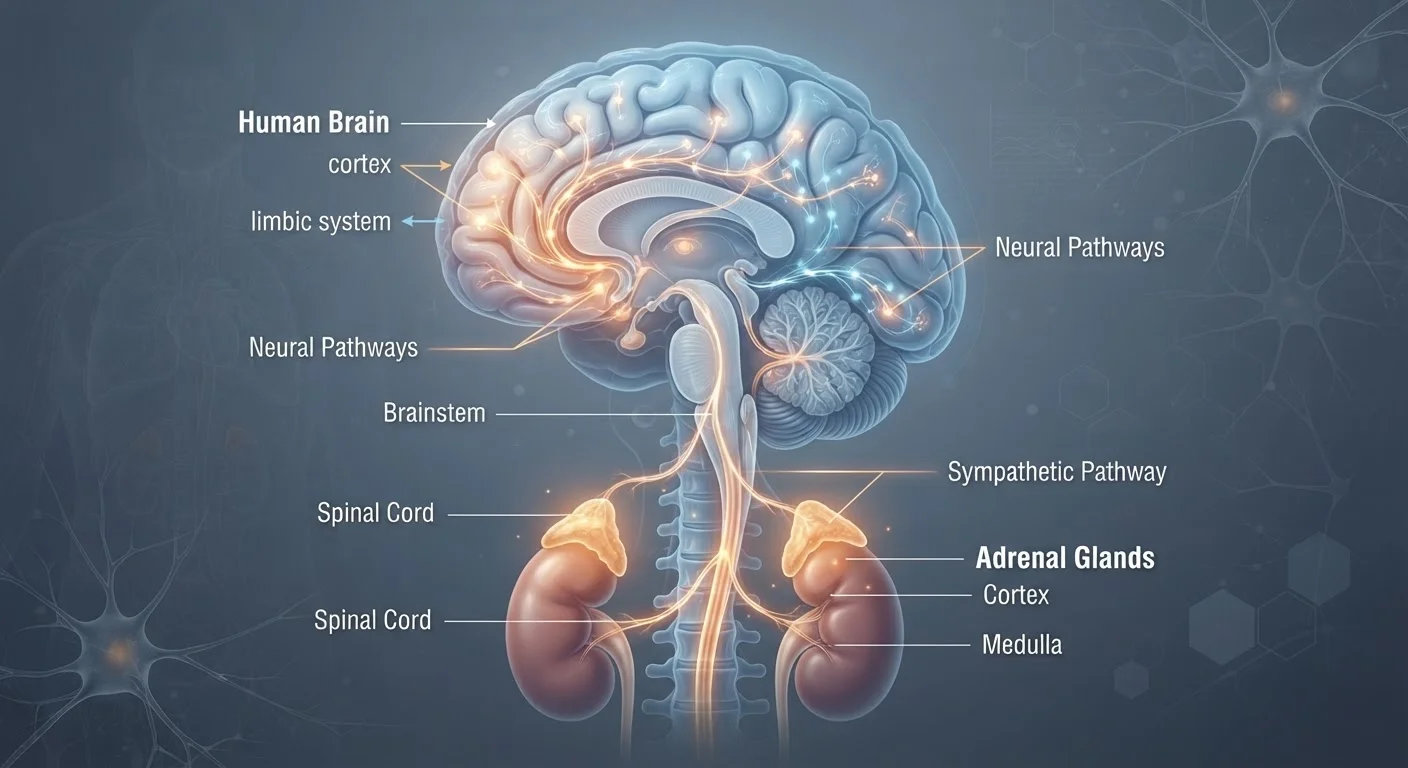
Stress begins not with a hormone but with a perception. The brain's amygdala - a small, almond-shaped structure involved in processing emotions - detects a potential threat and sends an urgent signal to the hypothalamus, the region that acts as the body's command center. This happens faster than conscious thought.
The hypothalamus immediately activates the sympathetic nervous system, which triggers the adrenal glands to pump adrenaline (epinephrine) into the bloodstream. Within seconds, heart rate climbs, breathing deepens, pupils dilate, and muscles receive a surge of blood and oxygen. This is the classic fight-or-flight response - an evolutionary mechanism that once helped humans escape predators and now activates during traffic jams, work deadlines, and difficult conversations alike.
Understanding this cascade helps explain why stress feels so physical. It isn't just a state of mind; it is a whole-body mobilization. Mental well-being encompasses how effectively we navigate and recover from exactly these moments.
Not All Stress Signals Are Obvious
Physical symptoms like jaw clenching, shallow breathing, or digestive discomfort are often stress-related but can easily be attributed to other causes. The body's stress response affects virtually every organ system, which is why stress can manifest in surprisingly varied ways from person to person. If you notice persistent unexplained physical symptoms, consult a healthcare provider rather than self-diagnosing.
Cortisol: The Slow-Burning Stress Hormone
While adrenaline handles the immediate surge, a second hormone follows a slightly slower path. The hypothalamus signals the pituitary gland, which in turn signals the adrenal cortex to release cortisol. This hormonal relay - known as the HPA (hypothalamic-pituitary-adrenal) axis - unfolds over minutes rather than seconds.
Cortisol's role is to sustain the stress response. It raises blood sugar to fuel muscles and the brain, temporarily suppresses non-essential functions like digestion and reproduction, and modulates the immune system. In the short term, these are adaptive changes. The problem emerges when cortisol remains elevated because the perceived stressor doesn't resolve.
77%
Adults reporting physical symptoms of stress
According to the American Psychological Association's Stress in America survey, roughly 77% of adults report experiencing physical symptoms they associate with stress.
3x
Increased cardiovascular risk with chronic stress
Research published in peer-reviewed cardiology literature suggests chronically stressed individuals face meaningfully elevated cardiovascular risk compared to low-stress counterparts, though individual factors vary.
Prolonged cortisol elevation is linked to disrupted sleep architecture, increased blood pressure, shifts in appetite and metabolism, and changes in mood regulation. Research suggests it can also affect memory consolidation and attentional focus over time - a reason why people under chronic stress often report feeling mentally foggy.
What Chronic Stress Does Differently
Acute stress - a job interview, a near-miss on the highway - is something the body handles well. It activates, responds, and then returns to baseline through the parasympathetic nervous system, sometimes called the "rest and digest" system. Heart rate slows, digestion resumes, and cortisol levels drop.
Chronic stress disrupts this recovery cycle. When demands are persistent - ongoing financial pressure, long-term caregiving, unresolved workplace conflict - the body never fully completes the return to baseline. Over time, this sustained activation can wear down regulatory systems. The immune response may become dysregulated, cardiovascular strain can accumulate, and the brain's own stress-signaling circuits may become more sensitive, making future stressors feel more intense.
This progression is why everyday stress can cross into burnout without a clear turning point - it tends to be gradual rather than sudden. Recognizing the body's early warning signals matters enormously.
Breathe to Reset Your Nervous System
Slow, extended exhales - longer than your inhale - directly stimulate the vagus nerve and activate the parasympathetic "rest and digest" system. Even a few minutes of deliberate breathing can help signal to the brain that the immediate threat has passed, supporting a return toward baseline. This is one of the few stress-reduction techniques with a clear physiological mechanism.
Using This Knowledge Practically
Knowing how stress works biologically isn't just academic - it offers a framework for responding more deliberately. When you notice your heart racing before a difficult conversation, that's adrenaline at work. When you feel wired but exhausted after a high-pressure week, that's cortisol lingering past its usefulness. Naming these processes can reduce their psychological grip.
Evidence-based strategies that support the body's return to baseline include slow, diaphragmatic breathing (which activates the parasympathetic nervous system), regular physical movement (which metabolizes stress hormones), consistent sleep, and social connection. These aren't cures - they're physiological tools aligned with how the stress system actually operates.
It's also worth examining the habits we reach for under pressure. Some common responses - rumination, avoidance, excessive caffeine - can inadvertently keep the stress response activated. Learning which coping habits backfire is a practical extension of understanding the biology.
This article is for general informational and educational purposes only and does not constitute medical advice. If you are experiencing significant stress or related health symptoms, please consult a qualified healthcare professional.
Frequently Asked Questions
When the brain detects a stressor, it signals the adrenal glands to release adrenaline and cortisol. Your heart rate increases, muscles tense, breathing quickens, and digestion slows - all to redirect energy toward immediate action. These changes are automatic and happen within seconds.
Not necessarily. Short-term stress can sharpen focus, motivate action, and even bolster immunity temporarily. The concern arises when stress becomes chronic and the body never returns to its baseline calm state, which can contribute to cardiovascular strain, immune suppression, and mental health challenges.
Cortisol is a steroid hormone released by the adrenal glands in response to stress signals from the brain. It regulates blood sugar, manages inflammation, and helps sustain the body's energy during a stressor. Chronically elevated cortisol is associated with disrupted sleep, weight changes, and mood difficulties.
Yes. Common physical manifestations of stress include headaches, muscle tension, gastrointestinal upset, fatigue, and changes in sleep patterns. These arise because the stress response affects nearly every organ system in the body.
Acute stress is short-lived and resolves once the perceived threat passes. Chronic stress occurs when stressors persist or the body fails to fully return to a resting state. Chronic stress carries greater health risks because the body's regulatory systems remain in a heightened state for extended periods.
If stress is affecting your sleep, relationships, work performance, or physical health consistently, speaking with a qualified healthcare professional is a good step. Persistent symptoms should never be self-diagnosed or self-treated - a doctor or mental health clinician can offer personalized guidance.
The content on this site is for informational purposes only and is not a substitute for professional advice. Always consult a qualified professional for guidance specific to your situation.