

Why Contractor Estimates Can Be Hard to Read
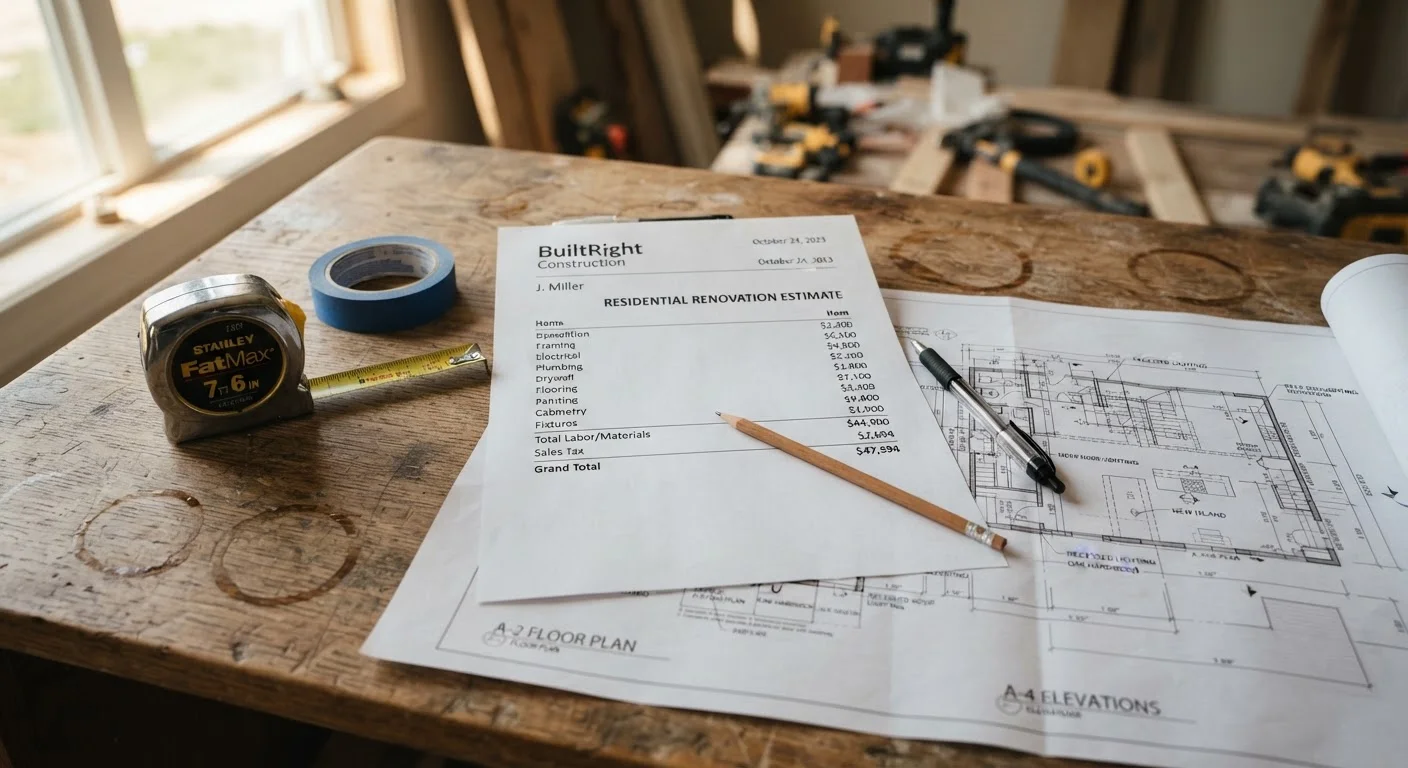
Most homeowners collect a few contractor quotes before starting a renovation, then struggle to figure out which one is fair - or even what they're being charged for. Estimates vary widely in format: one contractor might hand you a single-page summary; another might deliver a multi-page breakdown with dozens of line items. Neither approach is inherently better, but a detailed estimate gives you more to evaluate.
Understanding the language of a contractor estimate is similar to decoding other document-heavy moments in homeownership. Just as closing costs can surprise first-time buyers, renovation estimates often contain charges that seem obvious to a contractor but are invisible to the homeowner - until they show up on an invoice.
This reference breaks down the most common line items and terms you'll see on a home contractor estimate, so you can ask sharper questions before you sign anything.
Lump Sum Estimate
A single total price covering all labor and materials, without itemized breakdown. Simpler to read but harder to audit or compare line by line.
Allowance
A budgeted placeholder in the estimate for materials or finishes not yet selected. If the actual cost exceeds the allowance, the difference is added to your final bill.
Contingency
A percentage of the project total set aside to cover unforeseen conditions discovered during the work, such as hidden water damage or code-required upgrades.
Overhead and Profit (O&P)
The portion of the estimate that covers the contractor's operating expenses (overhead) and their earned profit margin. Both are legitimate and expected components of any professional bid.
Scope of Work
A written description of exactly what the contractor will and will not do on your project. The scope defines the boundaries of the contract and is the key reference point if disputes arise.
Change Order
A formal written amendment to the original contract that documents any additions, deletions, or substitutions to the scope or price. Any change to the original agreement should be documented as a change order before work proceeds.
Line-by-Line: What the Common Terms Mean
Here are the categories that appear most frequently on residential contractor estimates, along with what each actually covers.
| Typical contractor markup on materials | 10-20% above wholesale |
| Typical subcontractor management markup | 10-15% added by general contractor |
| Typical contingency range | 5-15% of project total |
| Typical combined Overhead & Profit (O&P) | 15-30% of project total |
| Permit responsibility | Generally the licensed contractor's (Verify with your local building department) |
Labor
This is the cost of the workers' time - measured in hours, days, or as a flat project rate. Some estimates list labor and materials together as a single number (called a lump sum); others separate them. When labor is itemized, you can check whether the rate seems reasonable for your area and trade type.
Materials
Materials lines cover the physical supplies needed for the job: lumber, drywall, tile, fixtures, fasteners. Contractors often mark up materials above their wholesale cost - typically 10-20%, though this varies. A transparent estimate will show the quantity, unit price, and extended total for each material category.
Subcontractor Costs
When a general contractor hires specialists - an electrician, plumber, or tile setter - those costs appear as subcontractor line items. The GC usually adds a management markup (often 10-15%) on top of the sub's price. This is standard practice, not a hidden charge, but it's worth confirming what's included.
Allowances
An allowance is a budgeted placeholder for items not yet selected - for example, "tile allowance: $800." It means the contractor priced the job assuming you'll choose materials within that budget. If you select something more expensive, the overage is added to your total. Allowances are common sources of final-bill surprises, so select finishes early if possible.
Contingency
A contingency is a percentage - often 5-15% - added to the estimate to cover unforeseen conditions: rotted framing behind walls, unexpected soil issues, code-required upgrades discovered mid-project. A contractor who includes a reasonable contingency is being honest about uncertainty. One who leaves it out entirely may be low-balling to win the bid.
Overhead and Profit (O&P)
These lines represent the contractor's business operating costs (insurance, licensing, vehicles, office) and their profit margin. O&P is legitimate and necessary - a contractor who doesn't account for it is either underbidding or uninsured. Combined, O&P typically ranges from 15-30% of the project total, depending on scope and region.
Get Permit Confirmation in Writing
Before work begins, ask your contractor to confirm in writing which permits they will pull and when. Work done without required permits can create legal and insurance complications when you sell your home, and may require costly remediation to bring into compliance. Your local building department can tell you which permits your specific project requires.
Permit Fees
Many renovations legally require a permit - electrical work, structural changes, additions, and HVAC modifications are common examples. Permit fees are set by your local municipality and are a pass-through cost, meaning the contractor charges you exactly what the jurisdiction charges them. Always confirm who is responsible for pulling the permit; licensed contractors should handle this, not homeowners acting as their own general contractor unless they fully understand the liability.
How to Compare Estimates Fairly
When comparing bids, don't just look at the bottom line. Make sure each estimate covers the same scope of work - if one contractor excluded demolition and another included it, the lower number isn't actually cheaper. Ask every bidder to provide a written scope of work that spells out what is and isn't included.
Watch for vague language like "miscellaneous labor" or "project costs" without detail. These are places where charges can expand unexpectedly. A clear estimate protects both you and the contractor.
If you've recently navigated other document-heavy homeowner decisions - such as reviewing purchase contract terminology - you already have the instinct to slow down and read carefully before signing. Apply the same discipline here.
This article is for general informational purposes only. Contractor pricing, permitting requirements, and trade practices vary by location and project type. Always verify permit requirements with your local building authority and consult a licensed contractor for guidance specific to your project.
The content on this site is for informational purposes only and is not a substitute for professional advice. Always consult a qualified professional for guidance specific to your situation.