

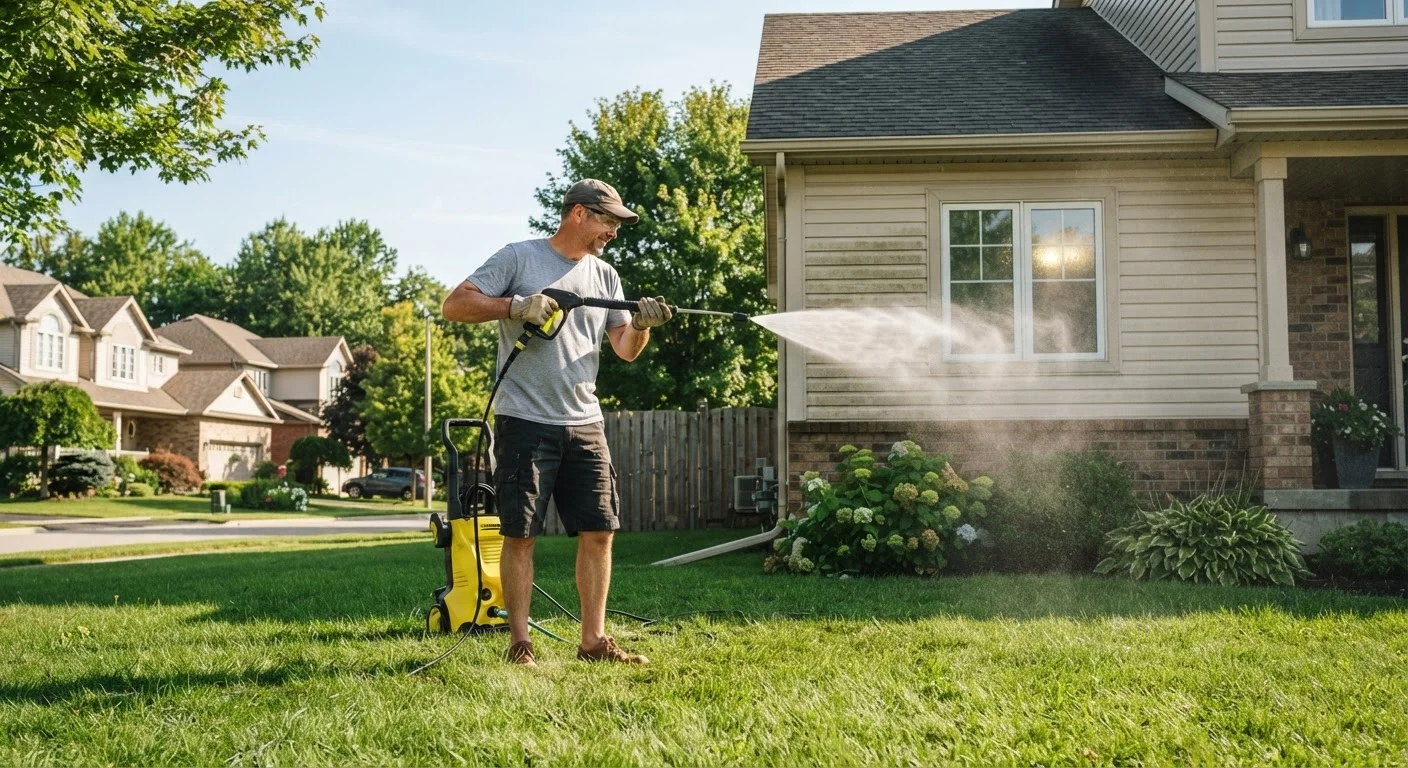
Option A
Pressure Washing
The high-force method for tough, durable surfaces.
Best for: Best for concrete driveways, brick patios, and other hard, non-porous surfaces that can withstand forceful water streams.
Option B
Soft Washing
The gentle, chemical-assisted approach for delicate materials.
Best for: Best for vinyl siding, roofing shingles, painted wood, and other surfaces that could be damaged by high water pressure.
How Each Method Works
Despite sharing the same basic goal - a cleaner home exterior - pressure washing and soft washing work through entirely different mechanisms, and understanding those differences helps you choose correctly.
Pressure washing uses water delivered at high pounds per square inch (PSI) - typically 1,500 to 3,000 PSI or more - to physically blast contaminants off a surface. The force of the water itself does most of the cleaning work. Consumer-grade electric pressure washers typically operate at the lower end of that range, while gas-powered units used by professionals can reach much higher.
Soft washing operates at low water pressure - often under 500 PSI, comparable to a garden hose - but applies biodegradable cleaning solutions (commonly sodium hypochlorite-based formulas) that kill mold, algae, mildew, and bacteria at the source. Rather than blasting away biological growth, the chemicals break it down, and the low-pressure rinse removes it gently.
| Criterion | Pressure Washing | Soft Washing |
|---|---|---|
| Primary cleaning mechanism | High-force water stream | Low-pressure + cleaning solution |
| Typical operating pressure | 1,500-3,000+ PSI | Under 500 PSI |
| Best surface types | Concrete, brick, hard masonry | Siding, roofs, painted wood, stucco |
| Risk of surface damage | High on delicate materials | Low (if solutions used correctly) |
| Kills biological growth (algae, mold) | Removes but may not kill | Yes - chemical action kills at root |
| Chemical use | Usually none | Required (biodegradable solutions) |
| DIY accessibility | Widely rentable; moderate learning curve | Requires correct chemical handling |
The practical upshot: pressure washing cleans through physical force; soft washing cleans through chemical action. Selecting the wrong one for a given surface is where many homeowners run into trouble.
Which Surfaces Suit Which Method
Surface compatibility is the most important factor in this decision. Matching method to material prevents damage that can be expensive - or irreversible.
Surfaces suited to pressure washing
- Poured concrete driveways and sidewalks - Dense, durable, and largely impervious to high-force water.
- Brick and natural stone patios - Handle pressure well, though very old or deteriorating mortar joints deserve caution.
- Unfinished concrete block walls - Can withstand pressure without surface degradation.
Surfaces suited to soft washing
- Vinyl siding - Pressure can crack panels, bend seams, or drive water into wall cavities.
- Asphalt shingle roofs - High pressure strips the granule coating that protects shingles from UV rays.
- Painted or stained wood - Excessive force lifts and chips paint, raises wood grain, and can cause splintering.
- Stucco and EIFS (Exterior Insulation and Finish Systems) - Both are fragile; pressure creates surface cracks and allows moisture intrusion.
- Older or porous masonry - Weathered brick and stone with eroded mortar can be damaged by forceful streams.
A Note on Older Homes and Lead Paint
Homes built before 1978 may have exterior surfaces coated with lead-based paint. Pressure washing or soft washing such surfaces can disturb lead particles, creating a health hazard. If your home may have lead paint, consult a licensed lead-safe contractor before any exterior washing. Do not attempt DIY washing on these surfaces without proper assessment.
Just as paint sheen affects how easy a surface is to clean indoors - as explored in our guide on interior paint finishes - the material and finish of your exterior dictates which cleaning method will preserve rather than harm it.
Safety, Costs, and When to Call a Professional
Both washing methods carry risks that are worth understanding before you pick up a wand.
6,000+
Annual U.S. pressure washer injuries
According to the Consumer Product Safety Commission, pressure washers send thousands of Americans to emergency rooms each year, primarily from lacerations and eye injuries.
~$100-$300
Typical professional soft wash cost (single-story home)
Industry pricing varies widely by region and home size; this range reflects commonly reported figures for a standard single-story exterior, not a guarantee of pricing.
Pressure washer injuries are more common than many homeowners expect. High-pressure streams can lacerate skin, damage eyes, and strip paint from vehicles if misdirected. Always wear eye protection, keep the nozzle moving, and never point the wand at people, animals, or windows. Keep ladders out of the equation - operating a pressure washer from a ladder is a recognized safety hazard.
Soft washing chemicals require their own precautions. Cleaning solutions can harm plants, stain decking, and irritate skin. Wet down surrounding landscaping before application and rinse thoroughly afterward. Follow label guidance on dilution and dwell time.
Cost considerations
DIY pressure washer rentals are widely available and typically cost less per day than hiring a service. Soft washing, however, often requires purchasing or mixing chemical solutions and a low-pressure sprayer, which can offset some savings. For roofs and multi-story homes, professional soft washing services are generally the wiser choice - both for safety and for ensuring proper chemical dilution that won't damage landscaping or siding.
Permits and professional licensing
Most residential exterior washing doesn't require permits, but some municipalities regulate chemical discharge into storm drains. Check local rules before using cleaning solutions near drainage points, and ask any professional you hire whether they follow local wastewater guidelines.
This article provides general home maintenance information for educational purposes. For hazardous tasks or work on older homes with unknown materials (such as lead paint), consult a licensed professional before proceeding.
The content on this site is for informational purposes only and is not a substitute for professional advice. Always consult a qualified professional for guidance specific to your situation.