

Why documentation is one of the most practical things a homeowner can do
Homeownership generates a steady stream of paperwork - from the stack of documents signed at closing to the receipt from last year's furnace tune-up. Most homeowners don't think about any of it until they need it urgently: during an insurance claim, a boundary dispute, a sale negotiation, or a tax audit. By then, missing documents can mean delays, out-of-pocket costs, or weakened legal standing.
Good recordkeeping isn't about being a meticulous paper-filer by nature. It's about protecting a significant financial asset. The seven categories below cover the documents most likely to matter, with guidance on why each one deserves a dedicated place in your home file.
Start a simple home file today
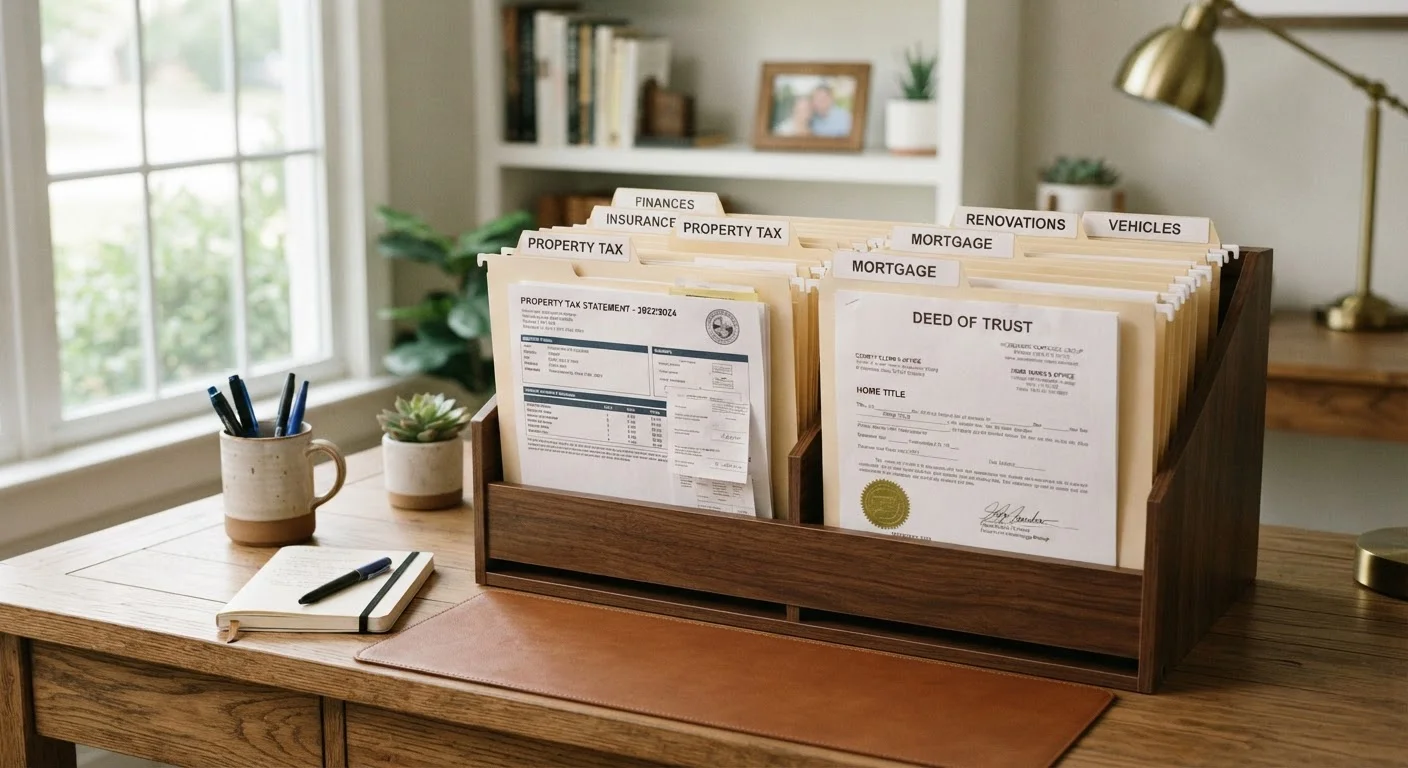
You don't need a complex system - a single accordion folder with labeled tabs for Ownership, Mortgage, Insurance, Taxes, Permits, Contractors, and Warranties covers most situations. Label each document when you receive it and file it immediately rather than letting papers accumulate. Consistency matters far more than the system you choose.
Deed and title documents
Your deed is the legal instrument that establishes your ownership of the property. Keep the original recorded deed along with any title insurance policy issued at closing. Title insurance protects against claims arising from prior ownership disputes, liens, or errors in public records - issues that can surface years after purchase. If your title insurer ever needs to defend your ownership, you'll need that policy number and the insurer's contact information readily available.
Also store any recorded easements, covenants, or deed restrictions that affect what you can do with the property. These are legally binding and often missed until a dispute arises.
Your deed and title insurance policy are the foundation of your legal ownership - never lose track of them.
Closing disclosure and mortgage documents
The Closing Disclosure summarizes the financial terms of your home purchase, including your loan amount, interest rate, closing costs, and how funds were distributed. This document is essential if questions arise about what you paid, your original loan terms, or your tax basis in the property.
Retain your promissory note and mortgage or deed of trust as well. When you eventually pay off the mortgage, your lender should record a satisfaction or release of lien - keep that document to confirm the debt is cleared from public record.
Your Closing Disclosure anchors your tax basis and loan history - keep it for as long as you own the property.
Home inspection reports
The inspection report from your purchase documents the property's condition at the time you took ownership. This matters if a defect later worsens and you need to demonstrate that it predated your ownership, or if a seller failed to disclose a known issue. Keep any inspection reports you've commissioned subsequently as well - ongoing inspections for roof condition, pests, or HVAC systems create a timeline of your home's health.
Paired with repair invoices, inspection reports show that you addressed known issues responsibly, which can be useful in insurance claims and resale disclosures.
Inspection reports create a documented timeline of your property's condition that can protect you in disputes.
Permits and certificates of occupancy
Whenever work requiring a building permit is completed - a room addition, electrical upgrade, deck construction, or HVAC replacement - retain both the permit and the final inspection sign-off. Unpermitted work can create liability at resale, complicate insurance claims, and expose you to municipal enforcement if discovered later.
A certificate of occupancy (CO) is issued when new construction or a significant conversion meets local building codes. If your municipality issued one, keep it in your file. Buyers, lenders, and insurers may request it. Reviewing your annual property ownership responsibilities checklist is a good way to ensure permit paperwork stays current.
Permits and final inspection sign-offs prove that renovations were done to code - a critical detail at resale.
Contractor invoices and warranty documents
Detailed receipts from licensed contractors serve multiple purposes: they support capital improvement deductions when calculating your cost basis at sale, provide proof of work for insurance claims, and document the scope and quality of repairs. Keep itemized invoices rather than just payment confirmations.
Warranties on appliances, roofing materials, windows, and HVAC systems often transfer to new owners, making them a genuine selling point. File warranty booklets, registration confirmations, and manufacturer contact information together. A missing warranty can mean paying out of pocket for a repair that should have been covered.
Itemized contractor invoices support your cost basis at sale and substantiate insurance claims effectively.
Homeowners insurance policies
Store your current declarations page - the summary of coverage amounts, deductibles, and policy limits - somewhere easily accessible, since you'll need it quickly after a loss. Also keep prior policy years to document coverage continuity if a claim spans policy periods.
Note your insurer's claims hotline and your policy number separately from the document itself, in case the file is damaged. Review coverage annually and keep notes of any changes. Overlooking insurance gaps is one of the more common - and costly - mistakes property owners make.
Easy access to your declarations page is critical in the immediate aftermath of a covered loss.
Property tax records
Retain annual property tax bills and payment confirmations for at least seven years. These substantiate deductions if you itemize on your federal return and serve as proof of payment if a tax lien is ever erroneously recorded against your property. If you've successfully appealed your assessed value, keep the decision letter - reassessments don't always update automatically in subsequent years, and documentation supports follow-up appeals.
Tax bills and payment records protect you against erroneous liens and support future assessment appeals.
Keeping your records current and accessible
A property file is only useful if it reflects your home's current state. Every significant repair, upgrade, or policy renewal should prompt you to update your records. The home maintenance hub offers practical guidance on scheduling the kinds of upkeep that typically generate permit and contractor paperwork worth saving.
Where to store these records
Keep physical originals in a fireproof, waterproof box or a bank safe deposit box for items like your deed and mortgage documents. Scan everything and store digital copies in a secure cloud service or encrypted external drive kept off-site. Documents stored only in your home are vulnerable to the same disasters your home faces. For sensitive financial documents, ensure any digital storage is password-protected and access-restricted.
For broader context on staying organized as a homeowner, the annual property ownership responsibilities checklist is a useful complement - it maps out the recurring tasks and deadlines that often produce documents you'll want to file.
This article provides general informational guidance about property recordkeeping and is not a substitute for legal, tax, or financial advice. Consult a qualified professional for guidance specific to your situation.
The content on this site is for informational purposes only and is not a substitute for professional advice. Always consult a qualified professional for guidance specific to your situation.