

Summary
28 items · 45-90 minutes
Why This Walkthrough Matters
Your security deposit is at risk the moment you sign a lease - not when you move out. Landlords are generally permitted to deduct from your deposit for damage beyond normal wear and tear, but the burden of proving what was already damaged when you arrived falls largely on you. Without a documented baseline, you have almost no leverage in a dispute.
A move-in inspection checklist creates a timestamped, room-by-room record that separates your responsibility from what came before you. If you're new to renting, our plain-language guide to leases and deposits explains how these protections fit into the broader rental process.
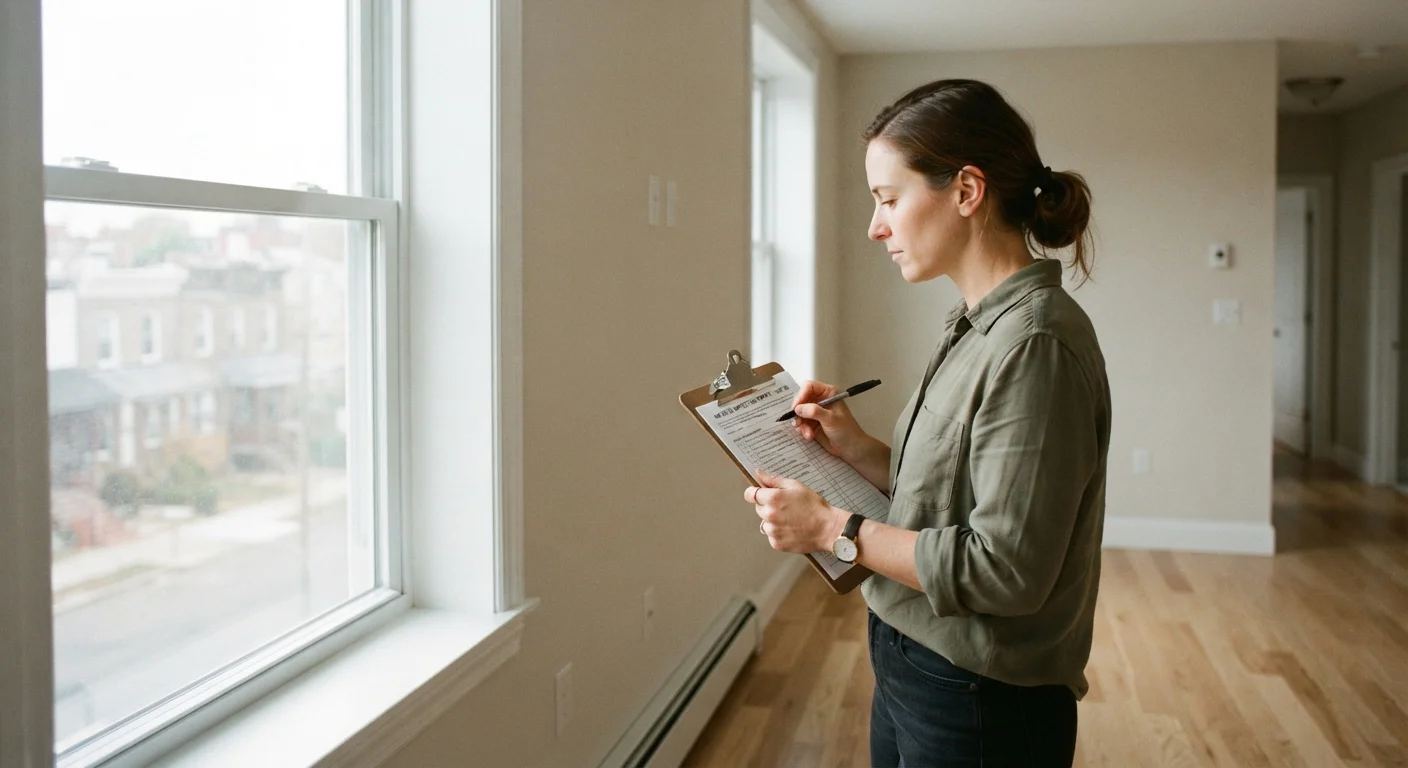
Complete this walkthrough before you move any furniture in - ideally with your landlord or property manager present, or on camera if they can't be there. Once you're done, pair this checklist with thorough photo and video documentation. For guidance on that process, see how renters can document their home to avoid deposit disputes.
Smartphone or Digital Camera
Capture timestamped photos and video of every room and any pre-existing damage before moving in.
Printed or Digital Inspection Checklist
Provides a structured, room-by-room framework so nothing is missed during the walkthrough.
Outlet Tester
A simple plug-in device that verifies whether electrical outlets are properly wired and functional.
Email or Certified Mail
Sends your completed inspection report to your landlord with a date-stamped record of delivery.
Room-by-Room Inspection Checklist
Work through every room in order. Note the condition of each item using a simple scale - Good, Fair (minor wear), or Damaged - and describe any damage briefly in writing. Photograph everything flagged as Fair or Damaged.
Preparation Before You Walk In
Entryway & Common Areas
Kitchen
Bathroom(s)
Bedrooms & Living Spaces
Safety Devices & Final Steps
Don't Skip the Minor Damage
Small scuffs, nail holes, and worn caulk may seem insignificant, but they are among the most common sources of deposit disputes. Document even cosmetic issues that seem trivial - "normal wear and tear" is interpreted differently by different landlords, and having a record puts you in a much stronger position. When in doubt, photograph it and note it.
Once you've completed the walkthrough, send a copy of your notes to your landlord via email so you have a date-stamped record. Good written habits from the start make a real difference - communicating with your landlord in writing is one of the most underrated habits a renter can build.
Get Your Report Acknowledged in Writing
Completing an inspection checklist only protects you if your landlord has a copy. Email it to them so the date is automatically recorded. If they offer a co-signed form, request your own copy immediately. An unacknowledged checklist sitting only on your phone is far harder to rely on if a dispute reaches a small claims court or mediation.
The content on this site is for informational purposes only and is not a substitute for professional advice. Always consult a qualified professional for guidance specific to your situation.