

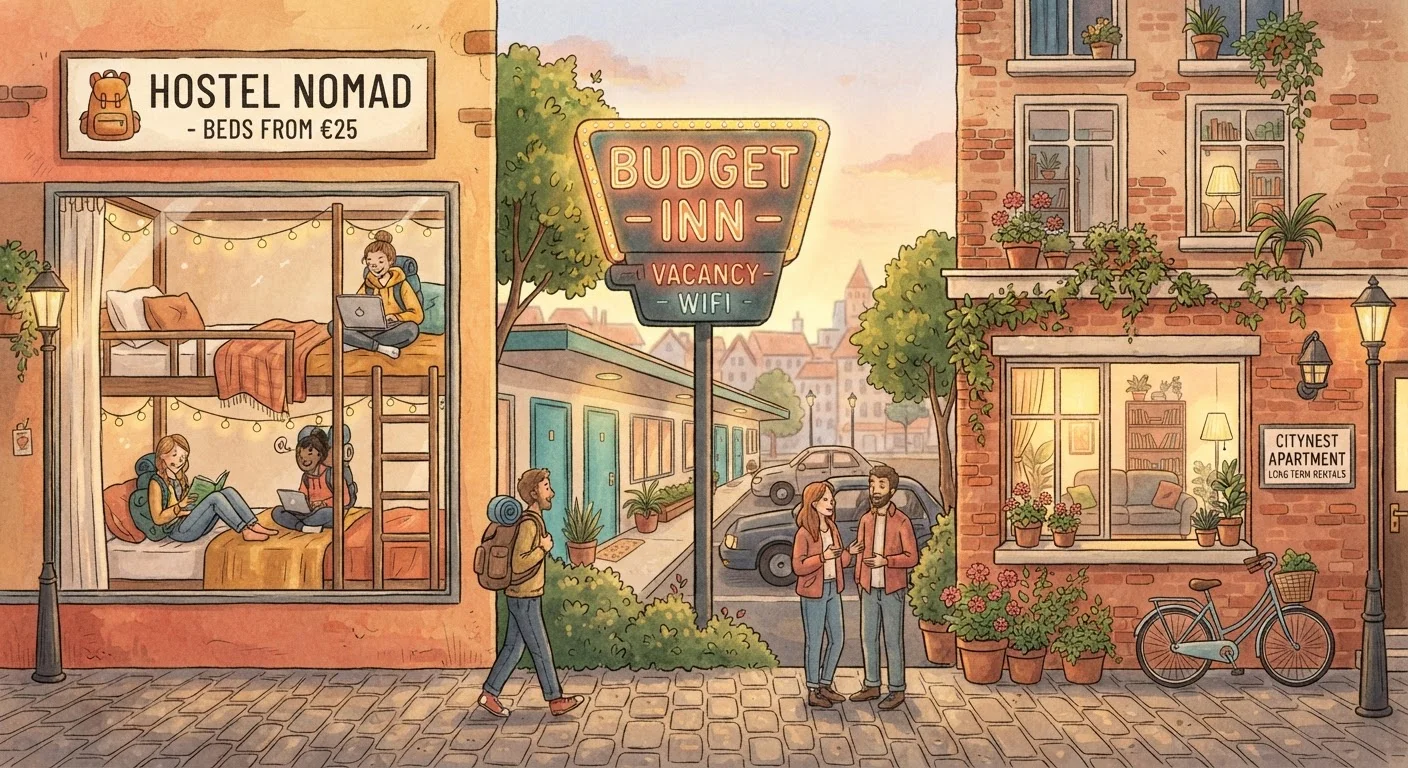
Why Cheap Accommodation Isn't Always the Smartest Choice
Budget travel is a skill, and accommodation is where that skill gets tested most. The instinct to book the lowest-priced listing makes sense - lodging is typically the second-biggest trip expense after airfare. But cost-conscious travelers who focus purely on the nightly rate often end up spending more, not less, once the full picture comes into view.
Location friction, hidden fees, missing kitchen access, and poor sleep quality all translate into real dollar costs - extra rideshares, restaurant meals that replace a skipped hostel breakfast, or a last-minute upgrade when a booked property falls short. Understanding the actual trade-offs across accommodation types helps you make a smarter call before you click "reserve." For a broader look at how lodging fits into your overall trip spend, see The Real Cost of Travel.
Ignoring location costs when choosing accommodation.
Why it happens: Travelers compare nightly rates without mapping out how far a property sits from transit, attractions, or the airport - costs that show up later in rideshares and taxi fares.
Overlooking cleaning fees and service charges on short-term rentals.
Why it happens: Listing platforms historically display the nightly rate prominently, burying one-time cleaning fees, service fees, and taxes until checkout - a practice that inflates the real cost significantly for short stays.
Booking a hostel dorm without checking amenity quality or private-room alternatives.
Why it happens: "Hostel" is assumed to mean cheapest available, but a sleepless night in a noisy 12-bed dorm can mean spending the next day less productively and grabbing pricier food options out of exhaustion.
Assuming a cheap motel outside the city is a reliable money-saver.
Why it happens: Highway-adjacent motels often advertise rates well below city-center hotels, making them look like obvious deals - but the transportation costs and time to reach your actual destination are rarely factored in.
Not verifying whether a rental includes a functional kitchen before banking on cooking savings.
Why it happens: Listings labeled "full kitchen" can mean anything from a real stove and refrigerator to a microwave and mini-fridge - travelers assume the former and discover the latter on arrival.
How to Read the True Cost Before You Book
Once you know the pitfalls, the fix is straightforward: build a total-cost estimate before committing to any listing. Add the full nightly rate, all fees, estimated transportation costs to and from your accommodation each day, and any meals you'll need to buy because cooking isn't an option. That number - not the headline price - is what you're actually paying.
~40%
Of nightly rental cost added by fees
Analysis of major short-term rental platforms has found that mandatory cleaning and service fees frequently add 30-50% on top of the advertised nightly rate for short stays.
$15-$30
Daily transport cost from remote accommodation
Budget travel researchers commonly estimate that staying just 20-30 minutes outside a city center can add meaningful daily transportation costs that erode accommodation savings.
For trips longer than five nights, a vacation rental with a kitchen frequently undercuts a cheap hotel once you subtract three to four restaurant meals per day. For one- or two-night stays, that math often reverses. The vacation rentals vs. hotels comparison digs deeper into exactly when each option wins on cost. And if you're still deciding how to structure your booking overall, booking flights vs. packages covers how your accommodation choice connects to the rest of your trip setup.
Watch for Resort Fees on Budget Hotel Listings
Some budget and mid-range hotels - particularly in Las Vegas, Miami, and other resort-heavy markets - charge mandatory "resort fees" of $20-$50 per night that are not included in the advertised rate. These fees are disclosed at checkout, not in the search listing. Always scroll to the full price breakdown before confirming any hotel booking, and search the property name plus "resort fee" to find the current charge.
Travel style matters too. Solo travelers often extract real value from sociable hostel common areas, while families or remote workers need space and quiet that a dorm bed simply can't deliver. Matching accommodation type to what you actually need - not to a general notion of "budget" - is what smart budget travel strategies look like in practice.
The content on this site is for informational purposes only and is not a substitute for professional advice. Always consult a qualified professional for guidance specific to your situation.