

Why Food Spending Derails So Many Travel Budgets
Accommodation and flights get most of the pre-trip budget attention, but food is frequently the category that quietly blows past projections. It's easy to see why: you're hungry, tired, and surrounded by unfamiliar options. Defaulting to fast food chains feels safe, and tourist-area restaurants feel convenient. The result is spending more than planned while eating less interestingly than you could.
The good news is that eating well on a tight travel budget isn't about deprivation - it's about redirecting spending toward the right places. Local markets, neighborhood eateries, and smart meal timing can stretch your food dollar further than almost any other travel strategy. For a broader look at how food fits into overall trip cost management, the strategies for spending less without sacrificing the trip article covers the full picture.
Food Safety Abroad: Don't Skip This
Before eating street food or drinking tap water internationally, check current health advisories from the CDC and your destination's local health authority. Food safety standards vary widely by region and even by vendor. When in doubt, choose stalls with high turnover and visibly fresh ingredients, and stick to bottled or filtered water in regions with uncertain tap quality.
Keeping your eating habits balanced on the road is also worth thinking about. If you're curious about how travel affects long-term nutrition patterns, research-backed habits that make healthy eating stick offers useful perspective.
What You'll Need Before You Start
Getting set up for budget-smart eating doesn't require much - just a little preparation before and immediately upon arrival.
What you will need
Google Maps or a local equivalent
Locate nearby grocery stores, markets, and highly-rated local eateries away from tourist zones.
Reusable water bottle
Refill at filtered sources to avoid repeated purchases of single-use bottled water.
Small insulated bag or packing cube
Store market purchases, leftovers, or grocery snacks safely during day trips.
Accommodation with kitchen or kitchenette
Enables simple meal prep - even just breakfast and one snack - to dramatically reduce daily food spend.
Step-by-Step: Eating Well for Less on the Road
Set a realistic daily food budget before you arrive
Before your trip, research average meal costs at your destination. A quick look at travel forums, recent blog posts, or apps like TripAdvisor's price filters gives a realistic range. Divide your total food budget by trip days and aim to hit that number - not just average it. See the complete travel budget guide for a thorough framework to estimate and track all your travel costs.
Find the nearest grocery store or local market on day one
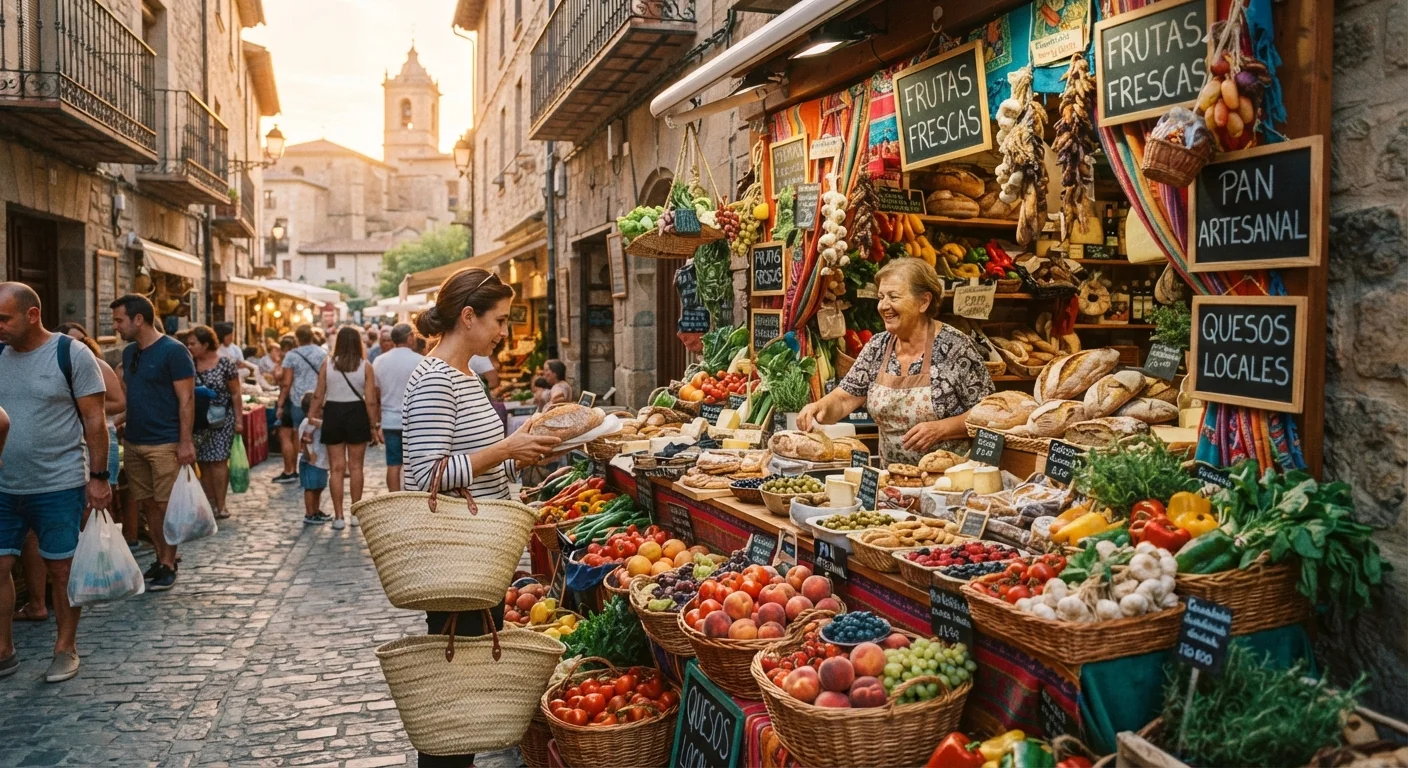
Within your first few hours at a destination, locate a neighborhood supermarket or covered market. Stock up on breakfast staples, portable snacks, and drinks. A simple breakfast of local bread, fruit, yogurt, and coffee assembled from grocery finds can cost under $5 almost anywhere in the world - versus $15-25 at a hotel restaurant or café. For destinations with rich market culture, this doubles as a genuine cultural experience.
Shift your biggest, most indulgent meal to lunchtime
Lunch pricing at sit-down restaurants is consistently lower than dinner across most of Europe, Latin America, and Southeast Asia. Fixed-price lunch menus - common in France, Spain, Portugal, Mexico, and beyond - offer two to three courses for $8-18 USD in many cities, a deal that evaporates at dinner. Make lunch your splurge meal and keep dinner casual: market leftovers, a sandwich, or a simple street food find.
Prioritize street food and casual local spots over sit-down restaurants
Street food and informal eateries frequented by locals are almost always cheaper than restaurants marketed to visitors - and frequently more flavorful. Look for spots with a line of locals, visible food prep, and quick turnover. Tacos, dumplings, falafel, rice dishes, and local stews prepared fresh at small stalls represent some of travel's greatest culinary value. The Destinations & Guides hub can help you identify which foods are iconic (and budget-friendly) at your specific destination.
Walk at least two blocks away from major tourist attractions before eating
Restaurants immediately adjacent to top attractions operate on captive-audience pricing. A two-to-three block detour - especially toward residential neighborhoods - routinely cuts prices by 30-50% while significantly improving food quality. Use a mapping app to search for restaurants filtered by local price tiers, or simply follow foot traffic away from the tourist core.
Use your accommodation's kitchen when possible
Even a partial kitchen - a microwave, mini-fridge, and kettle - opens up meaningful savings. Preparing your own breakfast and assembling simple lunches from market ingredients can save $20-40 per day for a solo traveler, more for families. When planning your itinerary, consider pairing accommodations with kitchen access for longer stays. A well-structured trip makes this easier - see how to build an itinerary that actually works so kitchen time fits naturally into your days.
Pack smart snacks to prevent expensive impulse buys
Hunger between meals in an unfamiliar city almost always leads to overpriced convenience purchases. A handful of nuts, a piece of fruit, or a granola bar bought at the grocery store costs cents compared to snacks sold at tourist kiosks or airport terminals. Keep two to three small snacks in your bag each day so you're never forced into a bad-value food decision while exploring. This habit also keeps energy levels stable - helpful for full days of walking or activity-heavy itineraries.
The Lunch Special Is Your Best Friend
Many sit-down restaurants in Europe, Latin America, and parts of Asia offer a fixed-price lunch menu - often called a 'menu del día,' 'prix-fixe,' or 'set lunch' - that includes multiple courses at a fraction of the dinner price. This is often the same kitchen, same quality, dramatically lower cost. Plan your biggest meal of the day at noon and keep evenings lighter and cheaper.
Tourist Menus Often Hide the Real Price
Restaurants in high-foot-traffic tourist zones frequently charge two to three times what locals pay just a few blocks away. If a menu is printed in six languages and handed to you by someone standing at the door, it's worth walking a little further. Ask hotel staff or locals where they actually eat - their recommendations are usually both more affordable and more delicious.
Staying Nourished Without Overthinking It
The goal isn't to turn every meal into a research project - it's to build a few reliable habits that keep food costs predictable without making eating stressful. Markets in the morning, a good local lunch, smart snacking, and the occasional splurge dinner add up to a genuinely satisfying food experience at a fraction of what reactive, tourist-zone eating costs.
Travelers who eat well on a budget tend to discover more of a destination in the process: the neighborhoods where locals shop, the vendors who take pride in their craft, the flavors you'd never encounter at a hotel buffet. That's not just thrift - it's better travel. For more ways to get the most from every dollar on the road, explore our hub on domestic destinations that deliver big experiences on smaller budgets.
This article provides general travel guidance for informational purposes. Food safety conditions, pricing, and local customs vary by destination and change over time. Always verify current health and safety information through official government and health authority sources before traveling.
The content on this site is for informational purposes only and is not a substitute for professional advice. Always consult a qualified professional for guidance specific to your situation.