

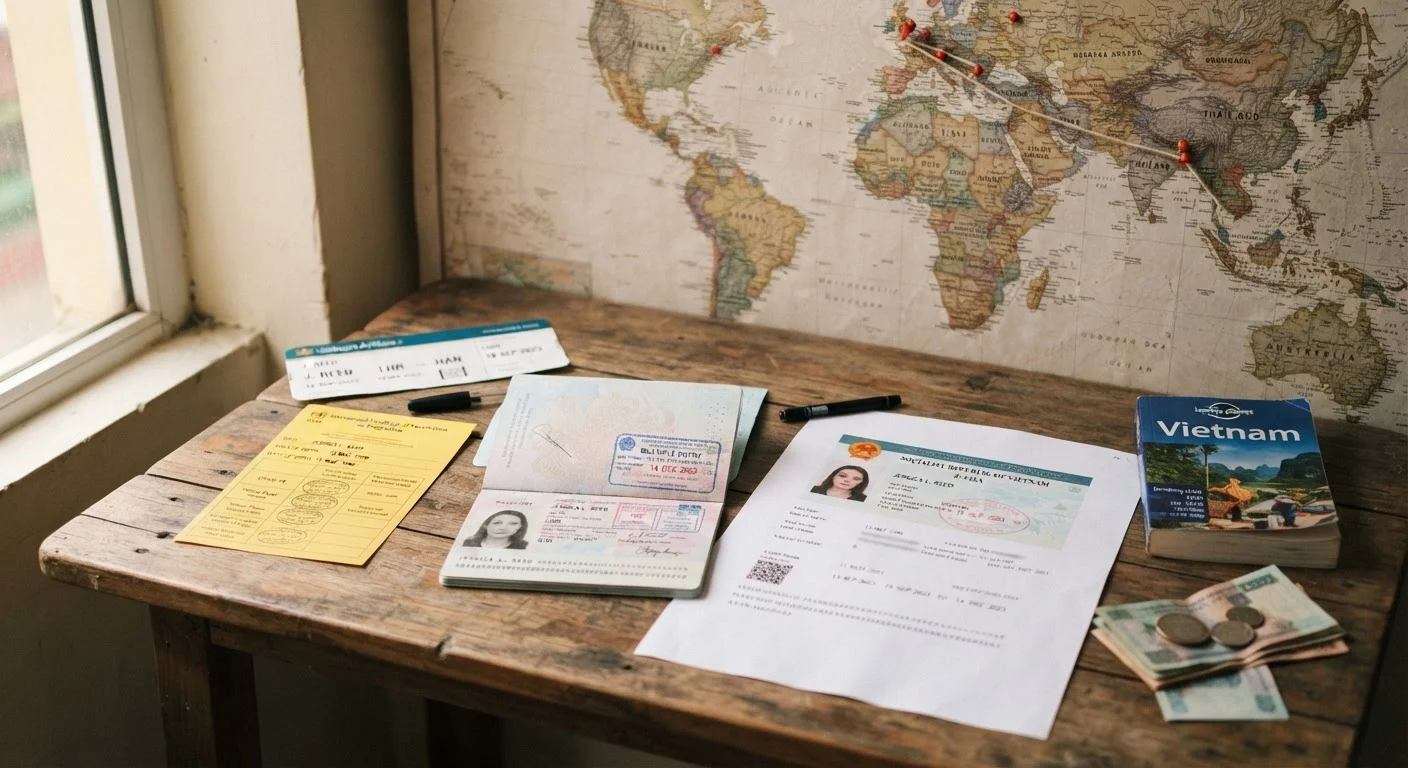
Why Documents Derail More Trips Than Weather Ever Does
Most travel horror stories don't start with a missed flight or a lost bag - they start at a check-in counter when an agent flags an expired passport, a missing visa, or the absence of a required vaccination certificate. The frustrating truth: every one of these scenarios is preventable with the right lead time and a few reliable sources.
Americans traveling internationally face a layered documentation landscape. Your passport is the foundation, but it's rarely sufficient on its own. Layered on top are visa requirements (which vary by country and by your passport's stamp history), entry health requirements, and destination-specific rules that can change with little public notice. See what a US passport actually grants you for a deeper look at where American travelers have visa-free access - and where they don't.
Passports: Validity Rules Most Travelers Get Wrong
A valid passport doesn't simply mean an unexpired one. Many countries enforce a six-month validity rule - requiring your passport to remain valid for at least six months beyond your departure date. Arrive at the border with four months remaining and you may be turned away, regardless of how many blank visa pages you have.
Page requirements are another overlooked issue. Some countries and visa agencies require a minimum number of blank pages for stamps. If your passport is crowded, a passport card won't save you - you'll need a full book renewal.
Six-Month Validity Rule
A passport entry policy requiring your passport to remain valid for at least six months past your planned return date. Not universal, but enforced by many countries across Africa, Asia, and the Middle East.
Electronic Travel Authorization (ETA)
A pre-travel electronic permission required by some countries before a traveler boards a flight. It is not a visa but must be obtained in advance through the destination country's official government portal.
International Certificate of Vaccination (ICVP)
Commonly called a 'yellow card,' this is an official WHO-standardized document proving you've received certain vaccinations. Some countries require it as a condition of entry, particularly for yellow fever.
Visa on Arrival
A visa issued directly at the destination country's port of entry rather than in advance. Availability depends on your nationality and the destination; it cannot always be assumed - verify before traveling.
Processing times from the U.S. State Department fluctuate significantly. Routine processing has historically taken several weeks; expedited service shortens that window but costs more and is not instantaneous. Always check current processing estimates directly at travel.state.gov before assuming timelines. If your trip is within six weeks, passport agencies offer appointment-based urgent service - but appointments can be scarce.
For a full framework on navigating these steps, the First Time Abroad planning guide walks through the entire pre-trip sequence in practical order.
Visas and Entry Requirements: Where Research Can't Wait
Visa requirements for US passport holders range from none (many Western European countries) to required-on-arrival (available at the port of entry) to must-be-obtained-in-advance (requiring an application weeks or months ahead). Some destinations also require Electronic Travel Authorizations (ETAs) - not visas per se, but pre-approval you must have before boarding your flight.
Complicating matters: some countries restrict entry based on which other countries' stamps appear in your passport. This is not broadly advertised and can catch even experienced travelers off guard. Similarly, if you hold dual citizenship, entry rules may differ depending on which passport you present.
Passport Stamps Can Affect Entry Elsewhere
Some countries restrict or complicate entry for travelers whose passports contain stamps from specific nations. This is more common than many Americans realize and is rarely flagged by booking platforms. If your itinerary involves politically sensitive regions or countries with known cross-entry conflicts, research stamp-based restrictions carefully through official embassy sources before you finalize your route.
The only authoritative sources for visa requirements are the destination country's official embassy or consulate website and the U.S. State Department's country information pages at travel.state.gov. Third-party travel sites are useful for general orientation but should never be treated as definitive - rules change. If you're heading to Southeast Asia, our country-by-country entry reference for US travelers is a useful starting point before you verify with official sources.
Vaccinations and Health Documentation: Don't Assume
Some destinations require proof of specific vaccinations as a condition of entry - not a recommendation, but a hard requirement. Yellow fever vaccination certificates are the most commonly mandated, especially for travelers arriving from or transiting through countries where the disease is endemic. Without a valid International Certificate of Vaccination or Prophylaxis (ICVP, commonly called a yellow card), you may be denied boarding or entry.
Beyond mandatory certificates, travel health clinics and the CDC's destination-specific guidance pages outline recommended vaccines based on your itinerary, travel style, and personal health history. These are not requirements, but skipping them carries real risk depending on where you're going. Always consult a travel medicine provider or your physician well in advance - ideally six to eight weeks before departure - since some vaccine series require multiple doses over time.
For a structured pre-trip review that includes health prep alongside safety advisories and entry rules, see the traveler's verification checklist.
This article is for general informational purposes only. Health and entry requirements vary by individual circumstance and change frequently. Always verify requirements with official government sources - including the U.S. State Department, the CDC, and your destination country's embassy - before traveling, and consult a qualified healthcare professional for personal vaccination guidance.
The content on this site is for informational purposes only and is not a substitute for professional advice. Always consult a qualified professional for guidance specific to your situation.