

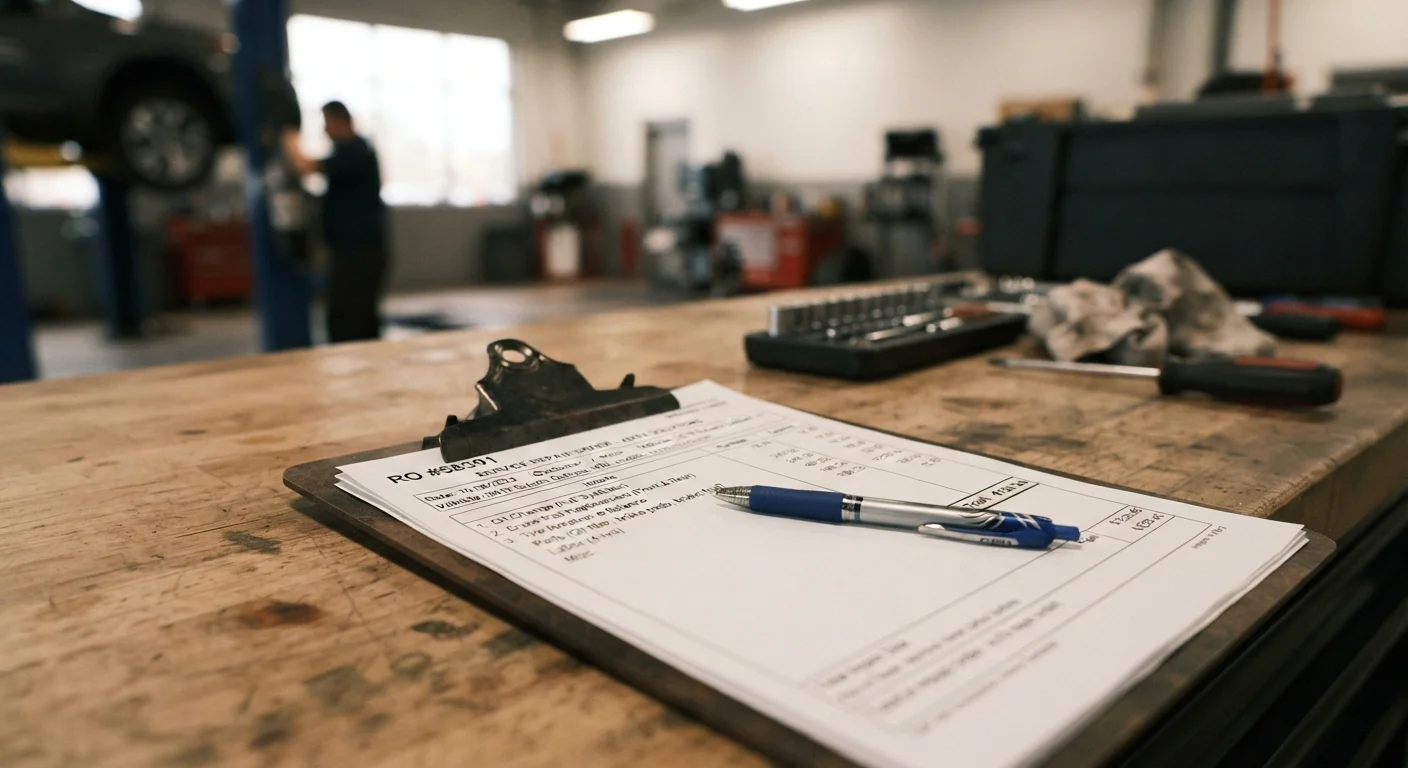
The Anatomy of a Repair Estimate
When a shop hands you a repair estimate - formally called a repair order (RO) - it can look like a wall of numbers, abbreviations, and shop-specific shorthand. Breaking it into its three core sections makes it manageable.
Every standard repair order contains: (1) a parts section listing each component to be replaced, (2) a labor section detailing the work performed and time billed, and (3) a miscellaneous fees section covering shop supplies, disposal, and taxes. Understanding each one prevents surprises when you pick up your keys.
| Typical labor rate range (U.S.) | $80-$160+ per hour (Varies by region, shop type, and vehicle brand) |
| Labor guide systems | Mitchell, AllData, Chilton (Most commonly used in U.S. independent and dealership shops) |
| Parts markup range | 20%-50% above shop cost (Industry standard; varies by shop policy and part type) |
| Written estimate required | In most U.S. states (Verify your state's specific consumer protection statutes) |
| Authorization required for overages | If final cost exceeds estimate (Many state laws require shop contact before exceeding estimate by a set threshold) |
For context on which services typically show up on a repair order, see Your Car's Maintenance Schedule, Decoded - it explains what each service interval involves before you see it billed.
Labor Hours: How Shops Calculate Time
Labor is almost always the largest line on an estimate. Shops charge by the flat-rate hour - a standardized time estimate published in industry labor guides (such as Mitchell or AllData) for each specific repair, not the actual time it takes your technician.
For example, if a guide says replacing a water pump takes 2.5 hours and the shop's labor rate is $120/hour, you'll be billed $300 for labor regardless of whether the job takes 90 minutes or 4 hours. This system is industry-standard, but it's worth understanding so you know what you're paying for.
What to ask: "What is your current labor rate per hour?" and "Which labor guide do you use to establish these times?" Any reputable shop will answer both questions without hesitation.
Repair Order (RO)
The official document a repair shop creates to authorize, track, and bill for work performed on your vehicle. It serves as the legal contract between you and the shop.
Flat-Rate Hour
A standardized time unit from industry labor guides that represents the expected time for a specific repair. Shops bill this fixed amount regardless of actual technician time spent.
OEM Part
Original Equipment Manufacturer part - a component made by or to the exact specifications of your vehicle's manufacturer, identical to what was installed at the factory.
Aftermarket Part
A replacement part produced by a third-party manufacturer rather than the vehicle's original maker. Quality, fitment, and warranty coverage vary significantly across brands.
Remanufactured Part
A used part that has been disassembled, cleaned, and rebuilt to meet original factory specifications. Often carries a warranty and is less expensive than a new OEM part.
Shop Supply Fee
A charge covering consumable materials used during a repair - such as rags, cleaning solutions, and small hardware - that are not billed as individual line items.
Sublet Repair
Work that your primary shop outsources to a specialist facility, such as a frame shop or machine shop. It appears as a separate line on your estimate and may include a handling markup.
Parts: OEM, Aftermarket, and Remanufactured
The parts section identifies every component being replaced and its unit cost. Three sourcing categories appear most often:
- OEM (Original Equipment Manufacturer): Parts made by - or to the exact specification of - your vehicle's manufacturer. Generally the most expensive option but identical to what came in your car originally.
- Aftermarket: Parts made by independent manufacturers. Quality varies widely across the aftermarket sector. Ask whether the shop uses parts that meet or exceed OEM specifications.
- Remanufactured (Reman): Cores from used parts that have been rebuilt to factory specs. Common for alternators, starters, and brake calipers. Often a cost-effective middle ground.
You generally have the right to request OEM parts, though your estimate will reflect the higher cost. If a shop proposes aftermarket parts, ask specifically about the brand and warranty coverage on those components.
~65%
Share of repair bill that is typically labor
Industry observers consistently note labor accounts for the majority of most repair invoices, underscoring why the labor rate matters.
3 tiers
Parts sourcing categories on most estimates
OEM, aftermarket, and remanufactured represent the three standard sourcing options you'll encounter on a repair order.
Shop Fees, Taxes, and the Fine Print
Below the parts and labor subtotals, you'll typically find a cluster of additional charges that are easy to overlook:
- Shop supply fee: A flat charge or percentage covering consumables - rags, cleaners, small fasteners, lubricants - used during the repair. This is standard practice but the amount should be disclosed upfront.
- Hazardous waste disposal: Covers proper disposal of fluids such as old oil, coolant, and brake fluid. Legitimate shops list this separately as a compliance cost.
- Sublet repairs: Work the shop sends to a specialist (e.g., alignments, machine work). This appears as its own line and may carry a small handling markup.
You Have the Right to Get It in Writing
Most U.S. states require repair shops to provide a written estimate before beginning work and to obtain your authorization before exceeding a set dollar threshold. If a shop declines to provide a written estimate, that is a significant red flag. Keep a copy of your signed estimate and compare it line-by-line against the final invoice when you pick up your vehicle.
If you're weighing whether a repair is worth doing yourself versus authorizing a shop, DIY Maintenance vs. Taking It to a Shop can help you evaluate the risk and skill involved for common jobs.
The content on this site is for informational purposes only and is not a substitute for professional advice. Always consult a qualified professional for guidance specific to your situation.