

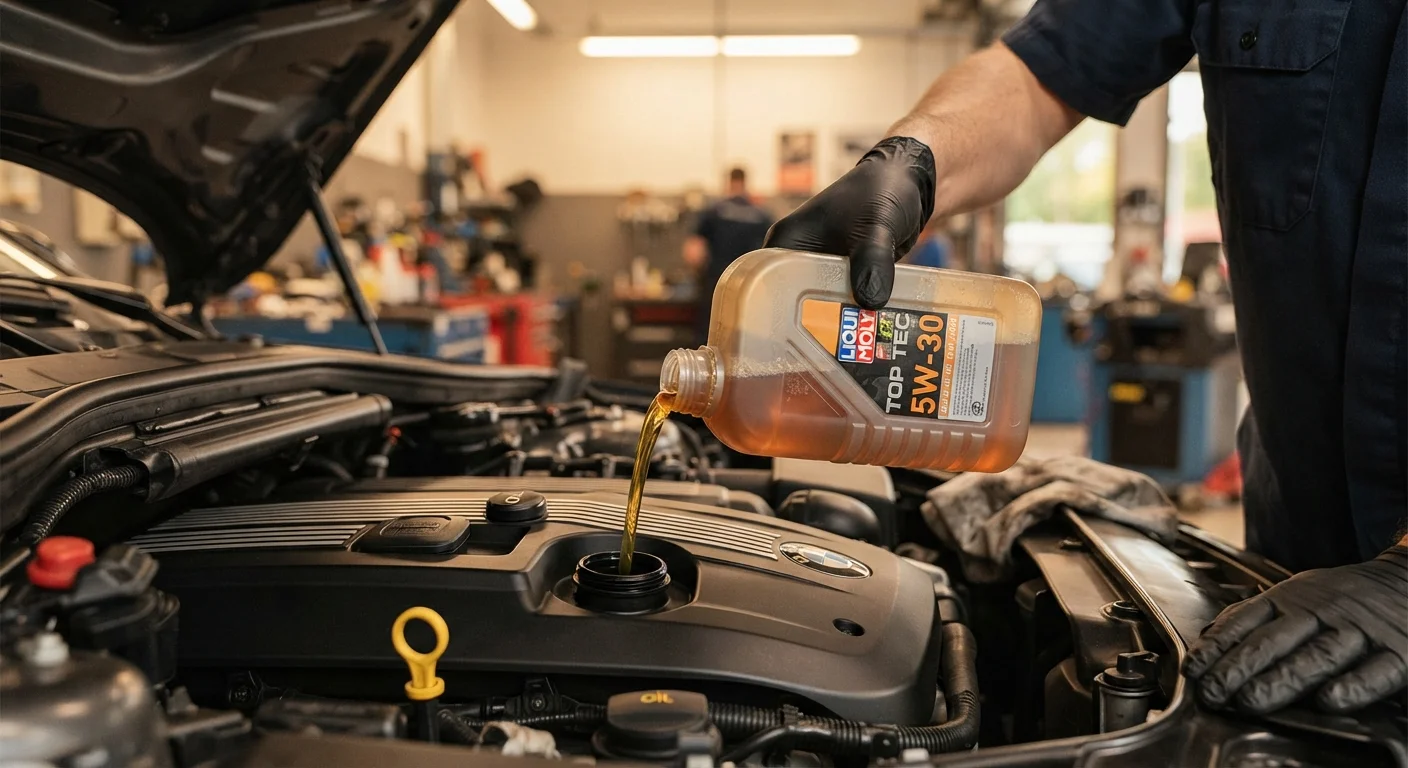
Option A
Synthetic Motor Oil
The engineered, high-performance option.
Best for: Drivers with newer vehicles, extreme climates, turbocharged engines, or longer intervals between oil changes.
Option B
Conventional Motor Oil
The time-tested, widely available standard.
Best for: Owners of older vehicles with simpler engines operating in moderate climates and typical driving conditions.
What's Actually Inside Each Type of Oil
Motor oil - whether synthetic or conventional - starts from crude oil drawn from the ground. The critical difference is what happens next.
Conventional motor oil is refined from crude oil through a distillation process that removes most impurities. What remains is a blend of hydrocarbon molecules of varying sizes and structures. That variability is conventional oil's main limitation: uneven molecules perform less predictably under temperature extremes and degrade faster over time.
Synthetic motor oil goes further. It either starts from a highly refined base stock or is built from chemical compounds designed specifically for lubrication. The result is a more uniform molecular structure - one that resists breakdown at high temperatures, flows more readily in cold weather, and maintains its protective film longer under stress.
Between the two sits synthetic blend oil, which mixes conventional base stock with synthetic additives to offer a middle ground in both performance and cost.
What 'Full Synthetic' Actually Means
The term 'full synthetic' is not uniformly regulated in the United States, so formulations can vary between manufacturers. What matters most is whether the oil meets the API (American Petroleum Institute) service rating and the viscosity grade specified in your owner's manual. Those two specifications - not marketing language - confirm the oil is appropriate for your engine.
Head-to-Head: How They Compare on What Matters
Understanding the practical differences helps you cut through the marketing and focus on what your engine actually needs.
| Criterion | Synthetic Motor Oil | Conventional Motor Oil |
|---|---|---|
| Base source | Engineered or highly refined base stock | Refined crude oil |
| Molecular consistency | Uniform - more predictable performance | Variable - less predictable under stress |
| Cold-weather flow | Flows readily at low temperatures | Thickens more in extreme cold |
| High-temperature stability | Resists breakdown at high heat | Degrades faster under sustained heat |
| Typical drain interval | Often 7,500-10,000+ miles (per manufacturer) | Typically 3,000-5,000 miles |
| Cost per change | Generally higher | Generally lower |
| Availability | Widely available | Widely available |
| Best engine match | Newer, turbocharged, high-performance engines | Older, simpler engines in moderate conditions |
One point drivers often overlook: viscosity grade - the numbers on the label like 5W-30 or 0W-20 - matters as much as oil type. That grade describes how the oil flows at different temperatures. Always match the grade your manufacturer specifies, regardless of which oil type you choose. For a broader view of how oil changes fit into your vehicle's overall care, see Your Car's Maintenance Schedule, Decoded.
When Each Type Makes Practical Sense
The most reliable guide to which oil your engine needs is your vehicle's owner's manual. Manufacturers specify an oil type and viscosity grade based on the engine's tolerances, clearances, and operating conditions - not on generic advice.
Synthetic oil is typically the better fit when:
- Your manufacturer requires or recommends it (common in turbocharged, direct-injection, and many newer engines)
- You drive in very cold winters or very hot summers
- Your vehicle sits unused for extended periods
- You want to take advantage of manufacturer-approved extended drain intervals
Conventional oil remains appropriate when:
- Your manufacturer specifies it and your engine is in good condition
- You drive a high-mileage older vehicle that has always used conventional oil without issue
- Your driving conditions are mild and you stay on top of change intervals
If you're comfortable handling your own oil changes, understanding the distinction between DIY-appropriate tasks and those better left to professionals is worth reviewing - see DIY Maintenance vs. Taking It to a Shop for practical guidance.
~3,000-10,000 mi
Typical oil change interval range
Manufacturer-recommended intervals vary widely depending on oil type, engine design, and driving conditions - always check your owner's manual.
~5°F vs. ~20°F
Cold-pour point advantage of synthetic
Synthetic oils are generally formulated to flow at significantly lower temperatures than conventional oils, improving cold-start engine protection.
Common Questions Drivers Have
Can I switch from conventional to synthetic? For most well-maintained engines, yes. The idea that switching causes leaks in older engines is largely a myth - modern synthetic oils are compatible with engine seals. That said, if an older engine already has minor seal wear, a mechanic's assessment before switching is a reasonable precaution.
Does synthetic oil last forever? No. Even synthetic oil accumulates contaminants - combustion byproducts, metal particles, and moisture - over time. Extended drain intervals associated with synthetic oil are based on the oil's resistance to chemical breakdown, not immunity to contamination. Always follow the interval your manufacturer recommends.
Is expensive oil automatically better? Not necessarily. Meeting your manufacturer's specification - API service rating and viscosity grade - matters more than price. A conventional oil that meets spec protects your engine correctly. An oil that doesn't meet spec, regardless of cost, is the wrong choice.
This article is for general informational purposes only. Always consult your vehicle's owner's manual and a qualified mechanic for recommendations specific to your engine and driving conditions.
The content on this site is for informational purposes only and is not a substitute for professional advice. Always consult a qualified professional for guidance specific to your situation.