

Why Each Surface Type Is Different
Rain, snow, and ice all reduce the friction between your tires and the road, but they do so in distinct ways - and that distinction matters for how you respond. Understanding what's happening under your tires helps you make better real-time decisions.
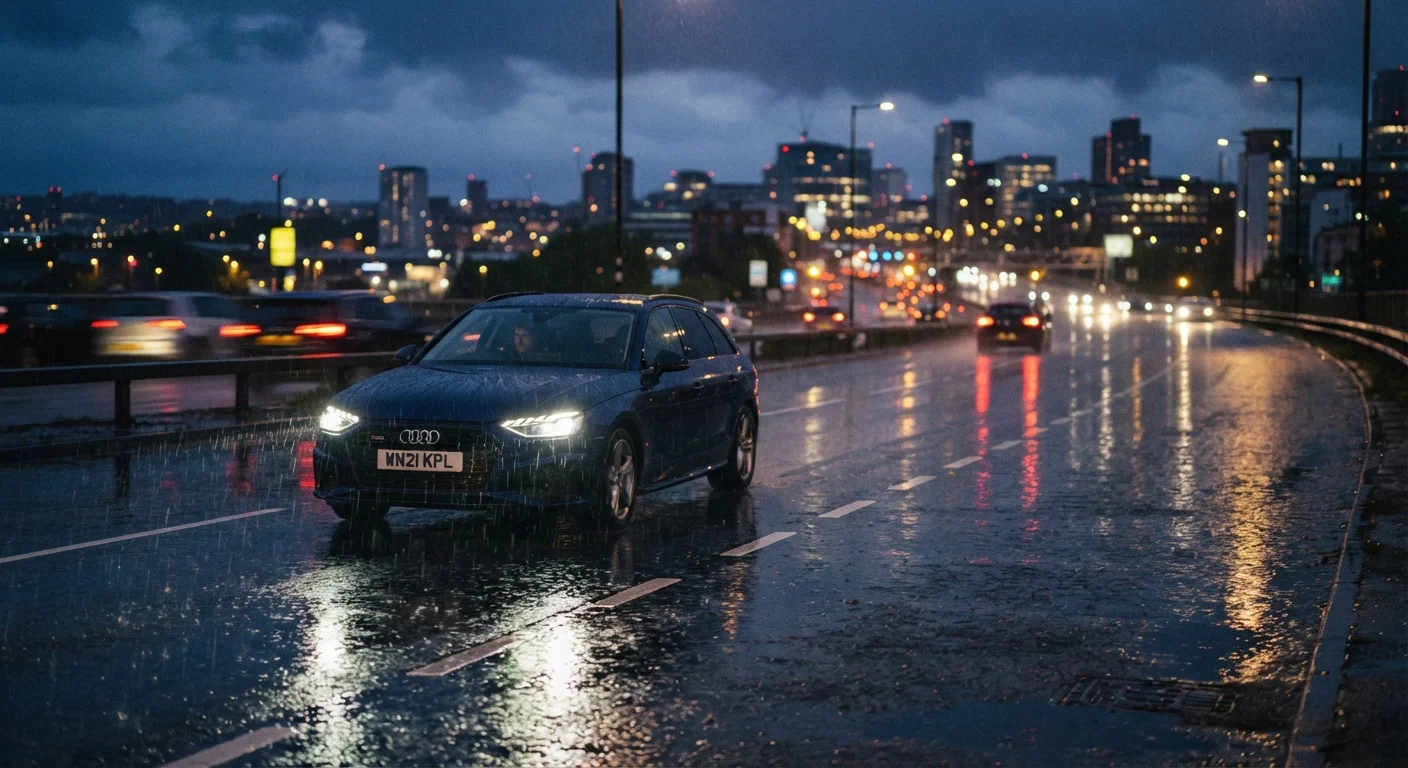
Rain introduces a thin water film that lubricates the road surface. Modern tire tread is designed to channel water away from the contact patch, but at higher speeds or with worn tires, the water can't escape fast enough - causing hydroplaning. Snow compresses and deforms, giving tires something to grip but with considerably less friction than dry pavement. Wet, heavy snow is often more slippery than light, powdery snow. Ice is the most dangerous because it provides almost no texture at all. Even a thin glaze dramatically cuts stopping power and steering response.
Your tires are the only part of your vehicle in contact with the road, which is why their condition is non-negotiable before driving in any adverse condition. See our guide on tire pressure and tread depth to understand what to check and how often. For broader seasonal preparation, our seasonal car care guide covers the full range of weather-related vehicle checks.
Test Your Traction Before You Need It
Shortly after pulling onto a wet or wintry road, find a safe, low-traffic stretch and lightly press the brakes to gauge how quickly your vehicle responds. This gives you a real-world sense of stopping distances before a situation demands full braking. Never test in traffic or at speed.
What to Do and How to Do It
The steps below apply to drivers of all experience levels. If you're new to winter driving or want a broader foundation for safe habits, our defensive driving guide covers the core principles that underpin all of these techniques.
What you will need
All-Season or Winter Tires
Provides the necessary tread pattern and rubber compound to grip rain, snow, or ice effectively.
Ice Scraper and Snow Brush
Clears snow and ice from all windows, mirrors, and lights before driving in winter conditions.
Tire Pressure Gauge
Allows you to verify tire inflation before driving, since pressure drops in cold weather.
Emergency Road Kit
Includes items like a flashlight, jumper cables, blanket, and reflective triangle for roadside emergencies.
Check Your Vehicle Before Leaving
Before driving in adverse conditions, take two minutes to confirm your vehicle is ready. Check that tire pressure is correct - cold temperatures cause pressure to drop, reducing grip. Verify that wiper blades are clearing the windshield fully and that all lights are functional. Clear all snow and ice from windows, mirrors, the roof, and headlights; snow flying off your vehicle is both a visibility hazard and a legal issue in many states.
Reduce Speed and Increase Following Distance
Speed is the most controllable factor in adverse-weather driving. On wet roads, stopping distances increase substantially compared to dry pavement. On snow or ice, stopping distances can be three to twelve times longer, depending on conditions and tire type. As a baseline: double your usual following distance in rain, and triple it - or more - in snow or icy conditions. Posted speed limits reflect dry-road performance; they are not targets in poor weather.
Adapt Your Inputs for Rain
Rain reduces tire grip by creating a film of water between the tread and the road surface. At higher speeds, tires can begin to hydroplane - riding on top of the water rather than through it - which causes a sudden, complete loss of steering control. To minimize this risk: reduce speed, avoid sudden steering movements, and brake gently before turns rather than during them. If you feel the steering go light, ease off the accelerator smoothly and keep the wheel pointed straight until you feel grip return. Avoid hard braking.
Adapt Your Inputs for Snow
Packed snow provides some texture for tires to grip, but it compresses under braking and can shift unpredictably. Use slow, deliberate steering inputs. Accelerate gently from stops - rapid throttle causes wheel spin, which reduces control. If your vehicle has ABS (anti-lock braking system), apply steady, firm pressure to the brake pedal and let the system modulate; do not pump the pedal. If your vehicle lacks ABS, apply light, progressive brake pressure to avoid wheel lock. Use engine braking by downshifting when descending hills rather than relying solely on the brake pedal.
Adapt Your Inputs for Ice
Ice offers the lowest traction of any common road surface. On glare ice, even a slight steering or braking input can cause the vehicle to slide. Drive at the minimum safe speed, make all steering corrections in tiny, smooth increments, and begin braking much earlier than feels necessary. If you start to skid, avoid the instinct to brake hard - instead, ease off the accelerator and steer gently in the direction you want the front of the car to go. Stay especially alert on bridges and overpasses, which freeze before road surfaces because cold air circulates underneath the deck.
Use Your Vehicle Systems Correctly
Modern vehicles include stability control, traction control, and ABS - systems designed to help maintain control when traction is lost. These are aids, not substitutes for attentive driving, and they have limits. Keep stability and traction control engaged at all times in adverse conditions; turning them off is rarely appropriate outside of getting unstuck from deep snow. Use headlights even in daytime rain or snow - this is both a safety measure and a legal requirement in many states.
Never Use Cruise Control in Wet or Winter Conditions
Cruise control is designed for stable, high-traction driving. On wet, icy, or snowy roads, it can maintain or even increase speed when your wheels lose grip - exactly the opposite of what you need. Disengage it entirely whenever road conditions are anything less than dry and predictable.
Black Ice Offers No Warning
Black ice forms when moisture freezes in a thin, transparent layer on pavement, making it nearly indistinguishable from dry road. Bridges, overpasses, shaded curves, and intersections are especially prone to it. If your car suddenly feels like it's floating or steering becomes unresponsive, you may be on black ice. Lift off the accelerator gradually and avoid any abrupt inputs until you feel traction return.
This article is for general informational and educational purposes. Driving conditions vary widely; always use your own judgment and follow local traffic laws and official guidance.
The content on this site is for informational purposes only and is not a substitute for professional advice. Always consult a qualified professional for guidance specific to your situation.