

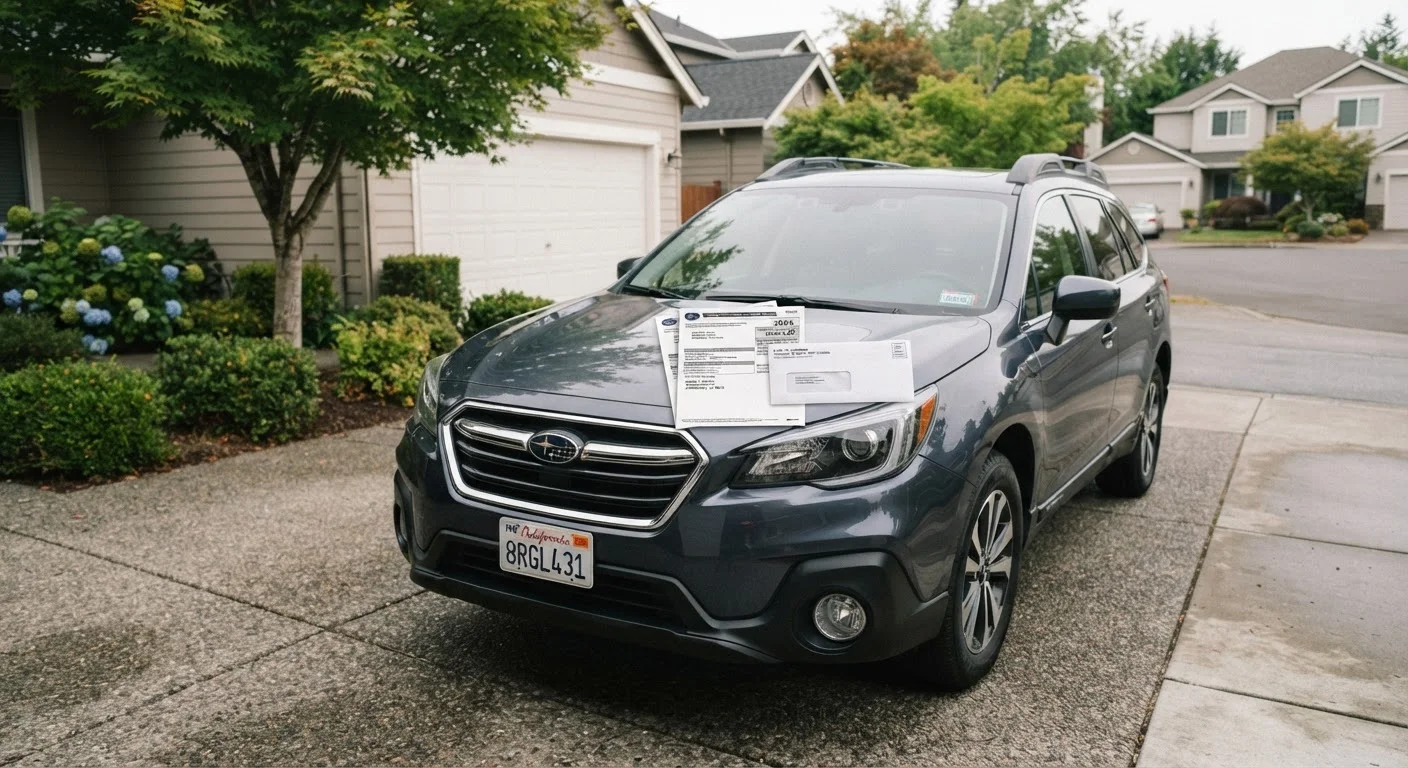
What Is a Vehicle Personal Property Tax?
When most drivers think about the cost of owning a car, they picture fuel, insurance, and maintenance. What often catches people off guard is an annual bill from their state or county government - a personal property tax on the vehicle itself. This is separate from the sales tax paid when you buy a car and separate from standard registration fees.
Vehicle personal property taxes exist because some states treat motor vehicles as taxable personal property, similar to how local governments tax real estate. The underlying logic is that the car has monetary value, and that value can serve as a tax base for funding local services. As explained in our broader guide on the true cost of owning a car in America, these recurring annual taxes are one of the less visible but significant expenses tied to vehicle ownership.
~27
U.S. states with vehicle personal property taxes
Estimates from tax policy researchers suggest roughly half of U.S. states levy some form of annual personal property tax on motor vehicles, though structures vary widely.
Ad valorem
Tax type used in most vehicle-taxing states
Most states that tax vehicles use an ad valorem (value-based) approach, meaning the tax bill falls each year as the vehicle's market value declines with depreciation.
Varies
Effective rates by state and locality
Tax rates differ dramatically - from fractions of a percent to several percent of assessed value - depending on the state, county, and municipality where the vehicle is registered.
How the Tax Amount Is Calculated
The calculation involves three moving parts: assessed value, assessment ratio, and tax rate.
- Assessed value: The state or locality assigns a value to your vehicle, usually drawn from a recognized industry valuation source. This reflects what your car is worth in the current market.
- Assessment ratio: Many jurisdictions don't tax the full market value. Instead, they tax a percentage of it - say, 60% or 100% - known as the assessment ratio.
- Tax rate: The resulting assessed value is then multiplied by the local tax rate, typically expressed in dollars per $100 of assessed value.
For example, if your car has a market value of $20,000, an assessment ratio of 60% produces a taxable value of $12,000. At a rate of $4 per $100, your annual bill would be $480. Because vehicles depreciate year over year, that bill should decrease as your car ages. See our article on how car depreciation works for a deeper look at how your vehicle's value declines over time.
Check Your State's Assessment Schedule
Contact your state's department of revenue or county assessor's office to confirm when vehicle values are assessed and when bills are issued. Knowing the exact schedule helps you budget accurately and avoid late payment penalties. Some counties post their valuation tables online, making it easy to estimate your upcoming bill before it arrives.
When and How to Pay
Due dates vary by state and sometimes by county. Some states tie the vehicle property tax to annual registration renewal, meaning you must pay before your tags are renewed. Others issue a separate tax notice on a fixed calendar schedule - often in the fall. Missing the deadline typically triggers late fees and interest, and in some states it can block your ability to renew your vehicle registration.
Payment methods commonly include online portals, mail, or in-person at a county office. If you escrow property taxes through a mortgage lender for your home, note that vehicle taxes are almost never handled that way - they're the owner's direct responsibility. Keeping track of these obligations alongside other annual ownership duties is worthwhile; our annual property ownership responsibilities checklist offers a useful framework for managing recurring financial deadlines.
State Variation and What to Watch For
Not all states impose this tax, and among those that do, rules differ substantially. Virginia, for instance, administers vehicle property taxes at the county and city level, with rates that can vary significantly across jurisdictions within the same state. Missouri applies the tax statewide. North Carolina bases it on a state-standardized valuation schedule. Some states exempt older vehicles or set value thresholds below which no tax is owed.
If you've recently moved or are considering relocating, understanding the tax environment of your new state is important. A state with no income tax may still levy meaningful personal property taxes on vehicles. For a comprehensive look at how vehicle-related government charges differ across the country, see our overview of vehicle registration across states.
Deductibility on Federal Taxes
The IRS permits taxpayers who itemize deductions to deduct the ad valorem (value-based) portion of vehicle personal property taxes paid during the tax year. Flat fees tied to vehicle weight or age do not qualify. Because individual tax circumstances vary, consult a licensed tax professional before claiming this deduction.
This article is for general informational purposes only and does not constitute tax, legal, or financial advice. Tax rules vary by state and locality and can change. Consult a qualified tax professional or your state's revenue authority for guidance specific to your situation.
Frequently Asked Questions
Approximately 27 states levy some form of annual personal property tax on vehicles, though the rules differ considerably. States commonly associated with this tax include Virginia, Missouri, North Carolina, South Carolina, and Connecticut, among others. Some states apply it statewide while others allow counties or municipalities to administer it locally. Always verify current rules with your state's department of motor vehicles or department of revenue.
Most states use a published valuation guide - often based on recognized industry sources - to establish a vehicle's fair market value at the start of each tax year. That value is then multiplied by an assessment ratio (often less than 100%) and the applicable tax rate to produce the amount owed. Because vehicles depreciate over time, your bill typically decreases each year you own the same car.
No. Registration fees are flat or formula-based charges collected to legally operate a vehicle on public roads and are generally not tied to market value. Vehicle personal property taxes are value-based and recur annually as a government revenue source. In some states, both charges appear on the same renewal statement, which can cause confusion.
The IRS allows taxpayers who itemize deductions to deduct the portion of a vehicle tax that is based on the vehicle's value - the ad valorem portion. Flat fees tied to weight, model year, or horsepower generally do not qualify. Because tax situations vary, consult a qualified tax professional to determine what applies to your specific circumstances.
Your tax liability depends on the rules of both the state you left and the one you moved to. Many states prorate the tax based on how many months the vehicle was registered there. You may need to notify both states and provide proof of your new registration to avoid being billed in two places. Check with each state's revenue authority promptly when you relocate.
Most jurisdictions provide a formal appeals or review process. You can typically submit documentation - such as a recent appraisal or evidence of high mileage or damage - to request a reassessment. Deadlines for appeals are usually strict, so act quickly once you receive your notice.
The content on this site is for informational purposes only and is not a substitute for professional advice. Always consult a qualified professional for guidance specific to your situation.