

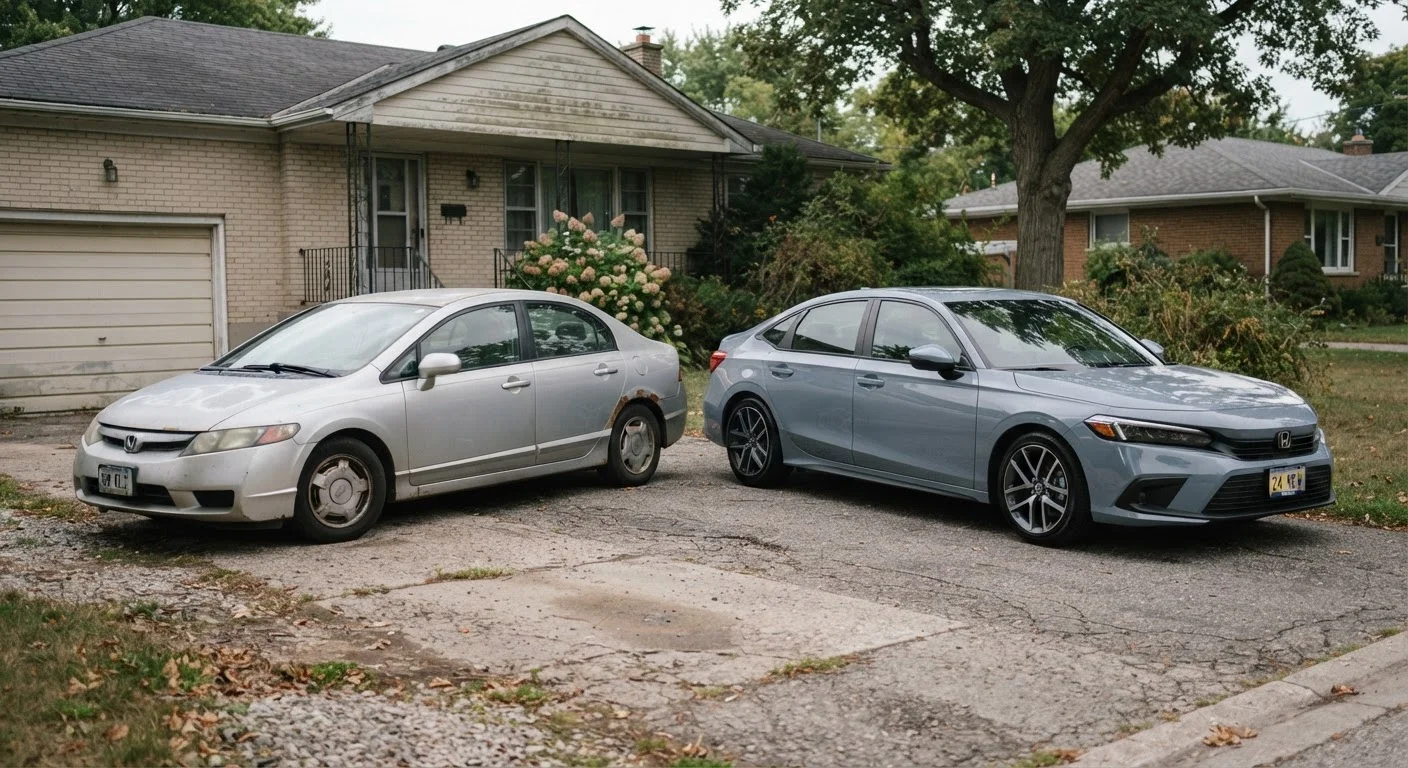
What Depreciation Actually Means for Car Owners
When you buy a vehicle, you're not just paying for transportation - you're also accepting that the asset will steadily lose value over time. That loss is depreciation, and it's relentless. Unlike a mortgage where the underlying asset may appreciate, cars almost universally move in one direction: down.
Depreciation is typically steepest in the early years. Industry data has long shown that new vehicles can shed a substantial portion of their value in year one, with the rate gradually slowing as the car ages. By the time a vehicle reaches five years old, it may be worth only 40-60% of its original purchase price, depending on the model and market conditions.
This makes depreciation one of the most significant components of total vehicle ownership cost - yet many owners never see it as a line item because no invoice arrives. The cost only becomes visible when it's time to trade in or sell.
~20%
Average first-year new car depreciation
Industry estimates consistently place new vehicle depreciation at roughly 15-25% in year one, with significant variation by make and model.
~50%
Value remaining after five years
Many vehicles retain only 40-60% of their original value after five years, though high-demand models can perform considerably better.
$3,000+
Annual depreciation cost on average new vehicle
Various automotive cost-of-ownership analyses estimate that depreciation alone can cost thousands of dollars per year, making it a dominant ownership expense.
Key Factors That Speed Up or Slow Down Depreciation
Not all vehicles depreciate at the same pace. Several factors interact to determine how quickly a specific car loses its value:
- Mileage: Higher annual mileage signals more wear and reduces the pool of interested buyers. A vehicle with significantly more miles than average for its age typically commands a lower resale price.
- Condition: Dents, interior damage, and deferred maintenance all visibly reduce value. Skipping routine maintenance doesn't just create repair bills - it also erodes resale value.
- Brand and model reputation: Vehicles with established reputations for reliability tend to hold value better. Market perception matters: a brand known for high long-term dependability will typically see slower depreciation.
- Market demand: Supply and demand dynamics affect used-car values. During periods of tight vehicle inventory, used car prices can rise - temporarily reversing normal depreciation trends.
- Fuel type: As consumer preferences shift, the resale value of certain fuel types can fluctuate. Electric vehicles, for example, face unique depreciation dynamics tied to battery technology and evolving infrastructure.
- Accident history: A vehicle with a reported accident on its history - even if repaired properly - typically sells for less than a comparable clean-history vehicle.
Preserve Value With a Complete Service Record
Buyers in the used-car market will often pay a premium for a vehicle with documented maintenance history. Keeping receipts and records of oil changes, tire rotations, and other services demonstrates responsible ownership and can meaningfully support your asking price when it's time to sell or trade in.
How to Use Depreciation to Make Smarter Ownership Decisions
Understanding depreciation curves can meaningfully change how you approach buying and holding a vehicle. For buyers, one practical strategy is purchasing a vehicle that is one to three years old. At that point, the steepest depreciation has already occurred, and the vehicle still has significant useful life remaining. This approach effectively lets the first owner absorb the largest value loss.
For current owners weighing whether to keep or replace a vehicle, depreciation math is central to the decision. Understanding when the numbers favor holding versus replacing requires accounting for both the continued depreciation of your current vehicle and the immediate depreciation hit of purchasing a new one.
Owners who finance vehicles should also understand the relationship between depreciation and loan balances. When a vehicle depreciates faster than a loan is paid down, the owner is considered "underwater" - meaning they owe more than the car is currently worth. This can create financial strain if the car is totaled, stolen, or needs to be sold. Gap insurance is one tool that addresses this specific risk, and is worth understanding before taking on a new loan.
Finally, if you're working within a tight budget, strategic decisions about vehicle age and total ownership costs can make a significant difference in long-term financial outcomes.
Frequently Asked Questions
Most new vehicles lose between 15% and 25% of their value within the first year of ownership. Some models depreciate even faster depending on brand perception and market demand. This is often referred to as the 'new car premium.'
Vehicles with strong brand reputations for reliability and high resale demand tend to hold their value better. Trucks and SUVs in popular configurations often depreciate more slowly than sedans. Specific depreciation rates vary by model, model year, and market conditions.
Yes, to a degree. Neutral colors like white, silver, gray, and black tend to appeal to a broader pool of buyers, which can support resale value. Unusual or polarizing colors may limit the pool of interested buyers and accelerate depreciation.
You cannot stop depreciation, but you can slow it. Keeping mileage reasonable, maintaining the vehicle consistently, avoiding accidents, and preserving service records all help support resale value. Keeping the interior and exterior in good condition also matters.
Yes - and this is where 'being underwater' on a loan becomes a real risk. If a vehicle depreciates faster than you pay down the loan, you may owe more than the car is worth. Gap insurance can cover this difference if the vehicle is totaled or stolen.
Buying a lightly used vehicle lets someone else absorb the steepest early depreciation. However, older or higher-mileage vehicles may carry higher maintenance costs, so it's worth weighing total ownership costs rather than purchase price alone.
The content on this site is for informational purposes only and is not a substitute for professional advice. Always consult a qualified professional for guidance specific to your situation.