

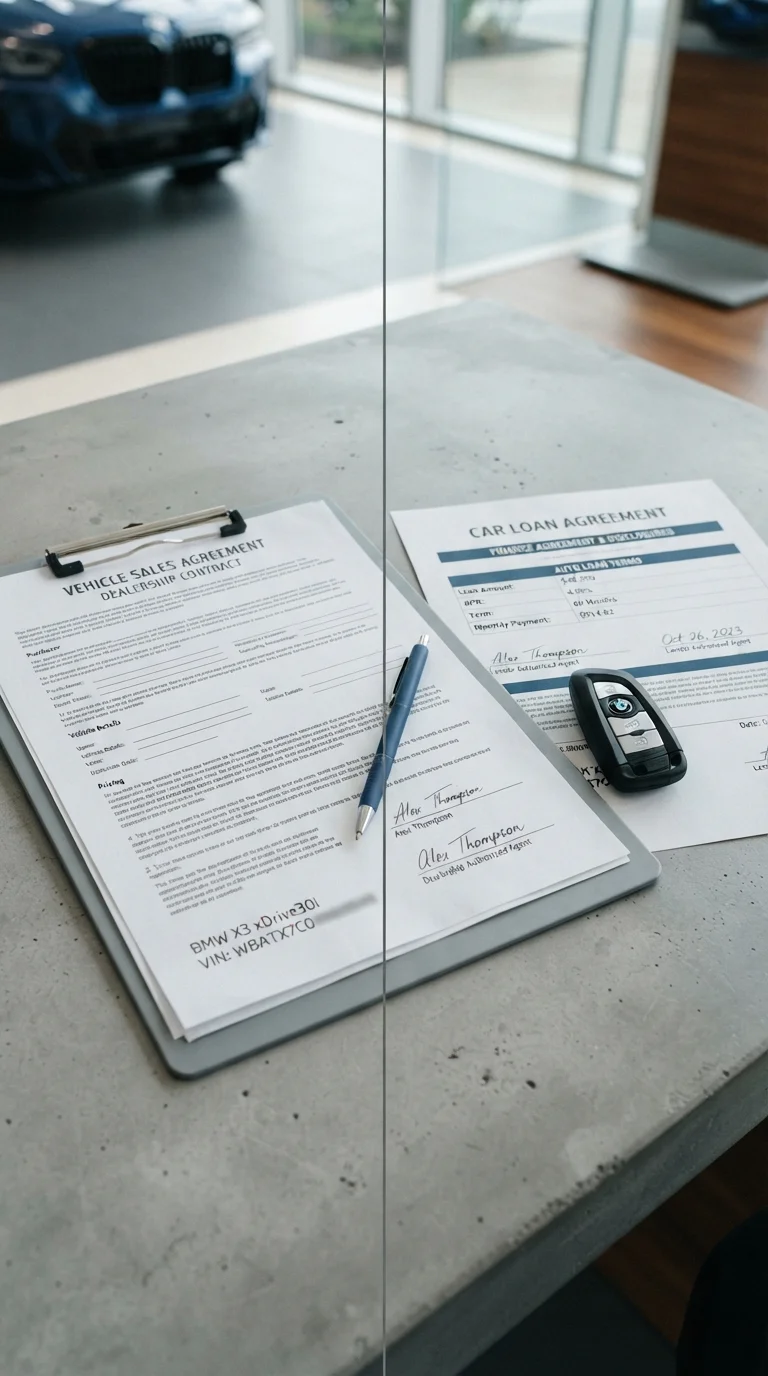
Option A
Car Lease
The flexible, lower-payment option with built-in return date.
Best for: Drivers who want a new vehicle every few years and prefer predictable monthly costs over building equity.
Option B
Auto Loan (Financing)
The ownership path that builds lasting value over time.
Best for: Drivers who want to own their vehicle outright, drive without mileage restrictions, and reduce costs over the long term.
How Each Agreement Works
A car lease is essentially a long-term rental agreement. You pay to use the vehicle for a set term - typically 24 to 36 months - after which you return it to the dealer. Your monthly payment covers the vehicle's depreciation (the drop in value during the lease period), plus interest and fees. You never hold the title.
An auto loan works differently. A lender - a bank, credit union, or dealership financing arm - fronts the purchase price of the vehicle, and you repay that sum with interest over a fixed term, often 48 to 72 months. Once the loan is retired, you own the car free and clear. The title is yours.
This structural difference is everything. With a lease, you're paying for depreciation on someone else's asset. With a loan, every payment incrementally increases your ownership stake in the vehicle. For a fuller picture of what vehicle ownership entails beyond the payment itself, see our breakdown of the true cost of owning a car in America.
| Criterion | Car Lease | Auto Loan (Financing) |
|---|---|---|
| Ownership | None - vehicle returned at term end | Full ownership after loan payoff |
| Monthly Payment | Generally lower | Generally higher |
| Mileage Limits | Yes - typically 10,000-15,000/yr | No limit |
| Modifications Allowed | No - must be reversed | Yes, once owned outright |
| Long-Term Cost | Higher if leasing continuously | Lower after loan is paid off |
| End-of-Term Fees | Possible (disposition, wear, mileage) | None |
| Equity Built | None | Yes - resale or trade-in value |
| Flexibility to Exit Early | Costly | Manageable (sell or refinance) |
The Real Cost Comparison Over Time
Leases almost always carry lower monthly payments than financing the same vehicle. That gap exists because you're only paying for a portion of the car's value - typically 40-60% over a three-year term. But lower monthly payments do not mean a lower total cost.
Consider a driver who leases a vehicle every three years for nine years versus someone who finances the same class of vehicle and keeps it for nine years. The financing driver typically pays more in the first few years, but their costs drop sharply after the loan is paid off. The perpetual leaser continues paying every month, indefinitely, without accumulating any asset.
~$150-$200
Typical monthly payment difference
Consumer financial research consistently shows lease payments run lower per month than loan payments for comparable vehicles, though gap narrows with longer loan terms.
~50%
Average vehicle depreciation in first 3 years
According to Edmunds and industry data, many new vehicles lose roughly 40-50% of their value within the first three years - the period most leases cover.
$0
Equity gained from a completed lease
When a lease ends and the vehicle is returned, the lessee walks away with no ownership interest regardless of payments made over the term.
Additional lease costs to factor in include: disposition fees when you return the vehicle (commonly $300-$500), excess mileage charges (often $0.15-$0.25 per mile over the cap), and wear-and-tear assessments. These charges can add up quickly and are easy to underestimate when comparing advertised monthly rates.
When you're weighing whether to lease again or finally buy, the financial logic of keeping a car versus buying new is worth working through carefully.
Restrictions, Flexibility, and What You Give Up
Lease contracts come with conditions that financing does not. The most common constraints include:
- Mileage caps: Most leases set an annual limit of 10,000-15,000 miles. Exceeding it triggers per-mile penalties.
- Modification restrictions: Alterations to the vehicle - even minor ones - are typically prohibited or must be reversed before return.
- Early termination costs: Ending a lease before its term can be significantly more expensive than exiting a loan early.
- Insurance requirements: Lenders on loans set minimum coverage requirements, but lessors often require higher limits and gap insurance.
Financing carries its own restrictions during the loan period - the lender holds a lien on the title, meaning you can't sell or transfer the vehicle freely without satisfying the loan. But once paid off, those restrictions vanish entirely.
Gap Insurance: A Critical Consideration
If your leased or financed vehicle is totaled or stolen, standard insurance pays only current market value - which may be less than what you owe. Gap insurance (Guaranteed Asset Protection) covers the difference between your insurance payout and your remaining balance. Many leases bundle this in, but it's worth verifying. For financed vehicles, gap coverage is optional but worth evaluating, especially in the early years of a loan when depreciation outpaces equity.
The lease vs. loan decision also connects to broader questions about financial structure. If you're weighing how fixed obligations work across different asset classes, the principles explored in fixed-rate vs. adjustable-rate mortgage trade-offs offer useful parallel context.
The content on this site is for informational purposes only and is not a substitute for professional advice. Always consult a qualified professional for guidance specific to your situation.