

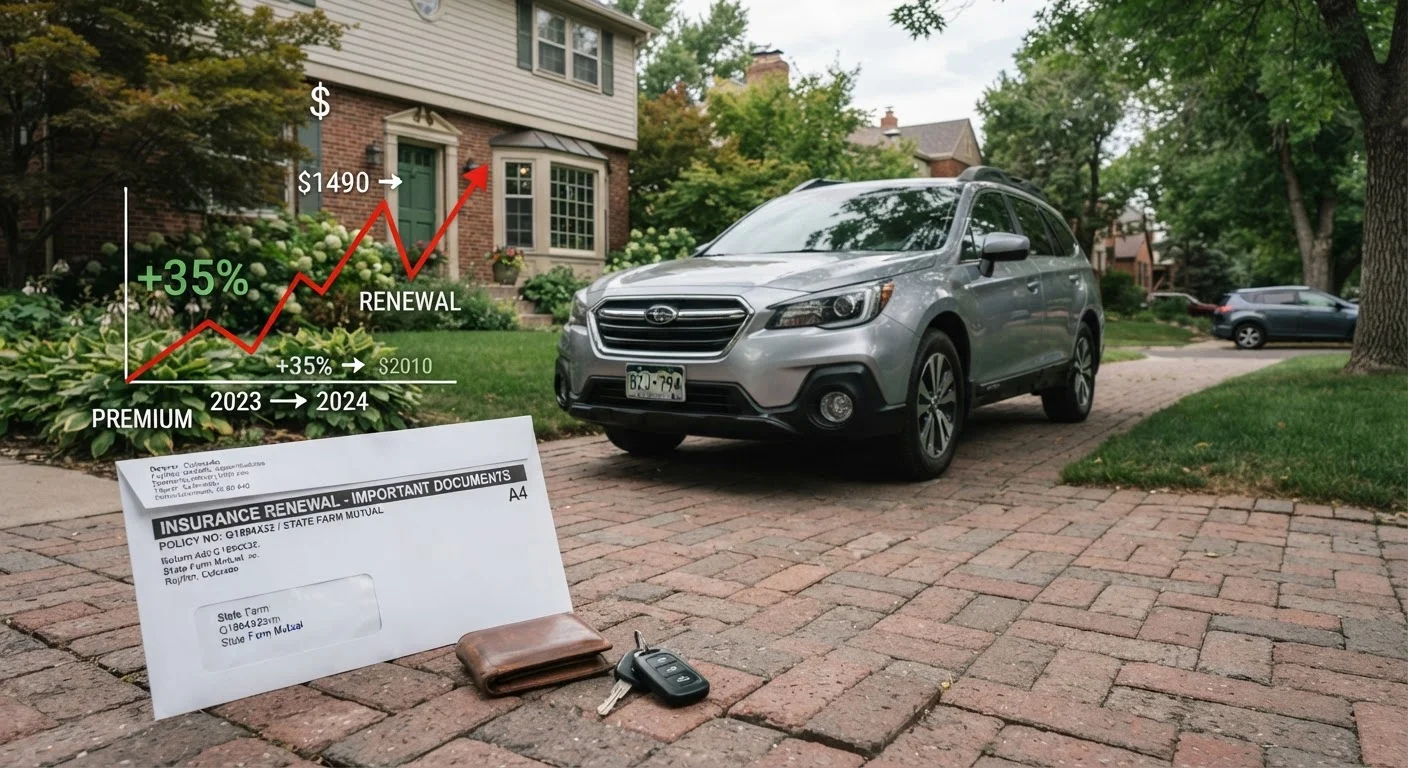
The Myth of the Claim-Free Discount
Many drivers assume that keeping a clean record - no accidents, no claims - is a guaranteed shield against higher premiums. It's a reasonable assumption, but it's incomplete. Car insurance pricing is a reflection of risk, and risk is assessed at multiple levels simultaneously: your individual history, your household, your neighborhood, and the broader insurance market.
Insurers are constantly recalculating the likelihood that they'll need to pay out a claim. When that calculation changes - for any reason - your premium can follow. Understanding the specific levers that drive those changes puts you in a far stronger position at renewal time.
The Factors That Move Your Rate
Several distinct categories of variables feed into premium calculations. Some are personal; others are entirely outside your control.
12%+
Average U.S. auto insurance rate increase in recent years
The Insurance Information Institute has reported that auto insurance premiums have risen sharply in recent years, driven by inflation in repair costs and increased claim severity.
~70%
U.S. states that permit credit-based insurance scoring
According to the National Association of Insurance Commissioners (NAIC), the majority of states allow insurers to use credit-based insurance scores as a rating factor for auto policies.
40%+
Rise in average vehicle repair costs over recent years
Industry data from sources including the CCC Intelligent Solutions annual report indicate that the average cost to repair a vehicle has climbed substantially, reflecting parts complexity and labor rates.
Credit-Based Insurance Scores
In most states, insurers derive a credit-based insurance score from your credit history. This is a separate calculation from the credit score lenders use, but it draws from similar data points - payment history, outstanding balances, length of credit history. Insurers argue this score correlates with claim likelihood. If your credit profile shifts - due to a late payment, a new credit inquiry, or a change in your debt-to-income picture - your insurance score can move accordingly. See how credit scores are actually calculated for a deeper look at the underlying data, and why a good credit score matters beyond loans explains how this number reaches into other areas of your financial life.
Location and Local Claim Trends
ZIP code is one of the most powerful rating variables. If claims frequency rises in your area - due to increased theft, more severe weather events, or a rise in traffic accidents - every policyholder in that territory may see higher rates. You personally may have done nothing differently. Changing your address, even to a neighboring town, can shift your premium significantly in either direction.
Vehicle Repair Costs and Inflation
Modern vehicles are increasingly expensive to repair. Advanced driver-assistance systems, sensors embedded in bumpers and windshields, and specialized parts all drive up repair costs. When the average cost of settling a claim rises across the industry, insurers adjust rates to stay solvent. This systemic inflation affects your premium regardless of whether your own vehicle has ever been in a shop.
Statewide Rate Filings
Insurers must seek approval from state regulators before changing their rates. When an insurer's actual losses outpace its projections - which happens during periods of elevated claims or inflation - it files for a rate increase that, once approved, applies to its entire book of business in that state. Individual policyholders receive this increase at their next renewal.
What You Can Do at Renewal
Review Your Policy Before Renewal, Not After
The best time to evaluate your coverage is a few weeks before your renewal date - when you still have time to ask questions, shop around, or adjust coverage levels. Waiting until after the new period begins limits your options and may result in paying for a policy that no longer fits your needs or budget.
When you receive a renewal notice with a higher premium, you have options. Start by requesting a written explanation from your insurer - in many states, they are required to explain material rate changes. Compare your coverage levels against what you actually need; understanding each coverage type can help you identify whether you're over- or under-insured for your situation.
Check whether any personal factors have shifted: Has your credit profile changed? Did you add a driver? Did your vehicle's value change significantly? If you've recently moved, verify that your address is correctly recorded - an incorrect ZIP code on file can produce inaccurate pricing. A licensed insurance agent can walk through your specific policy details and help you interpret what's driving the change. This article provides general information only and is not personalized insurance advice; always consult a qualified professional for decisions specific to your coverage.
This article is for general informational and educational purposes only. It does not constitute personalized insurance, financial, or legal advice. Coverage terms, pricing factors, and regulations vary by state and insurer. Consult a licensed insurance agent or adviser for guidance specific to your situation.
Frequently Asked Questions
Insurers reprice based on many factors beyond your personal claim history, including inflation in repair costs, higher claim frequency in your ZIP code, changes to your credit-based insurance score, and statewide rate adjustments approved by regulators. Your personal behavior is only one input into a larger actuarial model.
In most U.S. states, insurers use a credit-based insurance score - derived from your credit history - as one factor when setting premiums. Research cited by the National Association of Insurance Commissioners (NAIC) indicates a statistical correlation between credit scores and claim likelihood, which is why insurers use this data. A few states, including California, Hawaii, and Massachusetts, prohibit this practice.
Your personal rate is reviewed at each renewal period, typically every six or twelve months. Beyond your individual renewal, insurers periodically file systemwide rate changes with state regulators that can affect all policyholders in that state - sometimes mid-policy year for new customers.
Yes. Location is a significant rating factor. A new ZIP code may have higher rates of theft, more traffic density, or a worse claims history - all of which can raise your rate even if your driving habits haven't changed.
Request an explanation from your insurer - they are generally required to provide a reason for significant rate changes. Review what coverage levels you carry, check whether any personal factors have changed, and consult with a licensed insurance agent to understand your options. This article is general information, not personalized insurance advice.
The content on this site is for informational purposes only and is not a substitute for professional advice. Always consult a qualified professional for guidance specific to your situation.