

Start here
Why Budgeting Matters More Than You Think
Next
Know Your Numbers: Income and Expenses
Then
Choosing a Budgeting Method That Fits Your Life
Apply it
Building Your First Budget Step by Step
Watch out for
Common Pitfalls and How to Avoid Them
Make it stick
Keeping Your Budget Alive Long Term
Why Budgeting Matters More Than You Think
A budget is simply a written plan for how you intend to use your money over a given period - usually a month. That's it. It's not a restriction on your freedom, and it doesn't require deprivation. If you've heard otherwise, you're not alone. Common misconceptions about budgets convince many people to put off starting - sometimes for years.
Without a plan, money tends to disappear in ways that are hard to trace. You know you earned it; you're not sure where it went. A budget creates visibility. Visibility creates choice. And choice is where financial progress actually begins.
Think of a budget as a spending permission slip
Rather than viewing a budget as a list of things you can't do, think of it as pre-approving the spending you want to do. When you've planned for a dinner out or a streaming subscription, you can enjoy it without guilt. Intentional spending is still spending - it's just deliberate.
Know Your Numbers: Income and Expenses
Before you can build a budget, you need two figures: what comes in and what goes out. Start with your net income - the amount deposited into your bank account after taxes and deductions. If your pay varies, use a conservative average based on recent months.
Next, list your expenses in two categories:
- Fixed expenses - amounts that stay the same each month, such as rent, car payments, or loan minimums.
- Variable expenses - amounts that fluctuate, such as groceries, utilities, and entertainment.
One category that trips up many first-time budgeters: irregular expenses. These are real, predictable costs - car registration, annual subscriptions, dental visits - that simply don't arrive every month. Spending categories most budgets overlook are worth planning for in advance so they don't blindside you.
Unfamiliar with terms like discretionary spending or fixed cost? Key budgeting terms every American should know provides a plain-language glossary that makes these concepts straightforward.
Net income
The amount of money you actually take home after taxes, health insurance premiums, and any other deductions are removed from your paycheck.
Fixed expense
A cost that stays the same amount each month, such as rent or a car loan payment, making it easy to predict and plan for.
Variable expense
A cost that changes from month to month - like groceries, gas, or utilities - requiring you to estimate based on past patterns.
Discretionary spending
Money spent on non-essential wants - dining out, entertainment, hobbies - as opposed to necessities like housing or food.
Irregular expense
A real, predictable cost that doesn't arrive every month - such as an annual car registration fee or a quarterly insurance premium - often forgotten in monthly budgets.
Zero-based budget
A budgeting approach where every dollar of income is assigned to a specific category - spending, saving, or debt repayment - so that income minus all assignments equals zero.
Choosing a Budgeting Method That Fits Your Life
There's no single correct way to budget. Several frameworks have helped millions of households - the goal is to find one that matches how you think and how you spend.
- 50/30/20
- Divide net income: 50% to needs, 30% to wants, 20% to savings and debt repayment. A useful starting point, though it may need adjustment if your cost of living is high.
- Zero-based budgeting
- Every dollar is assigned a job - income minus all planned spending and saving equals zero. Nothing is left unaccounted for. More detailed, but highly effective for those who want full control.
- Envelope (or bucket) method
- Spending categories are funded in advance with set amounts. When a category's money is gone, you stop spending in it for the month. Works well for variable spending categories.
- Pay yourself first
- Savings and investment contributions are moved automatically at the start of the month before any discretionary spending happens. The rest is yours to use. Simple and effective for building savings habits.
No method is permanent
The budgeting framework you start with doesn't have to be the one you keep forever. Many people begin with the 50/30/20 rule for its simplicity, then move to zero-based budgeting as they want more precision. What matters most is starting - you can refine the approach as you learn what works for your household.
Building Your First Budget Step by Step
Once you understand your income, expenses, and preferred framework, you're ready to put a budget together. Here's a straightforward sequence:
- Calculate your monthly net income. Include all reliable income sources.
- List every fixed expense. These are non-negotiable amounts that recur reliably.
- Estimate variable expenses. Review 2-3 months of bank or card statements for realistic averages.
- Account for irregular expenses. Divide annual or quarterly costs by 12 and set aside that amount monthly.
- Assign savings and debt repayment goals. Treat these as non-optional line items, not what's left over.
- Check the balance. If expenses exceed income, identify which variable costs can be reduced first.
For a deeper dive - including income tracking systems, debt payoff strategies, and long-term goal setting - the complete personal budgeting playbook picks up where this introduction leaves off.
Common Pitfalls and How to Avoid Them
Most budgets don't fail because the person gave up - they fail because the plan wasn't realistic to begin with. Watch for these common early mistakes:
- Underestimating variable spending. Groceries, fuel, and dining costs are routinely underestimated. Use actual past spending, not wishful thinking.
- Ignoring irregular expenses. As noted above, predictable-but-infrequent costs are one of the most common budget disruptors.
- Setting savings goals last. If savings are treated as whatever remains after everything else, they rarely happen. Fund them like any other bill.
- Abandoning the budget after one bad month. One overspent category doesn't mean the plan failed - it means you have new information. Adjust and continue.
Avoid building a budget based on ideal behavior
It's tempting to draft a budget that reflects the spender you want to be rather than the spender you currently are. A plan built on overly optimistic estimates almost always breaks down within the first month. Start with honest numbers - even uncomfortable ones - and adjust gradually over time.
If debt is making your budget feel impossible, a beginner's roadmap to getting out of debt offers a structured approach to understanding and tackling what you owe.
Keeping Your Budget Alive Long Term
A budget written once and never revisited is just a document. The habit that makes budgeting work is the regular review - ideally monthly, or whenever your financial circumstances change significantly.
During your monthly review, ask: Did my actual spending match what I planned? Where did I overspend or underspend? Do my goals still reflect what I'm actually working toward? Adjusting your plan is not failure - it's the system working as designed.
As your financial confidence grows, you may find budgeting connects naturally to other goals - building an emergency fund, paying down debt, or eventually investing. Those topics are covered in the Saving & Debt section of this site, and when you're ready, opening your first investment account becomes a natural next step.
This article is for general informational and educational purposes only and does not constitute personalized financial, tax, or legal advice. Please consult a qualified financial professional before making decisions about your individual financial situation.
Frequently Asked Questions
Budgeting is useful at any income level - in fact, it tends to matter most when money is tight. A budget helps you direct every dollar intentionally, whether you earn $25,000 or $125,000 per year.
The 50/30/20 rule suggests allocating 50% of net income to needs, 30% to wants, and 20% to savings and debt repayment. It's a general guideline - not a universal rule - and may need adjustment based on your income and cost of living.
They're related but different. Tracking spending records what has already happened; budgeting plans what will happen. Effective budgeting typically involves both: planning in advance and reviewing actual spending afterward.
First, identify which expenses are fixed and which are flexible. Then look for areas to reduce discretionary spending or explore ways to increase income. If debt is a factor, reviewing a structured repayment approach may also help.
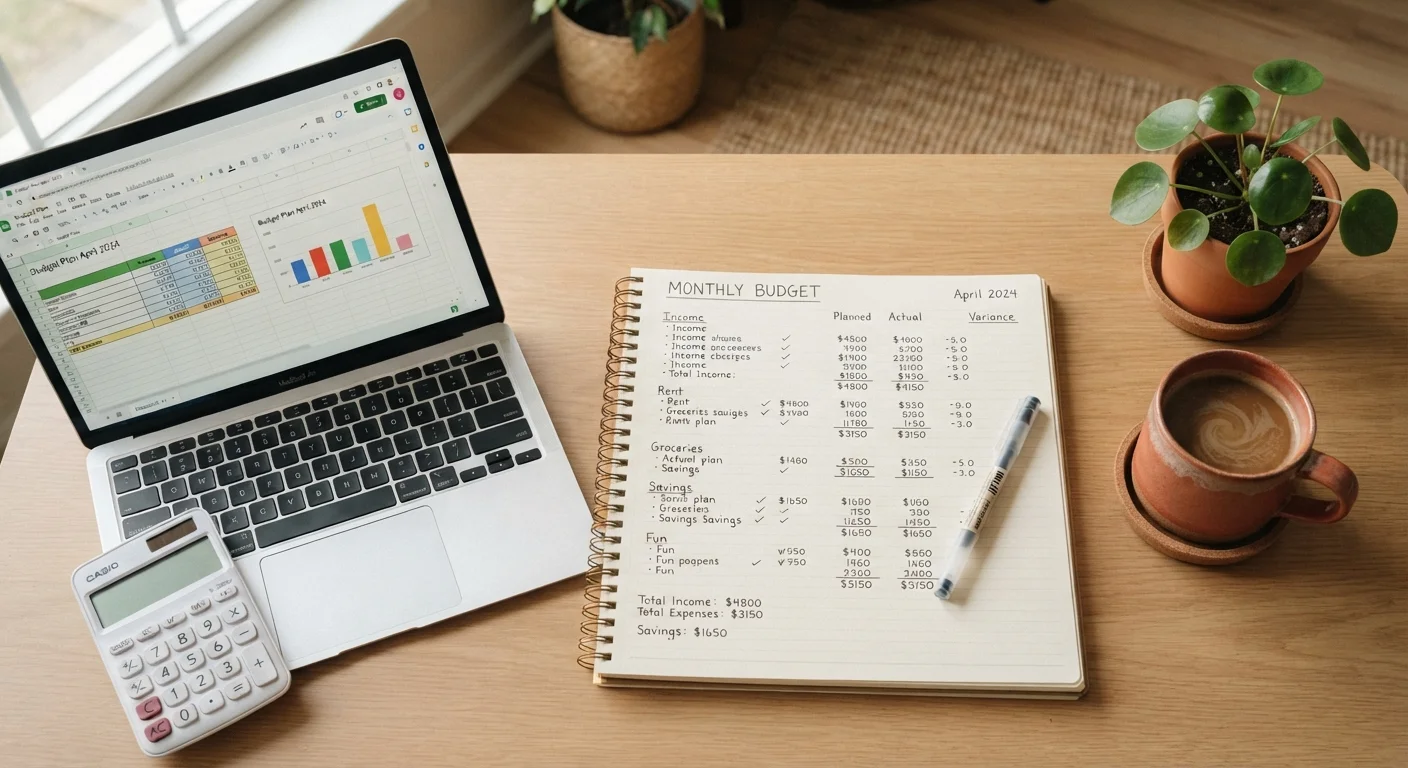
No. A pen and paper or a simple spreadsheet work perfectly well. Digital tools and apps can make tracking easier, but the method matters less than the habit of reviewing your plan regularly.
A monthly review is the most practical frequency for most households. You should also revisit your budget whenever a significant life change occurs - a new job, a move, a major purchase, or a change in household size.
The content on this site is for informational purposes only and is not a substitute for professional advice. Always consult a qualified professional for guidance specific to your situation.