

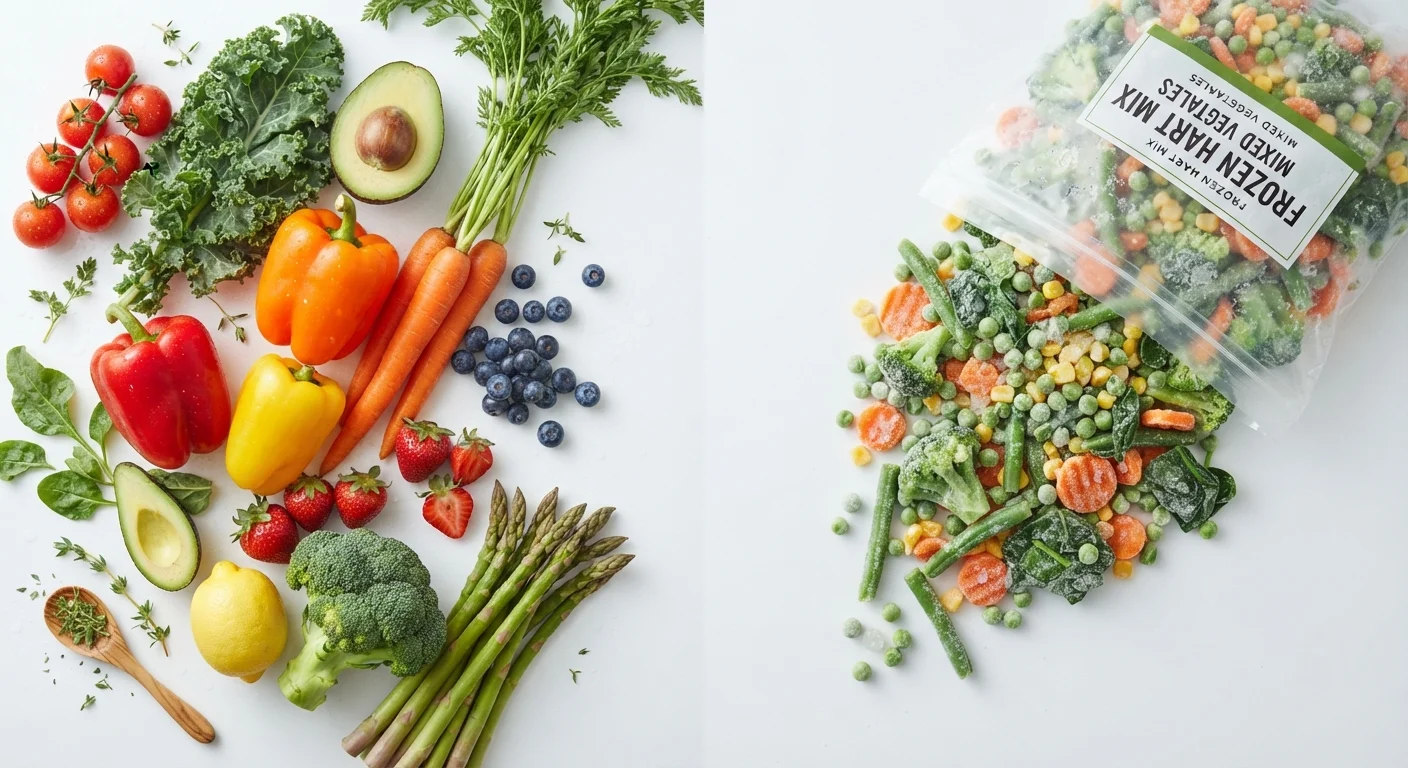
Option A
Fresh Produce
The farm-to-table classic - vibrant, versatile, and familiar.
Best for: Consumers who prioritize texture, taste variety, and access to a full range of local or seasonal options.
Option B
Frozen Produce
The nutrient-locked convenience choice - picked and preserved at peak ripeness.
Best for: Budget-conscious shoppers and anyone seeking consistent nutrient density year-round without food waste.
What Happens to Nutrients Between Farm and Fork
The nutritional gap between fresh and frozen produce is often smaller than most people assume - and in some cases, it runs in the opposite direction of what you'd expect. Fresh vegetables and fruits begin losing certain heat- and light-sensitive vitamins, such as vitamin C and several B vitamins, almost immediately after harvest. By the time fresh produce travels from farm to distribution center to store shelf to your refrigerator, days or even weeks may have passed.
Frozen produce, by contrast, is typically blanched briefly and flash-frozen within hours of harvest, at the point of maximum ripeness. Research published in journals such as the Journal of Food Composition and Analysis has found that frozen vegetables can contain levels of key vitamins and antioxidants equal to - or occasionally higher than - their fresh counterparts purchased from a supermarket. The blanching step does degrade some water-soluble vitamins, but the subsequent freezing largely halts further nutrient deterioration.
Fresh produce purchased directly from a farmers market and consumed the same day is a different story: that pathway minimizes nutrient loss and may offer superior flavor and phytonutrient content. The key variable is time and handling, not the fresh label itself.
| Criterion | Fresh Produce | Frozen Produce |
|---|---|---|
| Harvest-to-shelf nutrient retention | Varies; declines over days in transit | High; flash-frozen near peak ripeness |
| Shelf life at home | Days to 1-2 weeks | Several months |
| Typical cost per serving | Moderate to high (seasonal variation) | Generally lower year-round |
| Texture for raw eating | Superior | Not suitable after freezing |
| Food waste potential | Higher (spoilage risk) | Lower (use-as-needed) |
| Year-round availability | Limited by season/region | Consistent year-round |
| Additive concerns | Minimal | Check label for added salt or sugar |
Cooking Method: The Bigger Variable Most People Overlook
Whether you start with fresh or frozen, the way you cook produce has a substantial influence on what ends up on your plate nutritionally. Boiling vegetables in large amounts of water causes water-soluble vitamins - particularly vitamin C and folate - to leach into the cooking liquid. Steaming, microwaving, roasting, or lightly stir-frying tends to preserve more nutrients because exposure to water and prolonged heat is reduced.
This means a bag of frozen broccoli steamed for four minutes can retain more vitamin C than fresh broccoli boiled for ten. The practical takeaway: cook both fresh and frozen produce with minimal water and the shortest effective cooking time. Using cooking liquid in soups or sauces recovers some of those leached nutrients.
One Label Check Worth Making
Not all frozen produce is nutritionally equivalent to plain frozen vegetables. Some frozen products include added sodium, sauces, or sweeteners that can affect your overall dietary intake. When selecting frozen produce, check the ingredient list - ideally the only ingredient should be the vegetable or fruit itself. Plain frozen options give you the most control over what you're eating.
For building a weekly shopping plan that balances both types of produce effectively, see our nutrition-conscious grocery checklist for a practical category-by-category guide.
Practical Considerations: Cost, Waste, and Accessibility
Nutrition is only one lens through which to evaluate produce choices. Frozen vegetables and fruits are widely available year-round, typically cost less per serving than fresh equivalents, and generate far less household food waste - an important consideration given that the USDA estimates significant portions of purchased fresh produce are discarded uneaten each year.
Frozen produce also makes it easier to keep nutrient-rich options like edamame, butternut squash, and wild blueberries in stock regardless of season or local availability. For Americans in food-access-limited areas, frozen produce can be a meaningful source of dietary variety and essential micronutrients.
Fresh produce, on the other hand, excels for raw preparations, offers a wider variety of textures and culinary applications, and tends to be the choice when eating produce in its whole, unprocessed state is the goal. The sustainable, balanced approach for most households is a mix of both - leaning on fresh for immediate use and in-season items, and frozen as a nutritious, low-waste staple.
~45%
Vitamin C loss in fresh spinach after 7 days of refrigeration
Research cited by Penn State University found that leafy greens can lose nearly half their vitamin C within a week of refrigerated storage.
3-5x
Longer average shelf life of frozen vs. fresh produce
The Academy of Nutrition and Dietetics notes that most frozen vegetables remain nutritionally viable for several months when stored at consistent freezer temperatures.
This article is for general informational and educational purposes only and is not a substitute for professional medical or dietary advice. Consult a qualified healthcare provider or registered dietitian for guidance specific to your health needs.
The content on this site is for informational purposes only and is not a substitute for professional advice. Always consult a qualified professional for guidance specific to your situation.