

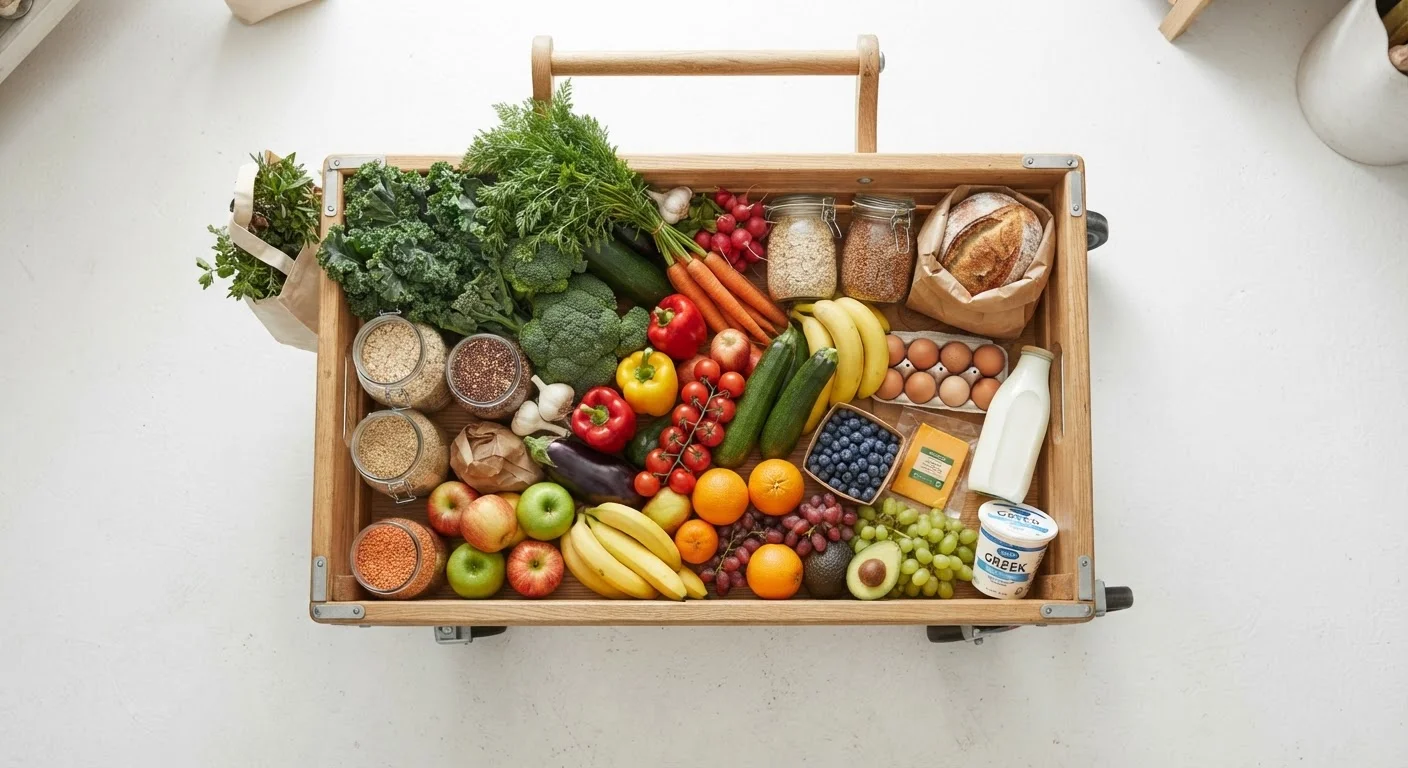
Summary
28 items · 20-40 minutes
Why a Structured Grocery List Matters
Most Americans spend money on groceries without a clear nutrition strategy - and that gap between intention and cart shows up at the dinner table. A checklist organized by food group isn't about rigid rules; it's a practical scaffold that makes balanced eating the path of least resistance.
Research from the Academy of Nutrition and Dietetics consistently links meal planning and structured shopping to better dietary variety and reduced food waste. Whether you're cooking for one or feeding a family, a repeatable weekly framework helps you stock a kitchen that supports real, sustainable eating habits - not a fad diet overhaul.
If you're also navigating tight grocery budgets, our companion article on plant-based eating on a budget offers realistic, cost-conscious strategies worth reading alongside this checklist.
Vegetables
Fruits
Whole Grains
Proteins
Dairy or Fortified Alternatives
Pantry Staples
Hydration
Tools to Make Your Run More Efficient
The right preparation transforms a grocery run from a stressful errand into a 20-minute routine. Before you head to the store, gather these basics.
Weekly meal plan (written or digital)
Knowing your intended meals prevents over-buying and ensures each item you purchase has a clear use.
Running pantry inventory
A quick scan of your fridge and pantry before shopping eliminates duplicates and highlights actual gaps.
Store loyalty app or weekly circular
Checking what's on sale - especially for proteins and produce - lets you adapt the checklist to your budget without sacrificing nutrition.
Reusable bags and cooler bag
A cooler bag keeps perishables safe during transit, particularly in warm weather or longer drives.
Getting the Most from This Checklist
A few principles will help you use this list week after week without it feeling mechanical.
Rotate your produce. Nutritional variety comes from eating across the color spectrum - dark leafy greens, orange root vegetables, red peppers, and purple cabbage each deliver distinct micronutrient profiles. Our guide to vitamins and minerals at a glance explains what each category provides.
Don't underestimate frozen. Frozen vegetables and fruits are harvested and flash-frozen at peak ripeness, which generally preserves their nutrient content well. For a detailed breakdown, see our article comparing frozen vs. fresh produce.
Prioritize fiber. Most American adults fall significantly short of recommended daily fiber intake. Legumes, whole grains, and vegetables are your highest-return choices. Fiber: the nutrient most Americans aren't getting enough of digs into why this gap exists and how to close it through food.
Match your proteins to your week. Consider what meals you're actually planning. A rotisserie chicken, a carton of eggs, and a can of chickpeas cover a wide range of quick dinners. For households short on time, practical kitchen strategies for busy schedules pairs well with this approach.
Watch the 'Health Halo' Effect in Packaging
Words like 'natural,' 'multigrain,' or 'made with real fruit' on packaging are marketing terms, not nutritional guarantees. Always check the ingredient list and nutrition facts panel. The first ingredient, sugar content, and sodium levels give you a far more accurate picture than front-of-package claims.
Build in flexibility. Swapping one item for a sale item in the same category - broccoli for Brussels sprouts, for example - keeps the nutritional intent intact while fitting a real budget. If you want to add more vegetables without a full diet overhaul, our article on eating more vegetables incrementally offers small, manageable additions.
This Checklist Is General Nutrition Guidance
This article provides general information to support balanced eating for healthy adults. It is not a substitute for personalized dietary advice. If you have a chronic condition, food allergy, or specific health concern - including diabetes, kidney disease, or cardiovascular disease - consult a registered dietitian or your healthcare provider before making significant changes to your diet.
The content on this site is for informational purposes only and is not a substitute for professional advice. Always consult a qualified professional for guidance specific to your situation.