

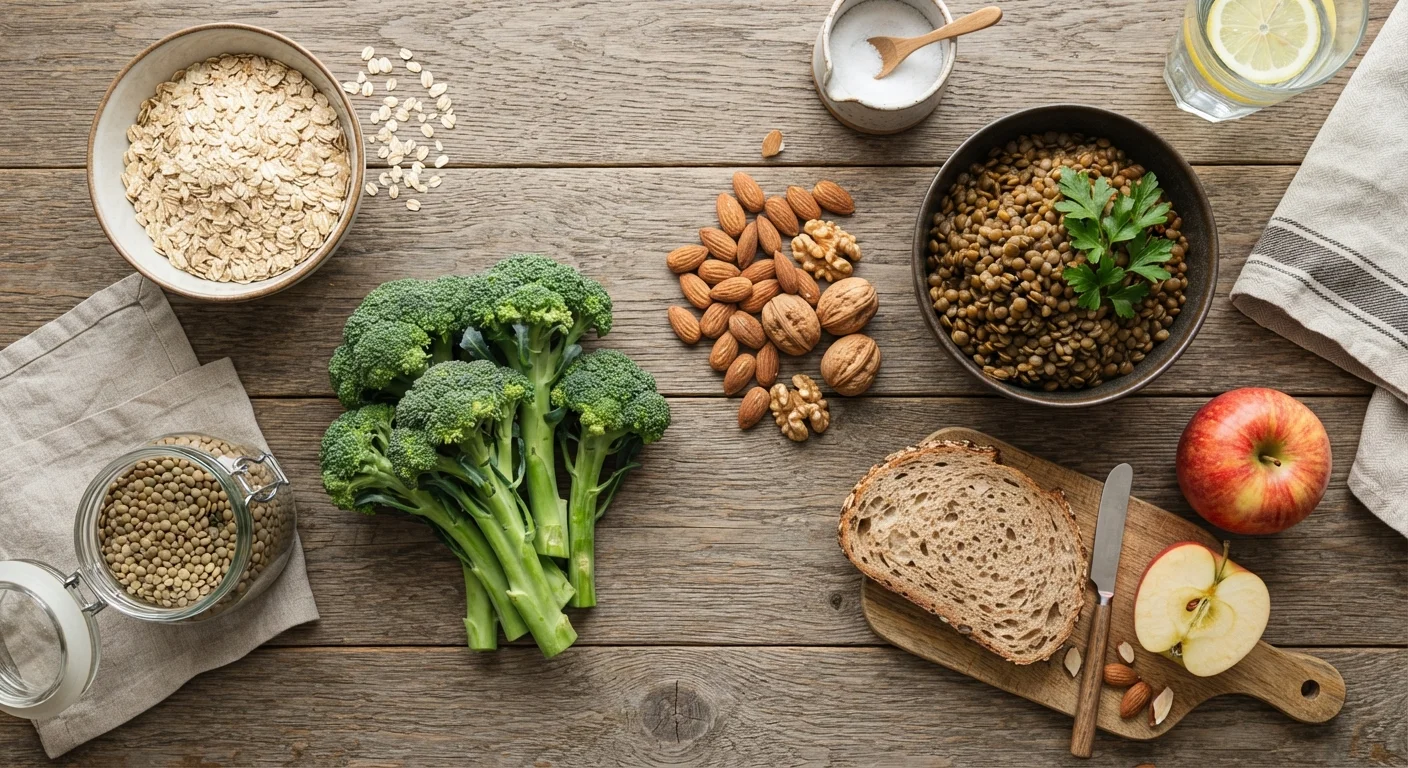
What Dietary Fiber Actually Is
Dietary fiber is a category of carbohydrate found in plant foods that the human digestive system cannot fully break down. Unlike starches and sugars, fiber passes largely intact through the small intestine and into the colon, where it exerts most of its effects. That structural distinction is what makes fiber functionally unique among carbohydrates.
Fiber is broadly divided into two types. Soluble fiber dissolves in water to form a gel-like substance; oats, beans, and apples are well-known sources. Insoluble fiber does not dissolve and adds bulk to stool; whole wheat products, bran, and many vegetables are typical sources. Most plant foods contain both types in varying proportions, so eating a diverse range of plant foods naturally provides both.
A third category - fermentable fiber, sometimes called prebiotic fiber - deserves mention. Certain soluble fibers (such as inulin and fructooligosaccharides) are fermented by gut bacteria, producing short-chain fatty acids that appear to support colon health and immune function. Research in this area is active and evolving, and while the findings are promising, scientists are still working out the precise clinical implications.
Why Most Americans Fall Short
The DGA recommends 25-38 grams of fiber per day for adults, depending on age and sex. National dietary survey data consistently shows that the average American adult consumes only about 15-17 grams per day - well below that target. Public health researchers have called this gap a "fiber gap" and consider it one of the most widespread nutrient shortfalls in the U.S. diet.
~15 g
Average daily fiber intake for U.S. adults
National Health and Nutrition Examination Survey (NHANES) data shows average adult intake falls roughly 10-20 grams below recommended levels.
95%
Americans not meeting fiber recommendations
Research published in the American Journal of Lifestyle Medicine estimated that approximately 95% of U.S. adults fail to meet adequate fiber intake targets.
25-38 g
Recommended daily fiber intake for adults
The Dietary Guidelines for Americans recommend 25 g/day for adult women and 38 g/day for adult men, with slightly lower targets for adults over 50.
The underlying cause is largely structural. The American food supply has shifted heavily toward ultra-processed foods - items that are low in fiber by design. Refined grains, where the bran and germ have been stripped away, dominate bread, pasta, and snack aisles. Convenience foods prioritize palatability and shelf stability, not fiber content. When the majority of daily calories come from these sources, closing the fiber gap becomes genuinely difficult without intentional effort.
Cost and access also play a role, though perhaps less than commonly assumed. Dried legumes, frozen vegetables, and whole oats are among the most affordable foods per serving at any major grocery store. The challenge is often habit and familiarity rather than budget - a distinction worth keeping in mind when building a practical eating pattern. For ideas on cost-effective plant-forward shopping, see plant-based eating on a budget.
What Fiber Does in the Body
Fiber's effects are well-documented across multiple body systems, and the evidence base is more robust than for many popular nutrition claims.
- Digestive regularity: Insoluble fiber adds bulk to stool and speeds transit through the colon, reducing constipation risk. Adequate hydration is essential for this mechanism to work properly.
- Blood sugar management: Soluble fiber slows glucose absorption in the small intestine, blunting post-meal blood sugar spikes. This is relevant for both glycemic control and sustained energy levels throughout the day.
- Cholesterol: Soluble fiber - particularly the beta-glucan found in oats and barley - binds bile acids in the digestive tract and assists their excretion, which prompts the liver to draw on circulating LDL cholesterol to make new bile acids. Multiple clinical reviews support a modest but meaningful LDL-lowering effect from regular intake of these fibers.
- Satiety: High-fiber foods generally slow gastric emptying and increase meal satisfaction, which may support healthy weight management over time - though fiber is one factor among many.
- Gut microbiome: Fermentable fibers feed beneficial bacterial populations in the colon. A diverse, fiber-fed microbiome is associated with favorable health markers, though this field is still maturing.
Don't chase a single "superfood" for fiber - distribute intake across meals. A breakfast with oats, a lunch with beans, and a vegetable-heavy dinner reliably gets most adults to their target without any single meal carrying the full load.
Spreading fiber intake across the day supports more consistent digestive function and reduces the gas and bloating that can occur when a large fiber dose arrives all at once.
When adding legumes causes gas, try incorporating smaller portions consistently rather than avoiding them. The gut microbiome adapts to regular legume consumption over several weeks, typically reducing symptoms with continued intake.
Tolerance to fermentable fibers improves with consistent exposure as gut bacterial populations shift - a well-documented physiological adaptation that most people don't give themselves time to experience.
This article provides general nutrition information and is not a substitute for personalized medical advice. Consult a qualified healthcare provider regarding your specific health needs.
Best Food Sources of Fiber
No supplement is necessary to meet fiber needs - whole foods provide fiber alongside vitamins, minerals, and phytochemicals that isolated fiber supplements cannot replicate. The following categories are the most dependable sources:
| Food | Approximate Fiber (per serving) |
|---|---|
| Cooked lentils (½ cup) | 8 g |
| Black beans, cooked (½ cup) | 7-8 g |
| Oatmeal, cooked (1 cup) | 4 g |
| Avocado (½ medium) | 5 g |
| Raspberries (1 cup) | 8 g |
| Broccoli, cooked (1 cup) | 5 g |
| Whole wheat bread (1 slice) | 2 g |
| Almonds (1 oz) | 3.5 g |
Legumes - beans, lentils, chickpeas - offer the highest fiber density per calorie of any common food group and deserve special attention. Building them into your weekly grocery run is one of the simplest ways to raise overall fiber intake.
For practical strategies on increasing vegetables in your meals without a total diet overhaul, eating more vegetables without overhauling your entire diet offers targeted, realistic approaches.
How to Increase Fiber Without Discomfort
A common reason people abandon higher-fiber eating is digestive discomfort - bloating, gas, and cramping that can accompany a sudden large increase in fiber intake. This happens because gut bacteria need time to adjust to increased fermentable substrates. The discomfort is real but preventable.
Increase Fiber Gradually to Avoid Side Effects
Jumping from a low-fiber diet to a high-fiber one in a single week is a reliable way to cause bloating and discomfort. Aim to increase your daily intake by roughly 3-5 grams per week until you reach your target. Pairing each incremental increase with an extra glass or two of water daily makes the transition noticeably smoother.
Practical steps for a gradual increase:
- Add one new fiber-containing food per week rather than overhauling the entire diet at once.
- Drink water consistently throughout the day. Fiber requires fluid to function properly; without adequate hydration, insoluble fiber can worsen constipation rather than relieve it.
- Swap refined grains for whole grains one meal at a time - whole grain pasta or brown rice at dinner is a low-effort starting point.
- Add half a cup of canned beans to soups, salads, or grain bowls. Rinsing canned beans reduces some fermentable oligosaccharides that contribute to gas.
- Keep fruit accessible. A piece of fruit at breakfast or as a snack contributes 3-5 grams of fiber with minimal preparation.
Sustainable habits matter more than dramatic short-term changes. For a broader look at how behavioral strategies support lasting dietary shifts, habits that make healthy eating stick provides research-backed guidance.
Reading Labels to Track Fiber Intake
The FDA Nutrition Facts panel on packaged foods lists dietary fiber as a line item under total carbohydrates, expressed in grams per serving and as a percentage of the Daily Value (based on 28 g/day). This makes label-reading one of the most practical tools for monitoring fiber consumption without apps or meal logging.
A food providing 5 g or more of fiber per serving is generally considered a high-fiber food; 2.5-4.9 g qualifies as a good source. When comparing two similar products - say, two brands of breakfast cereal - the fiber line is one of the most informative numbers to check. For a more complete walkthrough of what each panel section reveals, the nutrition labels reading guide explains serving sizes, daily values, and ingredient order in practical terms.
Fiber Needs Vary by Age and Life Stage
Recommended fiber intake decreases modestly after age 50, reflecting changes in caloric needs rather than reduced biological importance. Pregnant and breastfeeding individuals, children, and people with certain digestive conditions have specific considerations - a registered dietitian or healthcare provider can offer guidance tailored to those circumstances.
It's also worth distinguishing fiber from broader nutrition marketing language. Terms like "whole grain," "multigrain," or "made with whole wheat" on front-of-package labels don't guarantee meaningful fiber content - the Nutrition Facts panel is the reliable source. For a fuller look at how food marketing claims hold up against the evidence, see common nutrition claims examined.
The content on this site is for informational purposes only and is not a substitute for professional advice. Always consult a qualified professional for guidance specific to your situation.