

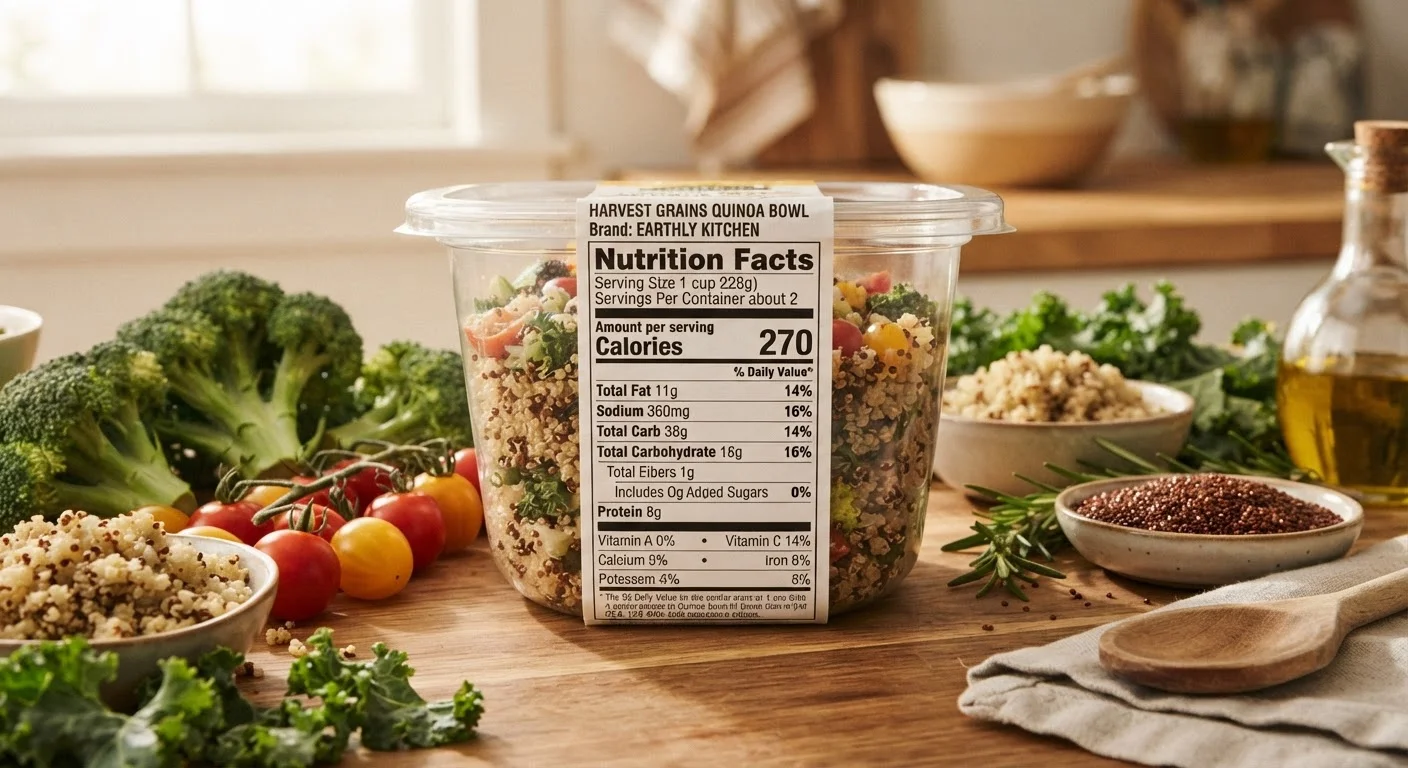
Why the Nutrition Facts Panel Exists
The Nutrition Facts label is a federally regulated panel required on most packaged foods sold in the United States. The FDA oversees its format, which was most recently updated in 2020 to reflect current nutrition science and public health priorities. The goal is straightforward: give consumers a consistent, comparable snapshot of what a food contains.
Reading the label well isn't about obsessing over every number - it's about building context. When you understand what each section is designed to communicate, you can use it as a quick reference rather than a source of confusion. Think of the panel as organized into distinct zones, each answering a different question.
For a broader look at how food marketing language interacts with what labels actually say, see our guide to common nutrition claims.
The Top Zone: Serving Size and Calories
Serving size anchors everything else on the label. All the nutrient numbers - calories, fat, sodium - reflect one serving, not the whole package. The FDA now requires serving sizes to reflect amounts people realistically eat, not aspirational portions from decades past. A can of soup or a bag of chips may contain two or more servings.
Calories appear in large, bold type immediately below serving size. This figure represents the total energy provided per serving from all macronutrients combined. Calories alone don't determine whether a food is nutritious, but they help you understand energy density in context.
Practical tip: Check the servings-per-container number first. If you typically eat the whole container, multiply all values accordingly before drawing conclusions.
70%+
Americans exceed recommended sodium intake
According to CDC dietary surveillance data, the majority of U.S. adults consume more sodium daily than dietary guidelines suggest.
< 10%
Recommended limit for added sugar (% of daily calories)
The 2020-2025 Dietary Guidelines for Americans advise limiting added sugars to less than 10% of total daily caloric intake.
95%
Americans fall short of fiber recommendations
Research published in the American Journal of Lifestyle Medicine found that approximately 95% of U.S. adults do not meet daily fiber intake recommendations.
The Middle Zone: Nutrients to Watch
This section lists specific nutrients split across two orientations - nutrients to limit at the top, and nutrients to get enough of below the bold dividing line.
Limit These
- Total Fat - broken into saturated fat and trans fat. Saturated fat is the figure most relevant to heart health guidance; trans fat should be as close to zero as possible.
- Sodium - one of the most important numbers for many Americans, given average intake well above recommended levels.
- Added Sugars - listed separately from total sugars since 2020. This distinction matters because added sugars carry no nutritional benefit beyond calories. Our explainer on added vs. natural sugar covers this in more detail.
Get Enough Of These
- Dietary Fiber - most Americans fall short of recommended intake. See why fiber matters for context.
- Vitamin D, Calcium, Iron, Potassium - nutrients identified as commonly under-consumed in the U.S. diet.
For a deeper look at vitamins and minerals, our micronutrients reference is a useful companion.
The Bottom Zone: % Daily Value and the Ingredient List
The % Daily Value (%DV) column translates raw grams and milligrams into a percentage of the daily amount recommended for a 2,000-calorie diet. It's a quick relative benchmark: 5% DV or less is generally considered low for a nutrient; 20% DV or more is considered high.
Use %DV to compare similar products or to gauge whether a food is a meaningful source of a nutrient you're trying to increase - or one you're trying to reduce.
The ingredient list, which appears below or beside the Nutrition Facts panel, follows a separate but equally important rule: ingredients are listed in descending order by weight. The first ingredient is present in the largest amount. If a sweetener appears in the first three ingredients, the product is predominantly sweet-tasting by design. Manufacturers sometimes use multiple forms of the same ingredient (e.g., several types of sugar under different names) to distribute them lower in the list - something worth knowing.
Supplement Labels Follow Different Rules
Dietary supplements - including vitamins, protein powders, and herbal products - use a 'Supplement Facts' panel rather than a Nutrition Facts panel, and are regulated differently than food. The FDA does not approve supplements for safety or effectiveness before they reach market. If you're evaluating a supplement, the label format will look similar but the regulatory context is distinct. Always consult a healthcare provider before adding supplements to your routine.
Putting the label to work in your weekly shopping is easier with a structured approach. Our nutrition-conscious grocery checklist offers a practical framework, and what a balanced plate looks like helps translate label reading into actual meals.
This article provides general nutrition education and is not a substitute for personalized dietary advice. Consult a registered dietitian or qualified healthcare professional for guidance specific to your health needs.
The content on this site is for informational purposes only and is not a substitute for professional advice. Always consult a qualified professional for guidance specific to your situation.