

Why Food Marketing Language Matters
Walk through any grocery store and you'll encounter a barrage of health promises: antioxidant-rich, gut-healing, immune-boosting, detoxifying. These phrases are designed to signal health, but they're often chosen for persuasion, not scientific precision. Understanding what they actually mean - and what they legally don't have to mean - is one of the most useful skills a nutrition-conscious consumer can develop.
The U.S. Food and Drug Administration (FDA) regulates specific health claims on food labels, but many common marketing terms fall into a looser category called structure/function claims. These describe how a nutrient might affect a normal body process (e.g., "calcium builds strong bones"), but they don't require pre-market proof of effectiveness. As a result, the bar for appearing on packaging is lower than many consumers assume.
Pairing this article with a solid understanding of label basics is a strong foundation. Our guide to reading nutrition labels walks through exactly what each section of an FDA nutrition facts panel is - and isn't - telling you.
Myth
Certain foods can 'detoxify' or 'cleanse' your body of harmful substances.
Fact
The body's liver and kidneys continuously filter and eliminate waste products. No food or drink accelerates this process in a clinically meaningful way for healthy individuals.
The concept of food-based detoxification lacks a precise scientific definition and is not supported by clinical evidence in healthy people. The liver neutralizes and processes toxins; the kidneys excrete waste through urine; the gut eliminates solid waste. These systems operate around the clock without dietary intervention. While adequate hydration and a diet rich in vegetables support normal organ function, labeling a juice or supplement as a "detox" product misrepresents how the body actually works.
Myth
Eating a 'superfood' every day will significantly improve your health.
Fact
'Superfood' is a marketing term, not a nutritional category. While many nutrient-dense foods offer real benefits, no single food meaningfully offsets an overall poor diet.
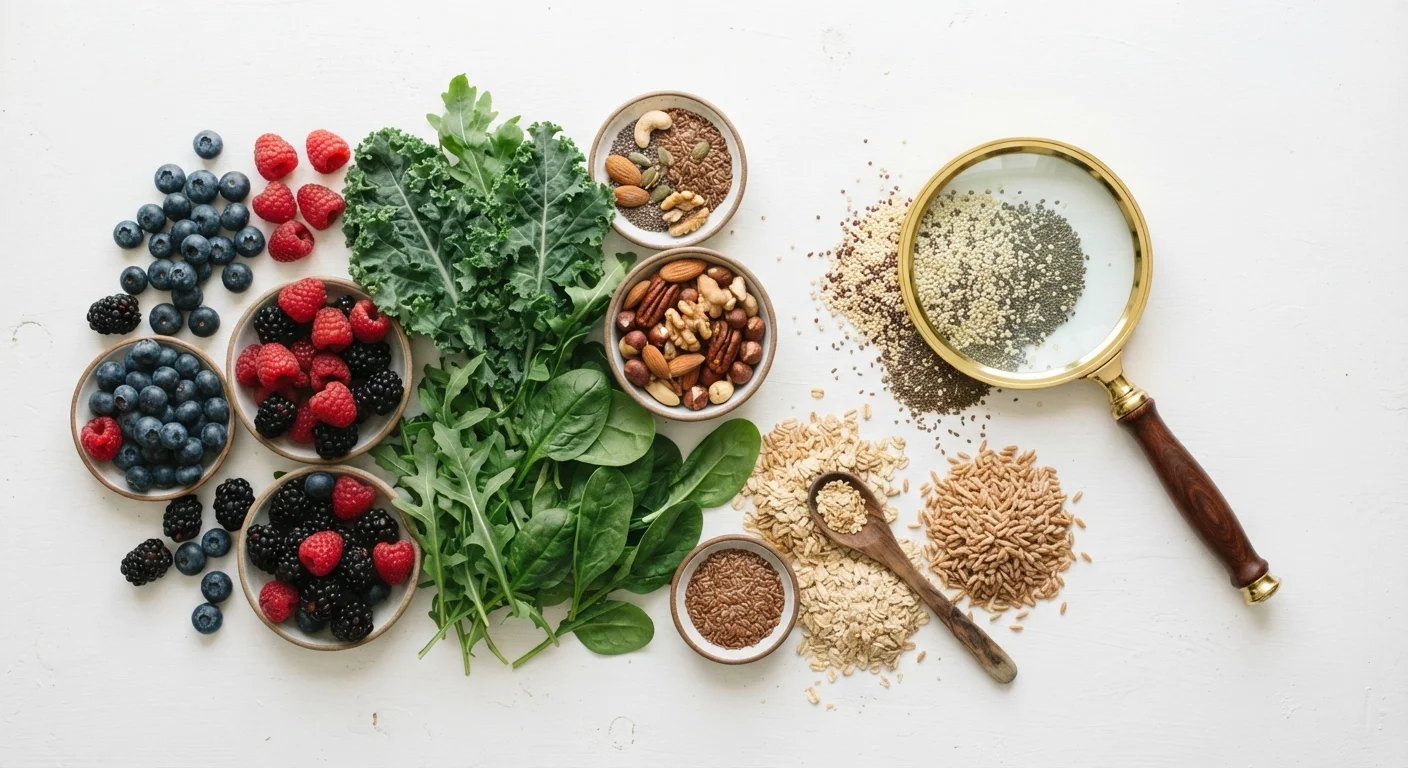
The term "superfood" does not appear in nutritional science literature as a defined category - it originated in marketing. Foods commonly labeled this way (blueberries, kale, acai, chia seeds) do contain valuable nutrients such as antioxidants, vitamins, and fiber. However, the research showing benefit from these foods is often conducted in isolation, at doses not achievable through normal eating, or in animal models. When studied in the context of realistic diets, no single food has been shown to produce dramatic health improvements. The overall dietary pattern remains far more predictive of health outcomes.
Myth
Products labeled 'natural' are healthier and safer than conventional alternatives.
Fact
The FDA has not established a formal regulatory definition for the term 'natural' on food labels. The word reflects marketing positioning, not a verified safety or nutrition standard.
Without a binding FDA definition, food manufacturers have broad latitude in applying the word "natural" to packaging. It does not guarantee the absence of additives, high sodium, added sugars, or calorie-dense ingredients. Some foods marketed as natural contain highly refined components. Consumers are better served by reviewing the actual nutrition facts panel and ingredient list than relying on front-of-package terms like "natural," "wholesome," or "clean."
Myth
Eating food labeled 'immune-boosting' will strengthen your immune system.
Fact
The immune system is a complex, multi-organ network that cannot simply be 'boosted' by a single ingredient. Adequate overall nutrition supports immune function; no food enhances it beyond normal healthy levels.
Immunity involves the coordinated interaction of white blood cells, antibodies, the lymphatic system, and numerous other components. Deficiencies in nutrients like vitamin C, vitamin D, zinc, and others can impair immune function - and correcting a deficiency does restore normal function. But adding more of these nutrients beyond adequate levels in people who are already well-nourished has not been shown to produce superior immune responses. Products claiming to "boost" immunity are generally describing this corrective effect in well-fed individuals, where it does not meaningfully apply.
Myth
Gluten-free products are healthier for everyone, not just people with celiac disease.
Fact
For people without celiac disease or non-celiac gluten sensitivity, there is no established health benefit to avoiding gluten. Many gluten-free packaged products contain more added sugar, fat, or refined starch than their conventional counterparts.
Gluten, a protein found in wheat, barley, and rye, causes a harmful immune response in people with celiac disease and warrants strict avoidance for that group. For the broader population, however, gluten itself is not harmful, and large-scale studies have not demonstrated health advantages from gluten-free diets in non-sensitive individuals. Because gluten contributes texture to baked goods, gluten-free reformulations often compensate with additional fat, sugar, or starches - potentially making them less nutritious on balance.
What the Evidence Actually Supports
Dismantling individual myths is useful, but the bigger picture matters more: decades of nutritional epidemiology consistently show that dietary patterns - not individual superfoods - are what drive long-term health outcomes. The Mediterranean diet, the DASH diet, and similar evidence-backed frameworks all share common traits: abundant vegetables, legumes, whole grains, and healthy fats, with limited ultra-processed foods.
~1 in 133
Americans with celiac disease
According to the National Institutes of Health, approximately 1 in 133 Americans has celiac disease, yet gluten-free diets are followed by a far larger share of the population.
~95%
Adults falling short of fiber targets
Research published in the American Journal of Lifestyle Medicine estimates that roughly 95% of American adults do not meet daily recommended fiber intake levels.
$300B+
Global functional food market size
Market research firms estimate the global functional and 'better-for-you' food market now exceeds $300 billion annually, reflecting the commercial scale of health-positioned food marketing.
No berry, powder, or "ancient grain" can substitute for that overall pattern. If a claim sounds too targeted or dramatic, it usually is. What consistently holds up? Dietary fiber, for one - fiber is a nutrient most Americans fall short on, with well-documented effects on digestive health, blood sugar regulation, and cardiovascular risk. Similarly, adequate intake of key micronutrients through whole foods - rather than through fortified "functional" products - remains the standard guidance from major health organizations. Our overview of vitamins and minerals provides a practical reference for the nutrients that genuinely matter.
Bold Claims Deserve Extra Scrutiny
If a food or supplement claims to cure, prevent, or treat a disease, that is a drug claim under FDA rules - and it requires clinical evidence. Most nutrition marketing avoids that threshold deliberately by using vague language like "supports" or "promotes." When you see dramatic health language on packaging, check whether the claim is backed by evidence from independent, peer-reviewed research rather than the manufacturer's own materials. When in doubt, consult a registered dietitian.
If you're looking to translate this into everyday practice, a nutrition-conscious weekly grocery checklist can help you stock a balanced kitchen without overthinking every purchase. And if adding more vegetables feels daunting, small steps to eat more vegetables shows that meaningful changes don't require a complete dietary overhaul.
This article is for general informational and educational purposes only and is not a substitute for personalized medical or nutritional advice. Consult a qualified healthcare professional or registered dietitian for guidance specific to your health needs.
The content on this site is for informational purposes only and is not a substitute for professional advice. Always consult a qualified professional for guidance specific to your situation.