

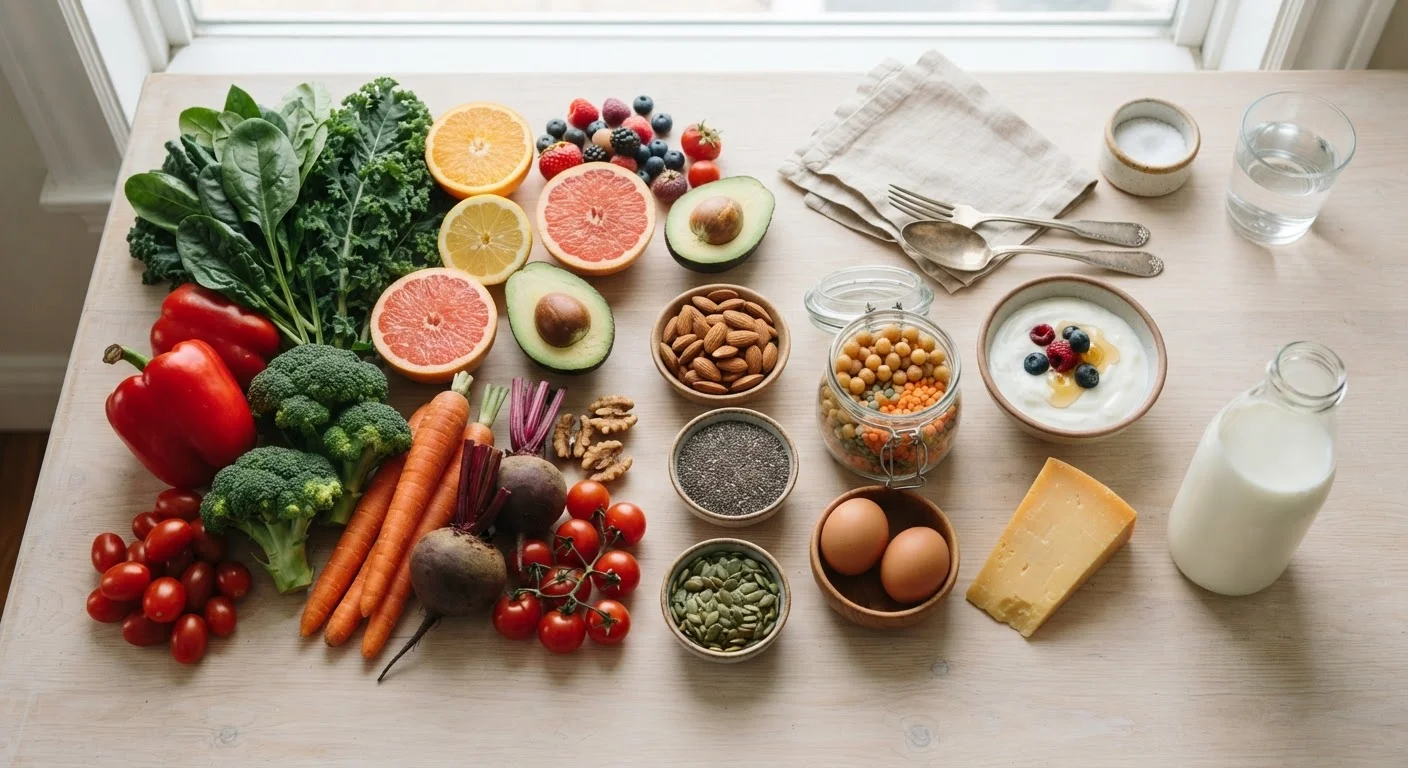
What Are Micronutrients and Why Do They Matter?
Macronutrients - carbohydrates, protein, and fat - tend to dominate nutrition conversations, but micronutrients are equally essential. Unlike macronutrients, which supply energy, vitamins and minerals drive the chemical processes that keep your body running: converting food into fuel, building and repairing tissue, supporting immune defenses, and regulating hundreds of enzymatic reactions.
The prefix "micro" refers to the quantities needed, not their importance. Deficiencies in even a single vitamin or mineral can have meaningful health consequences over time. Conversely, most people don't need to track each one obsessively - a varied diet built around whole foods naturally delivers a broad micronutrient profile. This reference is designed to help you understand what each nutrient does and which everyday foods supply it, so you can make more informed choices at the grocery store and the dinner table.
For a broader look at how macronutrients fit alongside these micronutrients, see our plain-English macronutrient guide.
| Total essential vitamins | 13 (National Institutes of Health, Office of Dietary Supplements) |
| Essential minerals (macro + trace) | ~16 recognized (Generally accepted nutritional science) |
| Most common U.S. deficiency | Vitamin D (National Health and Nutrition Examination Survey (NHANES)) |
| B12 risk group | Strict vegans and vegetarians (Academy of Nutrition and Dietetics) |
| Iron absorption booster | Pair plant iron with vitamin C (NIH Office of Dietary Supplements) |
| Folate importance | Critical in early pregnancy (CDC Folic Acid Recommendations) |
This article is for general informational and educational purposes only and is not a substitute for professional medical or dietary advice. Consult a qualified healthcare provider before making significant changes to your diet or beginning any supplement regimen.
Key Vitamins: Roles and Food Sources
Vitamins are organic compounds classified as either fat-soluble (A, D, E, K - stored in body fat and the liver) or water-soluble (the B vitamins and vitamin C - excreted more readily and needed regularly from food).
Micronutrient
A vitamin or mineral required by the body in relatively small amounts to support normal physiological functions. Despite the small quantities needed, deficiencies can have significant health consequences.
Fat-Soluble Vitamin
Vitamins A, D, E, and K, which dissolve in fat and are stored in the body's fatty tissue and liver. Because they accumulate, excessive intake from supplements can reach problematic levels over time.
Water-Soluble Vitamin
Vitamins C and the eight B vitamins, which dissolve in water and are not stored in large amounts. They need to be replenished regularly through food, and excess amounts are generally excreted in urine.
Trace Mineral
A mineral the body needs in very small quantities, such as iron, zinc, iodine, and selenium. Even though amounts are tiny, these minerals are essential for specific biological processes.
Daily Value (DV)
A reference amount set by the FDA representing how much of a nutrient a typical adult should consume per day, used as the basis for the percentage figures on Nutrition Facts labels.
Antioxidant
A compound that helps neutralize unstable molecules called free radicals, which can damage cells over time. Vitamins C and E, as well as selenium, have well-documented antioxidant functions.
Fat-Soluble Vitamins
- Vitamin A - Supports vision, immune function, and skin integrity. Found in liver, dairy, eggs, and orange-yellow produce such as carrots and sweet potatoes (as beta-carotene).
- Vitamin D - Helps the body absorb calcium and supports bone health and immune regulation. Synthesized by skin in sunlight; dietary sources include fatty fish, fortified milk, and egg yolks.
- Vitamin E - Acts as an antioxidant protecting cells from oxidative damage. Nuts, seeds, sunflower oil, and leafy greens are reliable sources.
- Vitamin K - Essential for blood clotting and bone metabolism. Leafy greens (spinach, kale, collards) are the most concentrated sources.
Water-Soluble Vitamins
- Vitamin C - Supports immune function, collagen synthesis, and acts as an antioxidant. Citrus, bell peppers, broccoli, and strawberries are rich sources.
- B Vitamins (B1, B2, B3, B5, B6, B7, B9, B12) - This family of eight vitamins collectively supports energy metabolism, red blood cell formation, and neurological function. Whole grains, legumes, eggs, dairy, meat, and leafy greens cover most of the group. Vitamin B12 is found almost exclusively in animal products, making it a key consideration for people following plant-based diets.
- Folate (B9) - Particularly important for cell division and DNA synthesis. Found in legumes, fortified grains, and dark leafy greens. Adequate intake is especially critical during pregnancy - those who are pregnant or planning to become pregnant should consult a healthcare provider about appropriate folate intake.
When reviewing packaged foods, the Daily Value percentages on nutrition labels reflect these nutrients. Learning to read those labels can help you spot gaps in your diet quickly.
Essential Minerals: What They Do and Where to Find Them
Minerals are inorganic elements that the body cannot manufacture. They are broadly divided into macrominerals (needed in larger amounts, such as calcium and magnesium) and trace minerals (needed in smaller amounts, such as iron and zinc).
~42%
U.S. adults with vitamin D insufficiency
According to analysis of NHANES data published in Nutrition Research, a substantial share of American adults have blood levels below the threshold associated with bone health.
90%+
Americans fall short on potassium
The Dietary Guidelines for Americans identifies potassium as a nutrient of public health concern due to widespread inadequate intake across the U.S. population.
10 mg/day
Average U.S. dietary fiber gap
Most Americans consume roughly half the recommended daily fiber, which also affects absorption of certain fat-soluble vitamins. See <a href="/health/everyday-nutrition/fiber-the-nutrient-most-americans-arent-getting-enough-of">why fiber intake falls short</a>.
Macrominerals
- Calcium - The primary mineral in bones and teeth; also involved in muscle contraction and nerve signaling. Dairy products, fortified plant milks, canned fish with bones, and leafy greens are good sources.
- Magnesium - Participates in more than 300 enzymatic reactions, including energy production and protein synthesis. Found in nuts, seeds, legumes, whole grains, and dark chocolate.
- Potassium - Helps regulate fluid balance, muscle contractions, and blood pressure. Bananas, potatoes, beans, and leafy greens are among the best dietary sources.
- Sodium - Necessary for fluid balance and nerve transmission, though most Americans consume well above recommended levels through processed foods.
Trace Minerals
- Iron - Carries oxygen in red blood cells. Heme iron (from meat, poultry, fish) is absorbed more efficiently; non-heme iron (from legumes, tofu, fortified cereals) is less so but can be enhanced by pairing with vitamin C-rich foods.
- Zinc - Supports immune function, wound healing, and taste and smell. Oysters, beef, pumpkin seeds, and legumes are notable sources.
- Iodine - Required for thyroid hormone production. Iodized salt, dairy, and seafood are the main sources in the American diet.
- Selenium - Antioxidant functions and thyroid support. Brazil nuts, seafood, and poultry are concentrated sources.
Be cautious about marketing language around minerals in packaged and functional foods. Many nutrient-focused claims on packaging do not hold up to the same scrutiny as their labels suggest.
Building a nutrient-dense cart doesn't have to be complicated. A nutrition-conscious grocery checklist can help you stock a well-rounded kitchen week after week.
The content on this site is for informational purposes only and is not a substitute for professional advice. Always consult a qualified professional for guidance specific to your situation.