

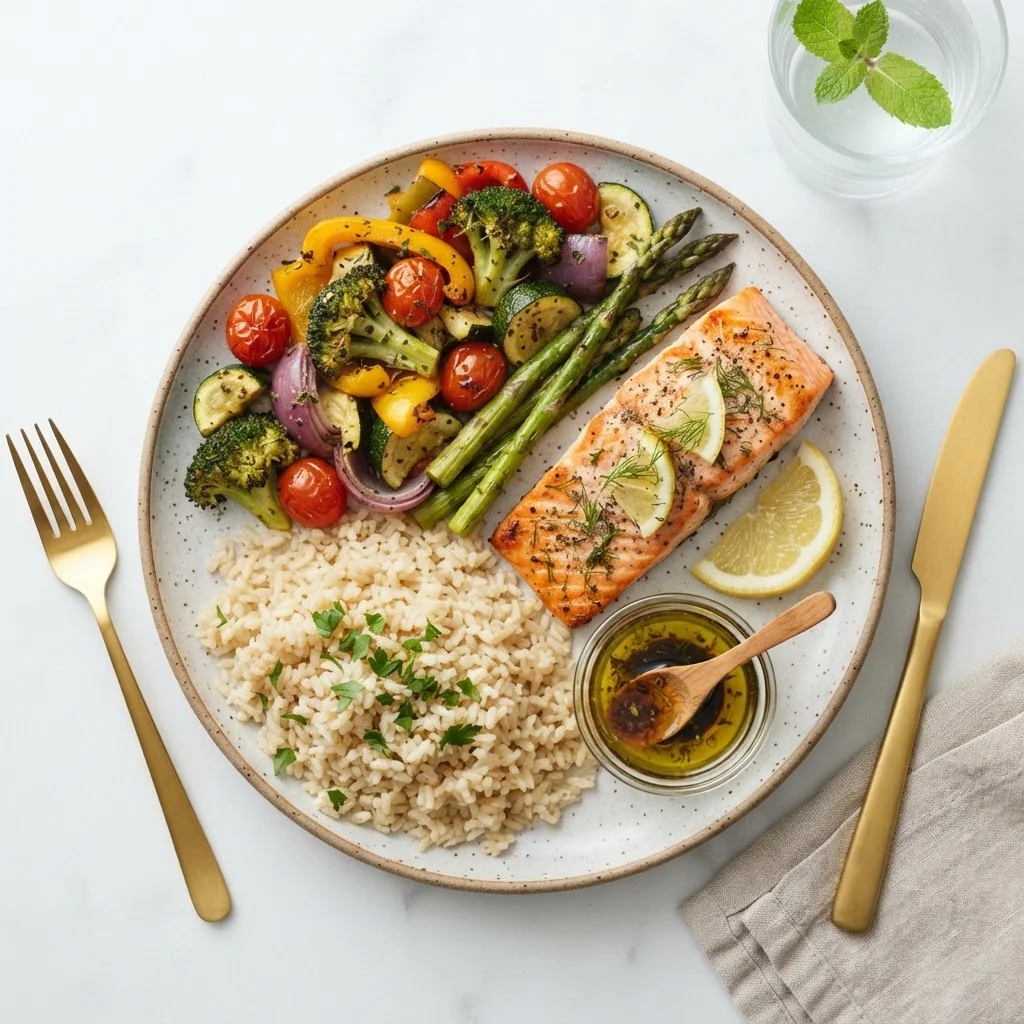
Beyond the Food Pyramid
Most Americans grew up with the food pyramid - a government-issued graphic that shaped school lunches and dinner table habits for decades. It has since been replaced, and for good reason: research showed that broad categories like "fats" or "grains" didn't offer enough practical guidance for building a healthy meal. Today, nutrition experts generally favor a plate-based visual model that translates dietary science into something you can literally see in front of you at mealtime.
The core idea is proportion. Rather than eliminating food groups or following a complicated formula, a balanced plate simply asks that different types of foods show up in roughly the right amounts relative to each other. This article breaks down what those proportions look like and why they matter.
90%
Americans not meeting vegetable intake recommendations
According to the CDC's State of Childhood Obesity and adult dietary data, roughly 9 in 10 Americans fall short of recommended daily vegetable intake.
~50%
Of plate should be vegetables and fruit
Both the USDA MyPlate and the Harvard Healthy Eating Plate recommend that vegetables and fruit fill approximately half of every meal.
3x
More fiber in whole vs. refined grains
Whole grains retain the bran and germ, providing significantly more fiber, B vitamins, and minerals than their refined counterparts, per USDA nutrient data.
The Four Core Sections of a Balanced Plate
Think of your plate divided into four zones, each playing a distinct nutritional role:
- Vegetables and fruit (about half the plate): Non-starchy vegetables should dominate - think leafy greens, broccoli, bell peppers, cucumbers, and carrots. Fruit can fill a smaller portion of this half. These foods deliver fiber, vitamins, minerals, and antioxidants with relatively few calories.
- Whole grains or starchy vegetables (about one quarter): Brown rice, whole wheat pasta, oats, quinoa, or starchy vegetables like sweet potatoes and corn provide complex carbohydrates and sustained energy. Choosing whole over refined grains preserves more fiber and nutrients.
- Lean protein (about one quarter): Fish, poultry, eggs, beans, lentils, and tofu are all solid options. Protein supports muscle maintenance, satiety, and dozens of physiological processes. Varying your protein sources across the week broadens your nutrient intake.
- Healthy fats (a supporting role): Olive oil for cooking, a few slices of avocado, or a small handful of nuts rounds out the meal with unsaturated fats that support cardiovascular health and help absorb fat-soluble vitamins like A, D, E, and K.
Use Color as a Quick Check
A visually colorful plate is often a nutritionally diverse one. If your meal is predominantly beige or white - think pasta, bread, and cheese - it's likely heavy on refined carbohydrates and light on vegetables and phytonutrients. Aiming for two or three distinct colors from vegetables and fruit at each meal is a simple, practical proxy for variety.
Where Dairy and Beverages Fit In
Both the USDA's MyPlate and Harvard's Healthy Eating Plate include a beverage and dairy component alongside the plate itself. Water is the best default beverage at every meal - it contributes no added sugars and supports hydration across the day. Low-fat milk, plain yogurt, or calcium-fortified plant-based alternatives like soy or oat milk can complement your meal and provide calcium and vitamin D. These aren't required at every sitting, but including them regularly helps meet daily calcium needs.
For more on understanding what's actually in packaged versions of these foods, see our guide to reading nutrition labels.
Dairy Isn't Required for Everyone
People who are lactose intolerant, vegan, or simply prefer to avoid dairy can meet calcium needs through fortified plant milks, canned fish with bones, leafy greens like kale, and fortified foods. If you have specific concerns about calcium or vitamin D intake, a registered dietitian or your primary care provider can help assess your individual needs.
Putting It Into Practice
The plate model works across cuisines and meal occasions. A grain bowl with roasted vegetables, chickpeas, and a tahini drizzle fits the framework just as well as a grilled salmon dinner with brown rice and steamed broccoli. So does a burrito bowl or a stir-fry - when the proportions are roughly right, the specific foods can reflect your preferences, culture, and what's in season.
One practical habit: before sitting down, take a quick visual scan of your plate. If vegetables are crowded out by starch or missing entirely, it's an easy adjustment to make. For readers ready to apply this framework beyond a single meal, our beginner's guide to meal planning offers a structured starting point. You can also use our nutrition-conscious grocery checklist to stock a kitchen that makes balanced plates easier to build throughout the week.
This article is for general informational and educational purposes only and is not a substitute for personalized medical or nutritional advice. Consult a registered dietitian or qualified healthcare professional for guidance tailored to your individual health needs.
Frequently Asked Questions
Vegetables and fruits should fill roughly half of your plate at each meal, with non-starchy vegetables - like leafy greens, broccoli, or peppers - taking up the larger share. This proportion helps maximize fiber and micronutrient intake without overloading on calories. Aim for variety in color and type across meals throughout the day.
Not exactly. Age, activity level, health status, and individual metabolic needs all influence what proportions work best for you. The plate model is a general framework, not a one-size-fits-all prescription. Consult a registered dietitian for personalized guidance, especially if you have a chronic condition or specific dietary goal.
Yes - whole-grain carbohydrates are a recommended component of a balanced plate, making up approximately one quarter of your meal. Sources like brown rice, whole wheat bread, oats, and quinoa provide fiber, B vitamins, and sustained energy. The key distinction is choosing minimally processed whole grains over refined ones.
Healthy unsaturated fats - found in olive oil, avocado, nuts, and fatty fish - support heart health and help the body absorb fat-soluble vitamins. They are typically used in cooking or added as a small topping rather than making up a large visible section of the plate. A moderate amount at each meal is consistent with evidence-based dietary guidelines.
Absolutely. The plate model adapts well to plant-based diets by swapping animal proteins for legumes, tofu, tempeh, edamame, or nuts. These foods supply protein, iron, and other key nutrients. It may be worth consulting a healthcare provider about nutrients like vitamin B12, zinc, and omega-3s that can require extra attention on fully plant-based diets.
No. Nutrition science generally emphasizes patterns over individual meals. If one meal is lighter on vegetables, the next meal is an opportunity to correct that. The plate model is a practical target to aim for most of the time, not a rigid rule that applies to every bite.
The content on this site is for informational purposes only and is not a substitute for professional advice. Always consult a qualified professional for guidance specific to your situation.