

Start here
What Meal Planning Actually Means
Next
How to Build Your First Weekly Plan
Build your foundation
Key Concepts Every Beginner Should Know
Avoid early pitfalls
Common First-Timer Mistakes to Avoid
Make it stick
Sustaining the Habit Beyond Week One
What Meal Planning Actually Means
Meal planning is simply the practice of deciding in advance what you'll eat over a set period - typically a week. It does not require cooking everything on Sunday, following a specific diet, or buying specialized containers. At its most basic, it means looking at your week, choosing a handful of meals, and shopping for what you need.
The payoff is real: reducing the daily mental load of "what's for dinner," cutting food waste, and making it easier to eat balanced meals without relying on last-minute convenience choices. Research consistently links home-cooked eating patterns with more varied nutrient intake, though individual results depend on many factors.
Meal planning pairs naturally with other healthy-living habits. If you're also thinking about your fitness baseline, our realistic fitness foundation guide covers how to build movement into your routine alongside better eating.
This article is for general informational and educational purposes only and is not medical or dietary advice. Consult a qualified healthcare professional or registered dietitian for guidance specific to your health needs.
How to Build Your First Weekly Plan
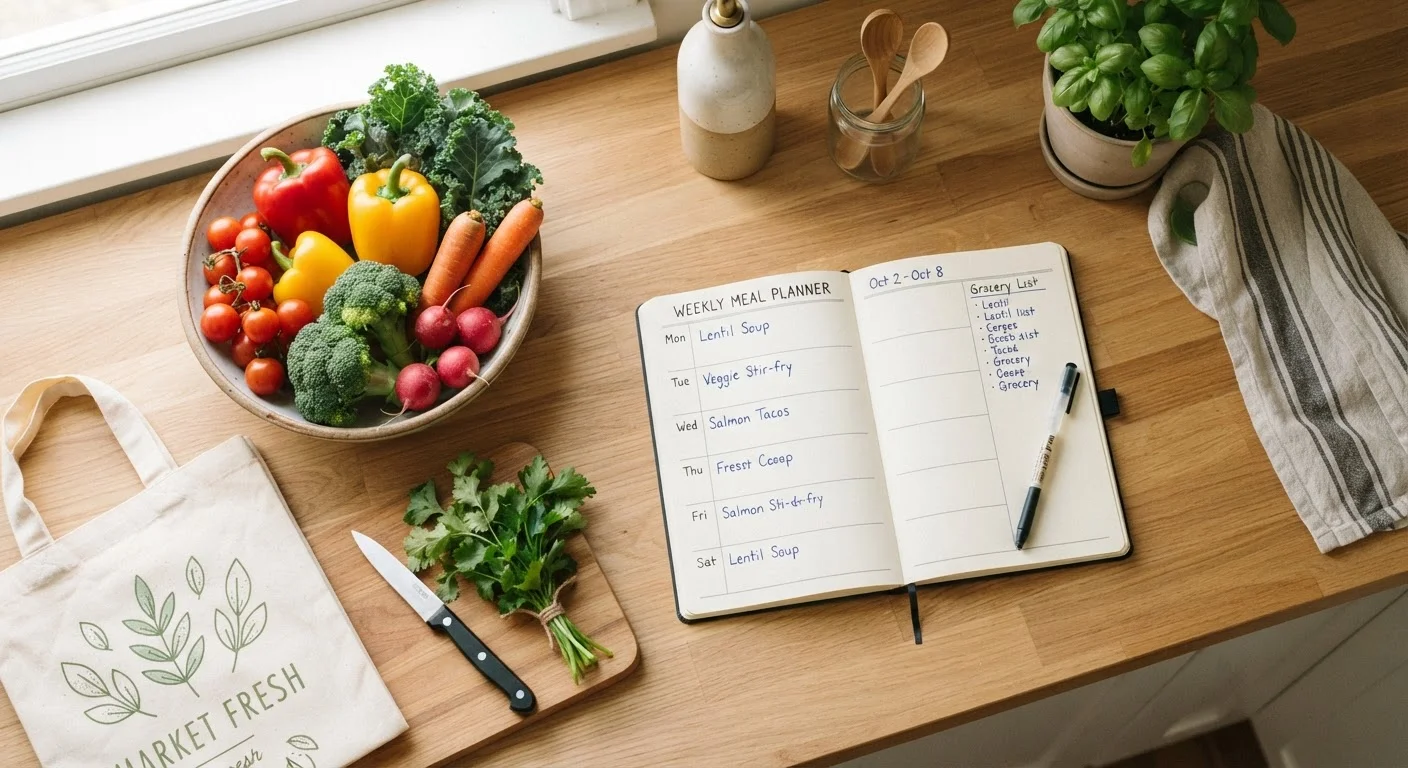
Start small. Choose three to four dinners for the coming week - not every meal. Pick meals you already know how to make and genuinely enjoy eating. Novelty adds friction; familiarity builds the habit first.
- Audit your week: Note which evenings you have more or less time. Plan quick meals (stir-fries, sheet-pan dishes) for busy nights and save more involved recipes for slower evenings.
- Check your pantry: Build meals around what you already have before writing your grocery list. This reduces waste and cost.
- Write a focused grocery list: Organize it by store section - produce, proteins, dairy, pantry - to make shopping faster and avoid impulse buys.
- Build in one flex night: Designate one evening as "leftovers, takeout, or fend for yourself." This cushion prevents the whole plan from derailing when life interrupts.
Shop With a Weekly Budget in Mind
Before writing your grocery list, set a rough spending target for the week. Knowing your food budget in advance helps you choose recipes that fit both your nutritional goals and your wallet. Building this into your planning routine from the start prevents grocery costs from creeping up unnoticed.
If grocery spending is also on your mind, the principles in our personal budgeting guide translate well to food spending - knowing your weekly food budget before you shop makes your grocery list far more effective.
Key Concepts Every Beginner Should Know
Meal planning
Deciding in advance what you'll eat over a set period, usually a week, to reduce last-minute decisions and support more balanced eating habits.
Batch cooking
Cooking one or two versatile staple ingredients - like grains or proteins - in larger quantities so they can be mixed and matched into different meals throughout the week.
Meal prep
The broader practice of preparing full meals or components ahead of time, which may or may not include batch cooking; often confused with meal planning but refers to the physical preparation step.
Pantry audit
A quick check of what food you already have at home before writing a grocery list, helping reduce waste and avoid buying duplicates.
Flex night
A deliberately unscheduled evening in your meal plan reserved for leftovers, takeout, or a simple no-cook option, acting as a buffer when plans change.
Anchor recipes
A small set of reliable, familiar meals you return to regularly because they are simple, well-liked, and easy to shop for - the backbone of a practical weekly rotation.
Understanding a few core ideas makes meal planning far less intimidating and helps you adapt when real life doesn't match your plan.
Batch cooking and full meal prep are not the same thing. Batch cooking means preparing one or two staples - a pot of grains, roasted vegetables, cooked chicken - that can be assembled into different meals across the week. This is far more flexible than cooking complete dishes in advance.
Balanced eating, in general public health guidance, emphasizes variety: vegetables, fruits, whole grains, lean proteins, and healthy fats across the week - not necessarily at every single meal. Rigidity often leads to abandonment; variety across days is a more realistic target.
Common First-Timer Mistakes to Avoid
Don't Over-Plan Your First Week
Mapping out every meal for seven days is the most common reason beginners abandon meal planning after week one. Start with three to four dinners only - that's enough to feel the benefit without overwhelming yourself. You can expand the scope gradually as the habit becomes automatic.
The most frequent reason new meal planners quit is over-planning - mapping out every breakfast, lunch, dinner, and snack from day one. This creates a system too rigid to survive a busy Tuesday. Scale back: three to four dinners planned well beats seven dinners planned poorly.
Other common missteps include:
- Choosing unfamiliar recipes: New techniques during a new habit adds two layers of learning at once. Save ambitious cooking for weekends.
- Skipping the pantry check: Shopping without knowing what you have leads to duplicates and waste.
- Treating the plan as a contract: Swapping Wednesday's meal to Friday is a success, not a failure. Flexibility is built into effective planning.
- Ignoring portion reality: A recipe that serves four doesn't help a solo household without a plan for the leftovers. Account for how you'll use everything you cook.
Just as checking your readiness before a new fitness routine prevents early burnout, taking stock of your current cooking habits before redesigning them entirely makes your meal plan far more durable.
Sustaining the Habit Beyond Week One
The weekly review is the engine of sustainable meal planning. Set aside ten to fifteen minutes - Sunday works for many people, but any consistent day will do - to assess the previous week and draft the next one. Ask: What worked? What didn't get cooked? What ingredients are still in the fridge?
Rotate a small set of reliable meals rather than choosing something new every single week. Keeping eight to twelve "anchor recipes" you trust means planning takes minutes, not an hour of browsing.
Over time, you'll naturally build a personalized system: a preferred planning day, a go-to grocery list structure, and a sense of which meals are genuinely weeknight-friendly for your household. That system - not any particular recipe or format - is what makes meal planning a durable habit rather than a January resolution.
When to Involve a Healthcare Professional
General meal planning is appropriate for most healthy adults without specialized guidance. However, if you have a chronic condition such as diabetes, kidney disease, or a diagnosed eating disorder, or if you have significant food allergies or intolerances, consult a registered dietitian before overhauling your eating patterns. Personalized guidance from a credentialed professional makes a meaningful difference in outcomes for those with specific health considerations.
If you have a specific medical condition, food allergy, or dietary requirement, consult a registered dietitian before making significant changes to your eating patterns. A dietitian can help you build a plan that supports your health goals safely and sustainably.
Frequently Asked Questions
Begin by planning just three to four dinners per week rather than every meal. This reduces overwhelm and lets you build the habit gradually. Once that feels manageable, you can expand to lunches or breakfasts.
No - meal prep and meal planning are related but different. Planning means deciding what you'll eat; prepping means cooking in advance. You can plan successfully without any batch cooking, though prepping a few staples can save time during the week.
Build at least one flexible or no-cook night into your plan each week. Swapping a meal to a different night is completely fine - the goal of a plan is to reduce last-minute decisions, not to lock you into a rigid schedule.
Not at all. Meal planning supports many goals: saving money on groceries, reducing food waste, eating more balanced meals, managing food allergies, or simply reducing daily decision fatigue. It's a practical tool, not a diet program.
Treat your plan as a guide, not a contract. Keep a few pantry staples - canned beans, whole grains, frozen vegetables - available so you can improvise a quick meal without abandoning the habit entirely.
For most healthy adults, general meal planning does not require professional guidance. However, if you have a chronic health condition, food allergies, or specific medical dietary needs, speaking with a registered dietitian before making significant changes to your eating patterns is strongly recommended.
The content on this site is for informational purposes only and is not a substitute for professional advice. Always consult a qualified professional for guidance specific to your situation.