

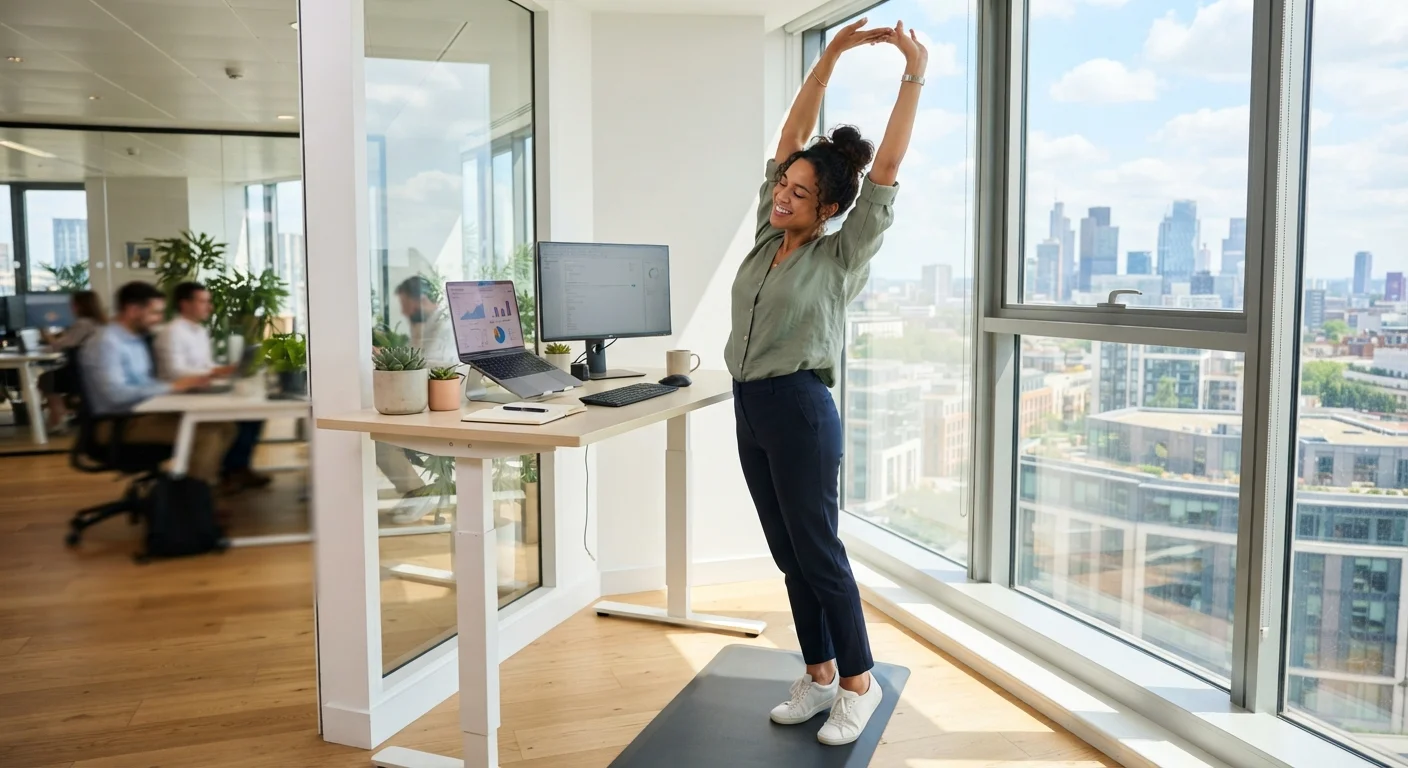
Why Sitting Too Long Is a Distinct Health Concern
Most Americans who work desk jobs understand that regular exercise is important - but research consistently suggests that even people who meet weekly physical activity guidelines can face health risks if they spend the bulk of their day seated. This phenomenon is sometimes described as the "active couch potato" problem: an hour at the gym does not fully cancel out eight or nine hours of near-continuous sitting.
Studies published in journals including the British Journal of Sports Medicine and Annals of Internal Medicine have linked prolonged sitting with elevated risks for cardiovascular disease, type 2 diabetes, and all-cause mortality. Researchers believe that long uninterrupted bouts of inactivity affect how the body regulates blood sugar and fat metabolism in ways distinct from a simple lack of exercise.
The practical implication: reducing the length of sitting stretches matters, not just adding exercise on top of an otherwise sedentary day. If you're curious about how brief movement bouts fit into a broader fitness picture, see what researchers have found about exercise snacking.
Frequency Matters More Than Duration
You don't need long movement breaks to counter the effects of sitting. Several studies suggest that frequent short interruptions - as brief as two to three minutes of light walking - are more effective at improving metabolic markers than one longer break taken once. Prioritize regularity over length when starting out.
What You'll Need Before You Start
No special gear is required to begin moving more at work. The main ingredients are awareness, a few environmental nudges, and a willingness to start small. Review what's useful below before working through the steps.
What you will need
Interval or break timer (phone app or desktop tool)
Reminds you to stand or move at regular intervals throughout the workday.
Standing desk or desk riser
Allows you to alternate between sitting and standing positions during the day.
Resistance band
Enables light strength movements (such as seated rows or standing stretches) at your workstation without a gym.
Supportive, comfortable footwear
Reduces discomfort during standing periods or walking breaks, encouraging longer duration.
Step-by-Step Strategies to Move More at Work
The following steps are designed to layer on top of each other progressively. You don't need to adopt every one immediately - pick one or two to start, build the habit, then add more. For a deeper look at the behavioral science behind making these habits last, explore how consistency supports long-term fitness routines.
Set a movement reminder every 45-60 minutes
Use your phone, a smartwatch, or a free browser extension to prompt you to stand up at least once per hour. Research suggests that breaking up sitting time every 30 to 60 minutes - even briefly - is associated with improved blood sugar and cardiovascular markers compared with uninterrupted sitting. A recurring alarm is the simplest reliable trigger to build this habit.
Stand or walk for at least two minutes per break
When your reminder fires, stand up and move - even a short walk to the kitchen, a few shoulder rolls, or a walk around your office floor counts. The goal is to interrupt the sitting posture and engage your muscles. You don't need a structured workout; light activity that gets you upright and moving is sufficient for breaking sedentary time.
Incorporate a sit-to-stand pattern if your setup allows
If you have access to a standing desk or desk riser, aim to alternate: roughly 20 to 30 minutes standing for every 60 minutes seated is a commonly cited starting point, though any increase from your current standing time is beneficial. Standing all day is not the goal - alternating positions reduces fatigue and avoids the discomfort that often makes people abandon standing desks.
Add walking to existing daily routines
Look for opportunities already built into your day: take phone or video calls on mute while pacing, walk during a portion of your lunch break, or park farther from your building's entrance. These are not additional time commitments - they layer movement onto time you're already spending. Cumulative steps across the day add up faster than most people expect.
Do light desk-based mobility work during natural pauses
Use moments when you're waiting - for a file to load, for a meeting to start, for a print job to finish - to do simple mobility exercises: seated spinal rotations, calf raises, shoulder shrugs, or gentle neck stretches. These require no equipment, take under 60 seconds, and help offset the postural strain of prolonged desk posture.
Don't Rely on Exercise Alone
A morning run or evening gym session is genuinely valuable - but evidence suggests it does not fully offset the metabolic effects of sitting for eight or more continuous hours. Think of reducing sitting time and exercising regularly as two separate, complementary goals rather than interchangeable ones.
Making the Changes Stick
Research on habit formation consistently shows that attaching a new behavior to an existing trigger - called "habit stacking" - improves follow-through significantly more than relying on motivation alone. Link movement breaks to things you already do: standing up every time you take a phone call, walking to a colleague's desk rather than sending a message, or doing a brief stretch before opening your lunch container.
Environmental design also plays a major role. Placing a resistance band on your desk, setting a visible timer, or positioning your printer across the room shifts the default toward movement without requiring active decision-making each time. Small friction reductions for healthy choices and small friction increases for sedentary ones are powerful levers.
If your work involves sitting for long hours and you're over 50, the strategies here apply equally - though individual needs may differ. Moving more after 50 outlines what to keep in mind as activity needs evolve with age. Pairing movement habits with sound nutrition can further support overall well-being - research-backed eating habits offer a natural complement to the strategies here.
This article is for general informational and educational purposes only and is not a substitute for professional medical advice. If you have a health condition that affects your ability to move or exercise, consult a qualified healthcare provider before making significant changes to your activity level.
The content on this site is for informational purposes only and is not a substitute for professional advice. Always consult a qualified professional for guidance specific to your situation.