

Where the Idea Comes From
For decades, public health guidelines emphasized sustained bouts of moderate-intensity activity - the familiar 30 minutes a day, five days a week benchmark. But as researchers began examining how activity is actually distributed throughout the day, an important question emerged: does it matter whether that movement happens all at once, or can it be accumulated in fragments?
The concept of exercise snacking grew out of this line of inquiry. Early studies, many conducted in Canada and New Zealand, looked at whether brief, repeated bouts of stair climbing or brisk walking could produce detectable physiological benefits. The findings were encouraging enough to spark a growing body of follow-up research examining everything from cardiovascular fitness to glycemic control.
It's worth noting that exercise snacking is related to, but distinct from, the broader concept of NEAT. Learn more about NEAT - the energy your body expends through all movement outside formal exercise - to understand where exercise snacking fits in the larger picture of daily activity.
What the Research Actually Shows
Several well-designed studies have found that multiple short activity bouts can produce health benefits comparable to a single continuous session of equivalent total duration. A frequently cited area is cardiorespiratory fitness: research published in journals including Applied Physiology, Nutrition, and Metabolism has shown that repeated one-minute stair-climbing intervals, performed three times daily over several weeks, improved aerobic capacity in previously sedentary adults.
Blood sugar regulation is another promising area. Short walks or light exercise after meals appear to blunt post-meal glucose spikes - a finding relevant for the millions of Americans managing or at risk for type 2 diabetes. Some studies suggest even a 10-minute walk following a meal can meaningfully reduce glycemic response compared to remaining seated.
1-3 min
Duration of effective exercise snacking bouts in key studies
Research published in Applied Physiology, Nutrition, and Metabolism found aerobic benefits from stair-climbing bouts as short as one minute, repeated three times daily.
~5%
Improvement in cardiorespiratory fitness in sedentary adults
Multiple short-bout exercise protocols produced measurable VO2 max gains in previously inactive participants over six-week study periods.
10 min
Post-meal walk duration linked to reduced blood glucose
Studies suggest a 10-minute walk after eating can meaningfully blunt post-meal blood sugar spikes compared to seated rest.
Muscle strength and endurance data are more limited but trending in a similar direction - particularly for older adults, for whom even brief resistance-based movement snacks may help slow age-related strength decline. Researchers caution that the evidence base is still developing, and most studies to date involve relatively small samples and short durations.
If you're also curious about how structured formats like walking and running compare on health outcomes, our walking vs. running science overview provides a useful parallel look at the evidence.
Practical Ways to Build Exercise Snacking Into Your Day
The appeal of exercise snacking is precisely that it doesn't require a gym membership, workout clothes, or a dedicated time slot. The friction is low, which matters: behavior research consistently shows that reducing barriers is one of the most reliable ways to build sustainable habits.
Make the Snack Vigorous Enough to Count
The benefit of exercise snacking appears to depend on intensity, not just movement. Aim to elevate your heart rate noticeably - you should be breathing harder than normal but still able to speak in short sentences. A casual stroll around the office is better than nothing, but a brisk walk or stair climb at pace is more likely to produce the physiological responses seen in research.
Common approaches include:
- Stair climbing: Three to five flights of stairs, taken at a brisk pace, repeated two or three times daily.
- Post-meal walks: A 5- to 10-minute walk after breakfast, lunch, or dinner.
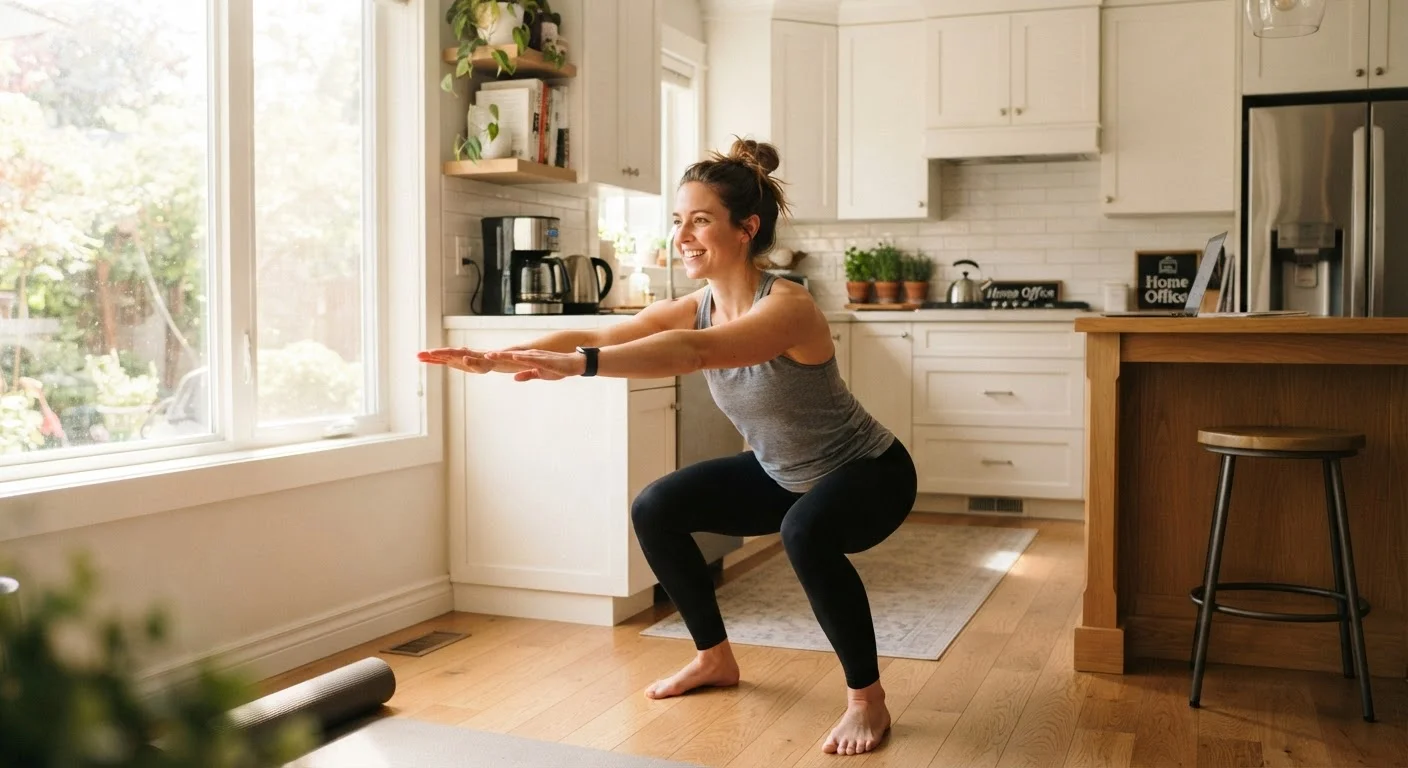
- Bodyweight circuits: A quick set of squats, lunges, or push-ups during a work break.
- Desk-side movement: Standing, stretching, or marching in place during phone calls or video meetings.
For those in office environments, the challenge of prolonged sitting is real and worth addressing directly. Our guide on countering too much sitting at work offers additional strategies tailored to workday constraints.
Honest Limitations and What Exercise Snacking Can't Do
Exercise snacking is a promising and accessible framework, but it isn't a complete fitness solution for everyone. If your goals include significant gains in muscle mass, sport-specific conditioning, or training for endurance events, consolidated workouts with progressive overload remain the gold standard.
There's also a risk of misinterpreting the research. Most studies on exercise snacking measure specific markers - VO2 max, blood glucose, blood pressure - rather than comprehensive long-term health outcomes. The evidence supports exercise snacking as a meaningful health tool, not as a proven substitute for all structured physical activity.
It's also worth being attentive to how your body responds. If you're ramping up activity after a long sedentary stretch, starting gradually and listening to your body matters. For context on the opposite concern, our piece on signs your body needs rest is a useful counterpart to this discussion.
This article is for general informational purposes only and does not constitute medical advice. Consult a qualified healthcare professional before making changes to your exercise routine, especially if you have an existing health condition.
Frequently Asked Questions
Most research on exercise snacking uses bouts lasting one to ten minutes. Even a single minute of vigorous stair climbing repeated a few times daily has shown measurable cardiovascular benefits in some studies. The key is that the effort level is meaningful - a leisurely stroll likely won't produce the same effect as a brisk, purposeful burst of movement.
For general health markers like blood sugar regulation and cardiovascular fitness, accumulated short bouts may be roughly comparable to a single continuous session of similar total duration. However, for specific goals like building significant muscle strength or training for endurance events, structured longer workouts are generally still recommended. Always consult a qualified professional for personalized fitness guidance.
Exercise snacking is often considered especially accessible for people who are just starting to build an active lifestyle, since the low time commitment reduces one of the biggest barriers to getting started. That said, anyone with an existing health condition or physical limitation should check with their healthcare provider before beginning a new exercise habit.
Stair climbing, brisk walking, bodyweight squats, jumping jacks, and brief cycling intervals are all commonly used in exercise snacking research. The common thread is that the activity is deliberate, somewhat vigorous, and repeated multiple times throughout the day - not just incidental movement like walking to the printer.
Some research suggests that a short bout of movement after meals may be particularly useful for managing blood glucose levels. However, the evidence for optimal timing is still developing, and moving at whatever time fits your schedule is far more important than hitting a specific window.
The content on this site is for informational purposes only and is not a substitute for professional advice. Always consult a qualified professional for guidance specific to your situation.