

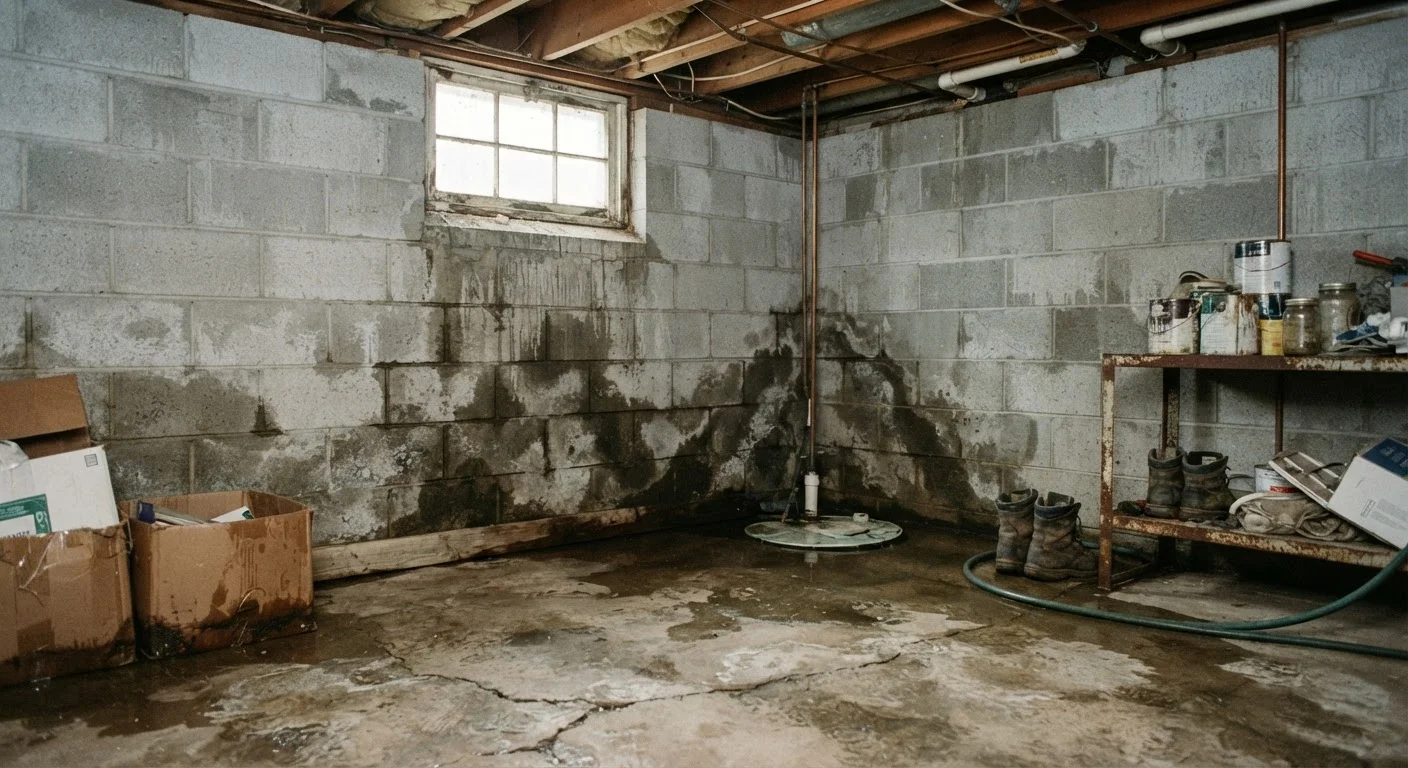
The Three Sources of Basement Moisture
Before choosing a solution, you need to know what you're dealing with. Basement moisture almost always falls into one of three categories:
- Condensation - Warm, humid air hits cooler basement surfaces (pipes, walls, concrete floor) and forms water droplets, just like a cold drink sweating on a summer day.
- Seepage - Water moves slowly through porous concrete, masonry block, or cracks in the foundation wall, often leaving damp patches or white mineral stains.
- Bulk water intrusion - Actual water flows in through wall cracks, the wall-floor joint, or floor cracks - typically during or shortly after heavy rain or snowmelt.
Each source has a distinct pattern. Condensation tends to be seasonal and tied to warm weather or poor ventilation. Seepage leaves persistent staining and efflorescence. Flooding events usually correlate directly with rainfall. Misidentifying the source is the most common - and expensive - mistake homeowners make.
Efflorescence Is a Clue, Not the Problem
Those white, chalky deposits you see on basement walls are called efflorescence - salts left behind as water moves through masonry and evaporates. Efflorescence itself won't harm your structure, but it's a reliable indicator that water is migrating through the wall. Painting or sealing over it without addressing the moisture source is a temporary cosmetic fix at best.
Diagnosing Your Problem: The Plastic Sheet Test
A simple home test can rule out condensation before you spend money on drainage systems. Cut a piece of heavy plastic sheeting - roughly 12 by 12 inches - and tape it firmly to a damp section of wall, sealing all four edges with waterproof tape. Leave it in place for 24 to 48 hours, then check both surfaces.
- Moisture on the room-facing side of the plastic: condensation is the likely culprit.
- Moisture on the wall-facing side: water is migrating through the masonry from outside.
Repeat the test in several locations, especially near corners and along the base of walls. Also check the wall-floor joint, which is a common entry point for groundwater. Document what you find - photos with timestamps help if you later consult a contractor.
Run the Test After a Rain Event
For the most informative results, perform the plastic sheet test during or shortly after a period of wet weather. Testing during a dry spell may not produce enough moisture movement to give you a clear answer. Check both the wall and floor areas since entry points can vary.
Exterior Fixes That Prevent Most Moisture Problems
A significant share of basement moisture problems originate outside the house. Addressing exterior drainage is often the most effective - and most overlooked - step a homeowner can take.
Grading
The ground around your foundation should slope away from the house at a rate of roughly six inches of drop over the first ten horizontal feet. Flat or inward-sloping soil directs rainwater toward your foundation instead of away from it. Re-grading with compactable fill soil is a manageable DIY project in most cases.
Gutters and Downspouts
Clogged gutters overflow and dump water directly against the foundation. Downspouts that terminate too close to the house deposit concentrated runoff right where you don't want it. Extend downspouts at least four to six feet from the foundation using a splash block or a downspout extension.
Window Well Drainage
Basement egress windows need properly installed window wells with gravel at the base to allow drainage. A clogged or improperly sized well can act as a bathtub, directing water straight through the window frame.
Fixing these exterior issues first is critical. It's also a prerequisite if you're planning to finish the space - see what homeowners should know before finishing a basement for the full picture on preparing your basement for renovation.
98%
Of basements that experience some water intrusion
The American Society of Home Inspectors has long cited figures suggesting the vast majority of basements will experience some form of water intrusion over the life of the structure.
50%
Indoor humidity threshold linked to mold growth risk
The U.S. Environmental Protection Agency recommends keeping indoor relative humidity below 50 percent to inhibit mold and dust mite growth.
Interior Moisture Management and When to Call a Professional
Once you've addressed exterior drainage, interior strategies can manage remaining humidity and minor seepage.
Ventilation and Dehumidification
If condensation is your main issue, improving airflow and running a properly sized dehumidifier can keep relative humidity below 50 percent - the threshold above which mold growth becomes a consistent risk. Make sure dryers and any fuel-burning appliances vent directly to the outside.
Crack Repair
Hairline cracks in poured concrete walls can sometimes be filled with hydraulic cement or polyurethane injection products. However, cracks wider than 1/4 inch, horizontal cracks, or cracks with displacement (where one side sits higher than the other) are structural warning signs that require professional evaluation.
Interior Drain Systems
For persistent groundwater intrusion, a licensed waterproofing contractor may recommend an interior perimeter drain system paired with a sump pump. These systems collect water at the base of the wall and redirect it out of the basement. They manage water rather than stopping it at the source, which is an important distinction.
This kind of project is also closely related to overall home envelope performance. Resources like our guide on home maintenance from the ground up can help you see how basement moisture fits into the broader picture of keeping your home sound.
This article provides general home maintenance information for educational purposes. For structural concerns, persistent flooding, or mold growth, consult a licensed contractor or waterproofing specialist familiar with local building codes and conditions.
Frequently Asked Questions
Tape a piece of plastic sheeting flat against the wall and seal all four edges. Wait 24-48 hours. If moisture forms on the outer (room-side) surface, it's condensation from humid air. If moisture forms behind the plastic between it and the wall, water is seeping through from outside.
A dehumidifier manages indoor humidity but does not stop water from entering. If your basement has active seepage or flooding, a dehumidifier will run constantly without solving the underlying problem. Address the water source first, then use a dehumidifier to maintain comfortable humidity levels.
Those deposits are called efflorescence - minerals left behind when water moves through concrete or masonry and then evaporates. Efflorescence itself is not structurally harmful, but it is a reliable sign that water is migrating through the wall and warrants investigation.
Contact a licensed contractor or waterproofing specialist if you see active water flowing in during or after rain, significant wall cracks, signs of structural movement, or persistent mold growth. These conditions go beyond DIY weatherproofing and may require interior drainage systems, exterior excavation, or foundation repair.
Coverage depends heavily on the cause and your specific policy. Sudden and accidental events - such as a burst pipe - are often covered, while gradual seepage or flooding from groundwater typically is not. Review your policy carefully and consult your insurance agent for guidance on your specific situation.
The content on this site is for informational purposes only and is not a substitute for professional advice. Always consult a qualified professional for guidance specific to your situation.