

The Upkeep That Falls Through the Cracks
Every homeowner knows to change furnace filters and test smoke detectors - those reminders are everywhere. But a separate set of maintenance tasks gets skipped not because homeowners don't care, but because no one mentions them. They don't announce themselves when overdue, and the consequences build slowly enough that the connection between neglect and damage isn't always obvious.
That quiet creep is exactly what makes them worth your attention. As part of a complete home maintenance approach, these lesser-known chores earn their place on the calendar. The list below covers tasks that are easy to do, genuinely protective, and commonly left off the seasonal checklist.
Clean the dryer vent duct
The flexible duct that carries moist air from your dryer to the exterior of your home accumulates lint over time - not just in the lint trap, but along the entire duct length. A partially blocked vent forces the dryer to work harder, raises drying times, and creates a genuine fire hazard. The U.S. Fire Administration has identified clogged dryer vents as a leading cause of residential dryer fires.
Disconnect the duct from the back of the dryer and use a long-handled dryer vent brush to clear lint from both the duct and the exterior hood. Aim to do this at least once a year, or more frequently if you do heavy laundry loads. Also confirm the exterior vent flap opens freely and isn't blocked by debris or nesting material.
A clogged dryer vent is one of the leading causes of residential fires - and one of the easiest to prevent.
Flush the water heater
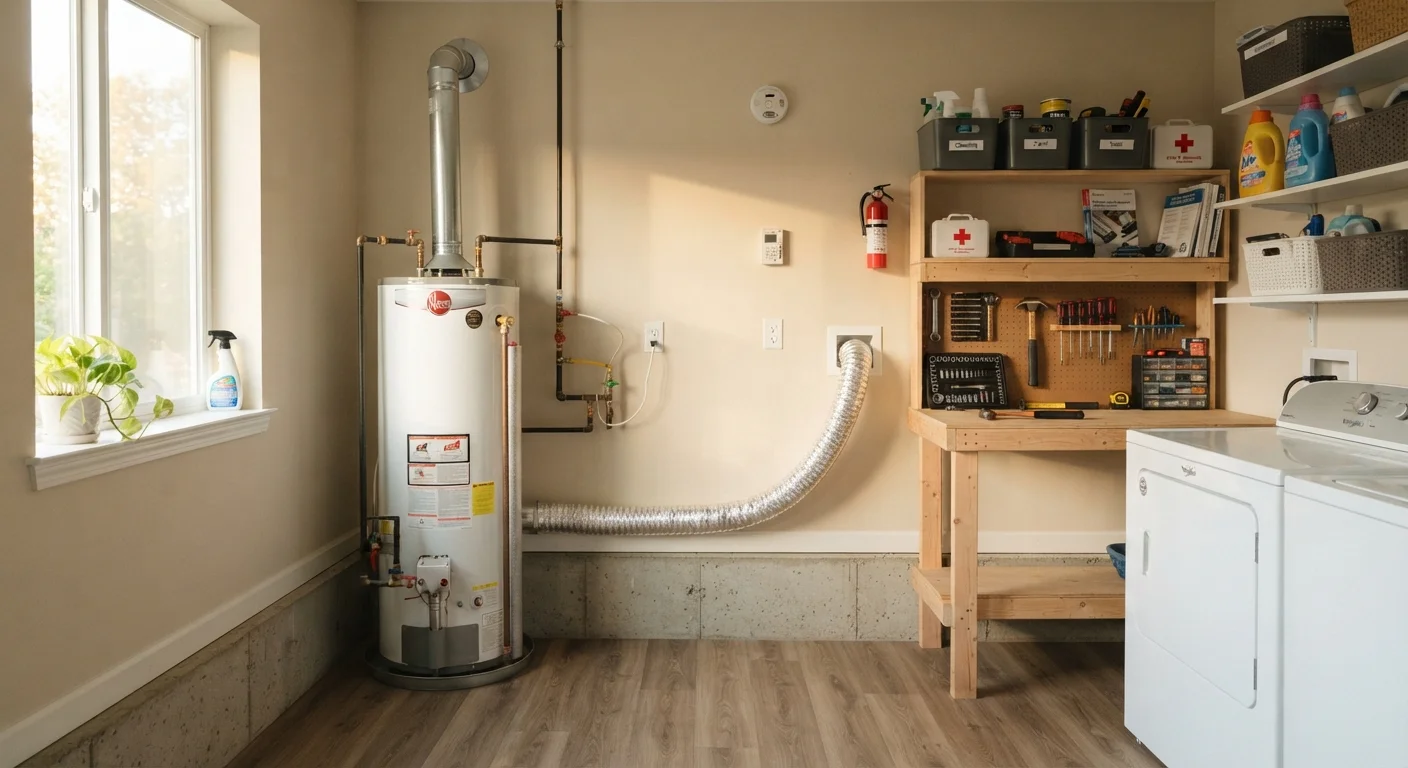
Sediment - primarily minerals like calcium and magnesium - settles at the bottom of tank-style water heaters over time. That layer of buildup acts as insulation between the burner and the water, forcing the unit to run longer and use more energy. Over several years, it can also accelerate corrosion and shorten the heater's lifespan.
Flushing the tank annually is straightforward: turn off the unit's power or gas, connect a garden hose to the drain valve at the base, and allow several gallons to run out until the water runs clear. Consult your water heater's manual for model-specific steps, and if the drain valve hasn't been opened in years, it may be stiff or prone to leaking - a plumber can help if you're unsure. For more on related plumbing systems, see our guide on how your home's plumbing works.
Mineral sediment quietly reduces efficiency and shortens water heater life - annual flushing costs almost nothing.
Test GFCI outlets and circuit breakers
Ground fault circuit interrupter (GFCI) outlets - the ones with the small test and reset buttons, typically found in bathrooms, kitchens, garages, and outdoors - protect against electrical shock by cutting power when a dangerous current imbalance is detected. Over time, the internal mechanism can fail without any visible sign.
Press the test button on each GFCI outlet; it should cut power to the outlet and any connected outlets downstream. Press reset to restore power. Do this every six months. Similarly, exercise your home's circuit breakers once a year by flipping each one fully off and back on - this keeps the mechanisms from stiffening with age. Note: if a breaker trips repeatedly on its own or feels unusually warm, contact a licensed electrician rather than attempting repairs yourself.
GFCI outlets can fail silently - a quick monthly test is the only way to confirm they're actually protecting you.
Inspect and refresh caulk at key joints
Caulk is the flexible sealant used around tubs, showers, sinks, windows, and exterior penetrations such as where pipes or wires enter the house. It degrades over time, shrinking, cracking, or peeling away from surfaces. When it fails, water infiltration follows - often invisibly, behind walls or under flooring, where damage accumulates before it's noticed.
Walk through your home once a year and check all caulked joints. Look for gaps, discoloration, or sections that have pulled away from the surface. Remove old caulk with a putty knife or caulk remover tool, clean the surface thoroughly, and apply fresh siliconized latex or 100% silicone caulk as appropriate for the location. For weatherproofing at the exterior, also see our article on sealing air leaks that drive up energy bills.
Failed caulk lets water sneak behind surfaces where damage builds for months before it becomes visible.
Clear slow drains before they become blocked drains
A drain that's moving slowly isn't just an annoyance - it's a warning. Hair, soap residue, and grease accumulate in bathroom and kitchen drain lines over time. A partial blockage can worsen into a full clog that backs up into a sink, tub, or, in more serious cases, causes a sewage backup.
Remove and clean sink stoppers and bathtub drain covers monthly. Use a drain snake or hair removal tool to pull out accumulated debris from near the drain opening. Avoid chemical drain cleaners as a regular habit - while they can dissolve organic matter in the short term, repeated use may degrade older pipes. If slow draining persists after clearing visible debris, it may indicate a deeper blockage worth a professional inspection.
Slow drains are a blockage in progress - clearing them early takes five minutes; clearing them late takes much more.
Check carbon monoxide detectors
Carbon monoxide (CO) detectors are required by law in most U.S. states in homes with attached garages or fuel-burning appliances, and for good reason - CO is colorless, odorless, and acutely dangerous. Unlike smoke detectors, CO detectors have an electrochemical sensor that degrades over time, typically after five to seven years, even if the unit still appears to function.
Test each detector monthly using its test button. Check the manufacture date printed on the back of the unit - if it's past its recommended service life, replace it. Keep detectors away from cooking appliances to reduce false alarms, and position at least one near sleeping areas. If a detector sounds an alarm, treat it as real: leave the building and call emergency services.
CO detectors have a finite sensor lifespan - even a working-looking unit may be unreliable after seven years.
Making These Tasks Stick
The hardest part of home upkeep isn't doing the work - it's remembering to do it. Linking these tasks to something predictable helps: tie dryer vent cleaning to the change of seasons, water heater flushing to a birthday or tax season, and GFCI testing to the same day you rotate smoke detector batteries.
Build a simple home maintenance log
Keep a dedicated notebook or digital document recording the date each task was completed and any observations (e.g., how much sediment came out of the water heater, or which GFCI outlets needed resetting). Over time, this log helps you spot patterns, prepare for replacements, and demonstrate upkeep history - useful if you ever sell the home. A seasonal maintenance calendar can serve as a ready-made framework.
If you're unsure which tasks are appropriate for DIY and which warrant a professional, consider the nature of the system involved. Electrical panels, gas lines, and structural elements should generally be evaluated by a licensed contractor. For everything else, putting off small repairs tends to turn manageable chores into expensive ones. A simple checklist posted inside a cabinet door can make all the difference.
The content on this site is for informational purposes only and is not a substitute for professional advice. Always consult a qualified professional for guidance specific to your situation.