

Summary
28 items · 20-40 minutes to review; recurring tasks spread throughout the year
Why Seasonal Maintenance Matters
Most home repairs don't arrive without warning - they build quietly from overlooked maintenance. A roof that leaks in November usually started losing its seal in early spring. A furnace that fails in January likely went unchecked the previous fall. The goal of a seasonal maintenance calendar isn't to add chores to your life; it's to catch small problems before they grow into costly ones.
This checklist organizes the most impactful home upkeep tasks by season. Each group is designed to be realistic - tasks you can complete yourself or schedule with a professional in a single weekend. For a broader understanding of how all these tasks fit together, see the complete homeowner's maintenance overview.
As you work through these tasks, consider keeping a maintenance log. Recording what you've done and when pays off during insurance claims, resale, and contractor visits.
Spring (March - May)
Summer (June - August)
Fall (September - November)
Winter (December - February)
Tools and Resources You'll Need
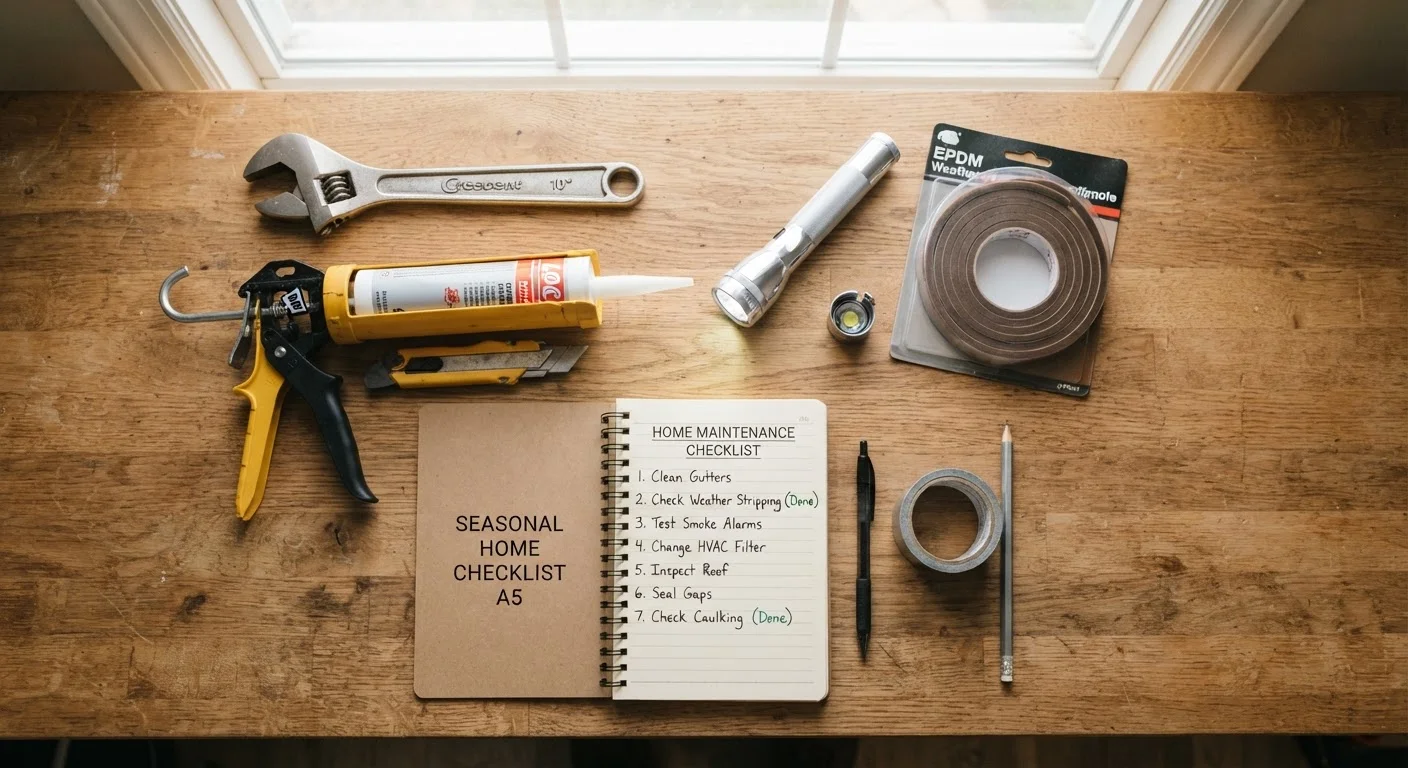
Before you begin, gather the right supplies. Having these on hand means you won't stall mid-task waiting for a hardware store run.
HVAC air filters (correct size for your unit)
Replace regularly during heating and cooling seasons to maintain air quality and system efficiency.
Caulk gun and exterior-grade caulk
Seal gaps around windows, doors, and utility penetrations to prevent drafts and moisture intrusion.
Gutter scoop and garden hose
Clear debris from gutters and flush downspouts twice a year, in spring and fall.
Ladder (stable, rated for your weight)
Safely access gutters, rooflines, and exterior trim for inspection and cleaning tasks.
Dryer vent cleaning brush kit
Remove lint from the full length of the vent duct to reduce fire risk.
Weatherstripping tape or door sweeps
Replace worn seals on exterior doors to prevent heat loss and drafts.
Flashlight and outlet tester
Inspect crawl spaces, attics, and electrical outlets for issues during seasonal walkthroughs.
Pipe insulation foam sleeves
Insulate exposed pipes in unheated areas to reduce the risk of freezing in winter.
Don't Climb the Roof Without Proper Safety Gear
Roof inspections can often be done from the ground or with binoculars. If you need to get onto the roof, use a properly rated ladder, wear non-slip footwear, and never work alone. Wet, steep, or damaged roofs should be assessed by a roofing professional - falls are among the most common causes of serious home-improvement injuries.
If you're unsure whether a task on this list falls within your skill level - particularly anything involving your electrical panel, gas lines, or structural components - contact a licensed contractor. Saving money on DIY work isn't worth the risk of an unsafe repair. You can also explore whole-house preventive maintenance contracts if you'd prefer professional oversight year-round.
Finally, consider whether your maintenance budget is set up to absorb unexpected repairs. A home maintenance reserve fund is a practical financial cushion many homeowners overlook until a repair catches them off guard.
Electrical and Gas Work Requires a Licensed Pro
Several seasonal tasks - including inspecting your electrical panel, servicing gas appliances, or making changes to your heating system - are not safe DIY projects. In most jurisdictions, this work requires permits and must be performed by licensed contractors. Attempting these tasks without proper training and credentials can result in fire, carbon monoxide risk, or failed inspections that complicate a future home sale.
Don't overlook the tasks that rarely make it onto standard lists. Easy-to-skip chores like dryer vent cleaning and water heater flushing quietly protect your home's safety and efficiency when done regularly.
The content on this site is for informational purposes only and is not a substitute for professional advice. Always consult a qualified professional for guidance specific to your situation.