

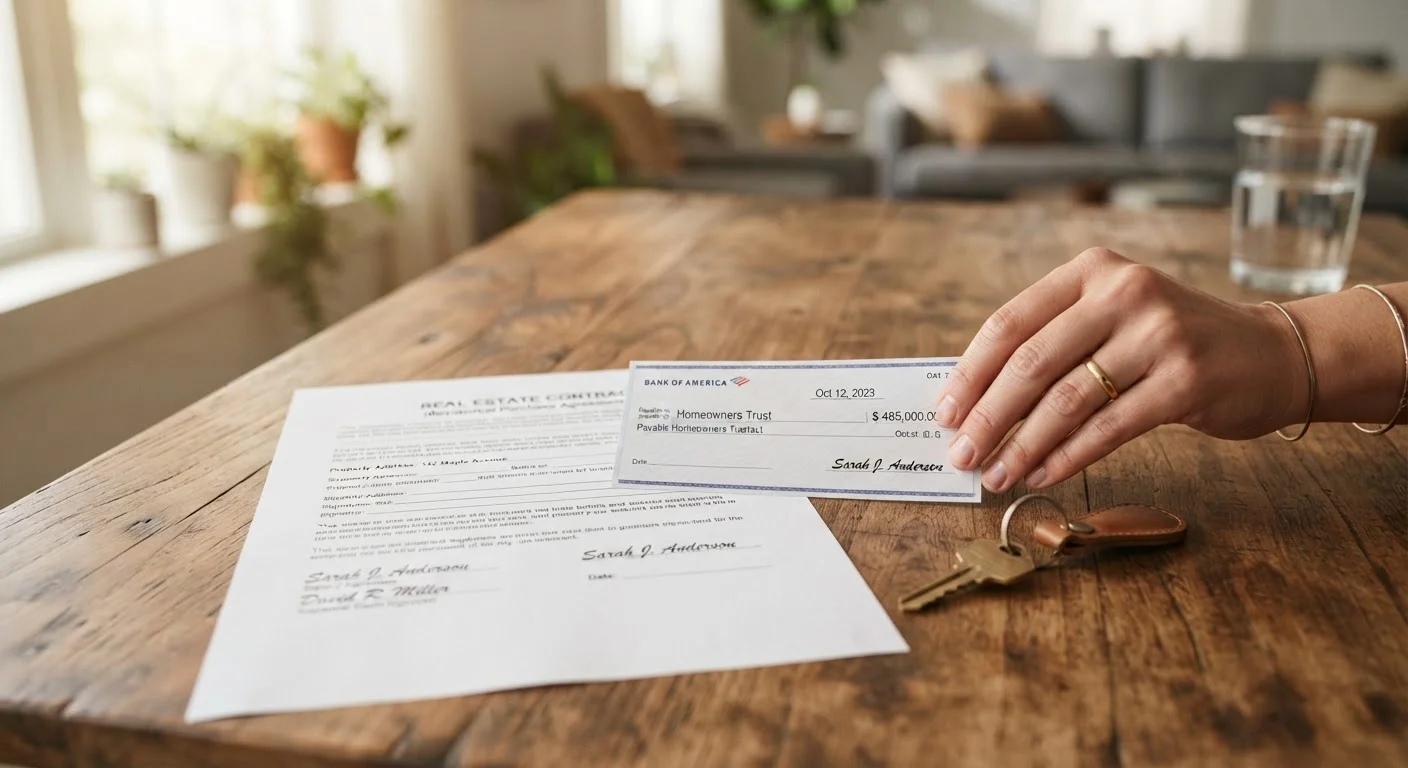
What Earnest Money Actually Does in a Transaction
Most first-time buyers understand that earnest money is a deposit paid early in the purchase process. What many do not fully appreciate is what that deposit signals - and what it puts at risk.
When a seller receives multiple offers, they cannot verify buyers' intentions through words alone. An earnest money deposit is a buyer's way of putting money behind their commitment. It tells the seller: if I walk away without good reason, I'm willing to lose this amount. That assurance is often the difference between a seller choosing your offer over a competing one.
The deposit is held in escrow - a neutral account managed by a title company, escrow agent, or brokerage - and is not accessible to the seller unless the buyer defaults under the terms of the contract. At closing, the funds are credited toward the buyer's costs, making earnest money a prepayment rather than an added expense. For a broader look at the terminology you'll encounter throughout this process, see our plain-language buyer's glossary.
1%-3%
Typical earnest money deposit range
This is the most commonly cited range in U.S. residential real estate, though amounts vary significantly by market competitiveness and transaction size.
$350,000+
U.S. median existing-home sale price
At this price point, a 1%-3% earnest money deposit translates to $3,500-$10,500 that buyers must have accessible shortly after offer acceptance.
How You Can Lose Your Earnest Money - and How to Avoid It
Forfeiting a deposit is more common than buyers expect, and it almost always comes down to one of two scenarios: backing out without a valid contingency, or missing a contractual deadline.
Contingencies are clauses in the purchase contract that allow buyers to exit a deal and recover their deposit under specific circumstances - most commonly a failed home inspection, a denied mortgage, or an appraisal that comes in below the agreed price. If any of these protective conditions are included and triggered properly, the deposit is returned. If a buyer waives those contingencies to make their offer more attractive - a common strategy in competitive markets - they assume significant financial risk.
Never Waive Contingencies Without Understanding the Risk
Waiving contingencies - such as the financing or inspection clause - can make your offer more competitive in a hot market. However, it also removes your ability to exit the deal and recover your deposit if those issues arise. Before agreeing to waive any contingency, fully understand what you're giving up and whether your financial position can absorb the loss of the deposit if the deal falls apart.
Deadlines matter too. Most purchase agreements specify windows for completing the inspection, securing financing, and satisfying other conditions. Missing a deadline, even unintentionally, can be treated as a contract breach. Work closely with your agent and lender to track every date in the agreement.
To understand exactly which contingencies you may be pressured to waive - and what that means for your deposit - read our companion article on purchase contract contingencies and the stakes of waiving them.
Earnest Money in Context: Part of a Larger Financial Picture
Earnest money is just one element in the financial puzzle of buying a home. Buyers sometimes confuse it with the down payment or assume it's an upfront cost beyond what they've budgeted. In reality, it's an early piece of the same pot of money.
That said, you do need to have those funds available on short notice. If your savings are stretched thin, an earnest money deposit of 1%-3% on a $350,000 home - between $3,500 and $10,500 - requires real preparation. This is one reason financial readiness matters well before you start touring homes. Our article on preparing your finances before house hunting covers the groundwork worth laying months in advance.
“Buyers who understand what's at stake with their earnest money make better decisions throughout the entire transaction - they read the contract more carefully, they meet their deadlines, and they're less likely to be caught off guard at the closing table.”
— Real Estate Editorial Team, Home Buying Guidance, Real Estate Editorial
Earnest money is also distinct from the down payment in an important way: while both affect how much cash you need at closing, they serve different purposes and are structured differently. If you have questions about what percentage to put down, common down payment myths are worth reviewing before you finalize your offer strategy.
This article is for general informational purposes only and does not constitute legal, financial, or real estate advice. Real estate contracts and practices vary by state and local market. Consult a licensed real estate professional or attorney for guidance specific to your transaction.
Frequently Asked Questions
Earnest money is typically due within one to three business days of the seller accepting your offer, as specified in the purchase contract. Missing this deadline can give the seller grounds to void the agreement, so act promptly once an offer is accepted.
It depends on why the deal fell through. If you back out for a reason covered by an active contingency - such as a failed inspection or denied financing - you are generally entitled to a full refund. Walking away without a valid contingency typically means forfeiting the deposit.
There is no universal answer, but 1%-3% of the purchase price is a common range in many U.S. markets. In highly competitive areas, some buyers offer more to strengthen their position. Your real estate agent can advise on what is typical in your local market.
Earnest money is held by a neutral third party - usually a title company, escrow company, or real estate brokerage - in an escrow account. It is not released to the seller until closing or until a dispute is resolved.
Yes. In nearly all transactions, the earnest money deposit is credited toward your closing costs or down payment at settlement. It is not an additional expense on top of the purchase price.
Sellers can only retain earnest money under conditions specified in the purchase contract - typically when a buyer defaults without a protecting contingency. If a dispute arises, the escrow holder will follow the contract terms or await a legal resolution before releasing funds.
The content on this site is for informational purposes only and is not a substitute for professional advice. Always consult a qualified professional for guidance specific to your situation.