

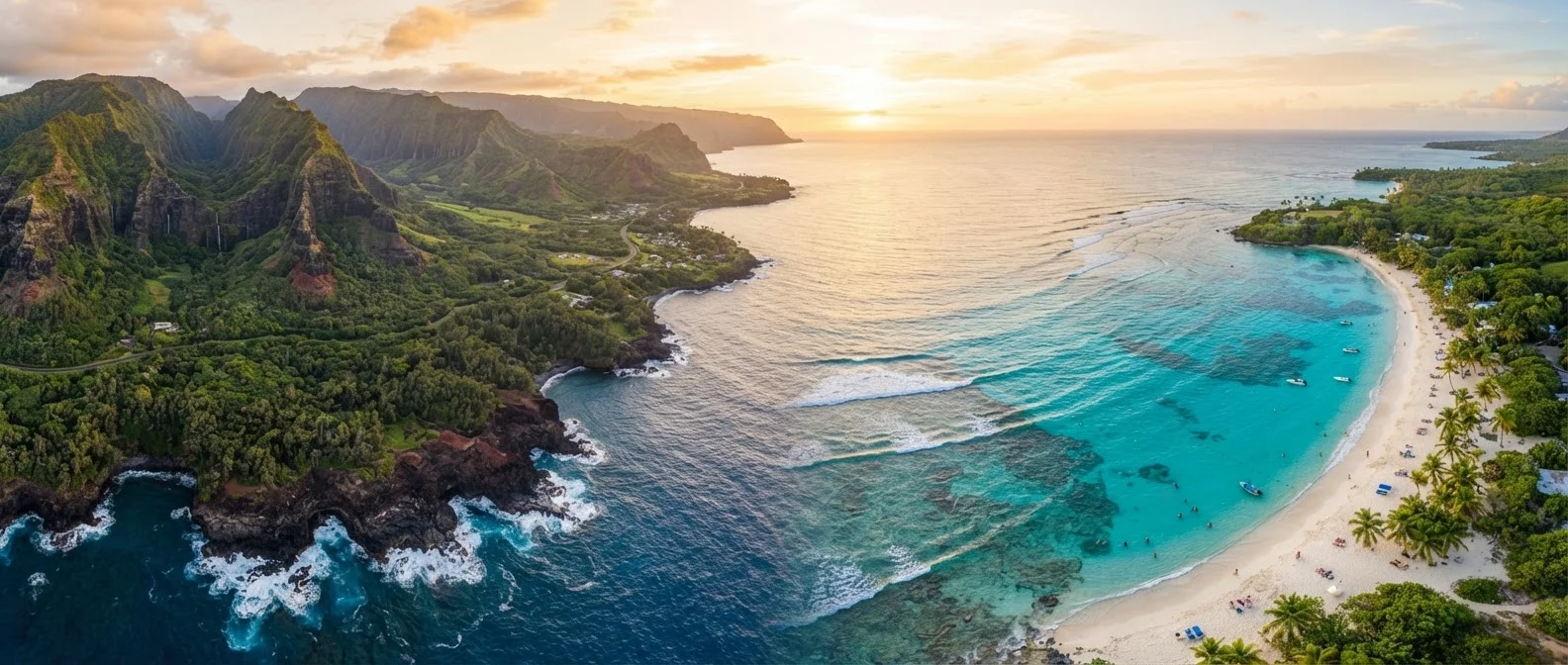
Option A
Hawaii
The all-American island adventure with dramatic landscapes.
Best for: Travelers who want diverse ecosystems, no passport hassle, and a mix of outdoor adventure with cultural depth.
Option B
The Caribbean
The classic beach escape with island-hopping variety.
Best for: Travelers seeking pure relaxation, warm waters, and flexible budgets across dozens of distinct island cultures.
Cost and Logistics: What Each Trip Actually Demands
For most Americans, Hawaii means a domestic flight - no passport, no foreign transaction fees, no customs lines. That convenience is real and meaningful, especially for families or first-time international travelers. Flights from the West Coast can run $300-$600 round-trip; from the East Coast, expect $500-$900 or more. Once there, daily costs are high - Hawaii consistently ranks among the most expensive US destinations for food, accommodation, and car rentals.
The Caribbean's entry costs depend heavily on which island you choose. Some require passports and occasionally visas (requirements vary by island and can change, so always verify with the US Department of State before booking). Flights from major US hubs to popular Caribbean islands often run $250-$600 round-trip. Where the Caribbean can win on value is in-destination spending: several islands offer more affordable lodging, local food, and all-inclusive resort packages that bundle costs predictably. For more on structuring your booking, see how flight-and-package decisions affect your trip.
| Criterion | Hawaii | The Caribbean |
|---|---|---|
| Passport Required | No (US state) | Yes, for most islands |
| Typical Round-Trip Flight (from US) | $300-$900+ | $250-$600+ |
| Daily Cost Level | High | Low to high (varies by island) |
| Hurricane Risk | Low | Moderate to high (June-Nov) |
| Cultural Variety | One archipelago, Polynesian roots | 30+ islands, diverse cultures |
| Adventure Activities | Volcanic hikes, surfing, diving | Water sports, sailing, snorkeling |
| All-Inclusive Options | Limited | Widely available |
Weather, Timing, and What the Seasons Actually Mean
Hawaii has a relatively stable tropical climate year-round, with a drier season (roughly May-October) and a wetter winter season. The variation is mostly by island side - windward coasts get more rain regardless of season. There are no hurricanes in the traditional sense, though tropical storms do occasionally affect the islands.
The Caribbean operates under a distinct Atlantic hurricane season running from June through November, with peak risk in August-October. Traveling outside that window (December through April) is considered prime season and commands higher prices. Shoulder-season travel in May or early June can offer genuine savings but requires monitoring weather forecasts carefully. If you're weighing a beach-heavy trip against something more activity-driven, our guide on matching your vacation format to your energy can help you think through the pacing.
30+
Distinct Caribbean island nations and territories
The Caribbean Basin encompasses more than 30 sovereign and affiliated territories, each with its own entry rules and character.
11 of 13
World climate zones found on Hawaii's Big Island
The Big Island of Hawaii contains eleven of the world's thirteen recognized climate zones, from desert to tropical rainforest to alpine tundra.
June-Nov
Atlantic hurricane season window
The National Hurricane Center designates June 1 through November 30 as the official Atlantic hurricane season, with peak activity in August-October.
Culture, Character, and What You'll Actually Experience
Hawaii is one place with many faces. Each of the six main visitor islands - Oʻahu, Maui, Hawaiʻi (the Big Island), Kauaʻi, Molokaʻi, and Lānaʻi - has a distinct personality. Oʻahu offers Honolulu's urban energy alongside Pearl Harbor history. The Big Island spans eleven of the world's thirteen climate zones. Kauaʻi is rugged and remote. Together they form an archipelago with genuine cultural depth rooted in Polynesian tradition, preserved in living language, arts, and custom.
The Caribbean, by contrast, is not one destination - it's a collection of sovereign nations and territories with African, European, Indigenous, and South Asian influences woven into their food, music, and architecture. Jamaica's reggae culture, Barbados's Bajan cuisine, and Martinique's French Creole identity are distinct enough to feel like entirely separate trips. If you're drawn to that kind of layered cultural variety, the Caribbean rewards exploration. For a useful parallel on how one region's two sides can diverge dramatically, our piece on Costa Rica's two coasts illustrates how geography shapes travel experience.
Entry Requirements Change - Always Verify
Visa and passport requirements for Caribbean islands vary by territory, can change on short notice, and differ depending on whether an island is a US territory, British overseas territory, or independent nation. Always check the official US Department of State travel website (travel.state.gov) and the destination country's immigration authority before booking. Do not rely solely on general articles - including this one - for entry documentation decisions.
Making the Call: Which Escape Is Right for You?
Hawaii suits travelers who want ecological drama, outdoor adventure, and a single cohesive destination with no international friction. It's a strong choice when your priority is hiking active volcanoes, surfing on famous breaks, or experiencing Polynesian culture firsthand - and when the higher daily costs are acceptable given those payoffs.
The Caribbean suits travelers who want flexibility - in budget, in island personality, in vacation pace. Whether you want an all-inclusive week of do-nothing relaxation or a boat-hopping cultural adventure, the region accommodates it. Just go in with clear expectations about passport logistics, hurricane-season timing, and the fact that each island is genuinely its own world.
Either way, how you structure accommodation matters as much as destination. See our breakdown of vacation rentals vs. hotels for budget travelers to stretch your dollars further once you've picked your island. And if neither feels quite right for your budget, domestic destinations that deliver big experiences might surprise you.
The content on this site is for informational purposes only and is not a substitute for professional advice. Always consult a qualified professional for guidance specific to your situation.