

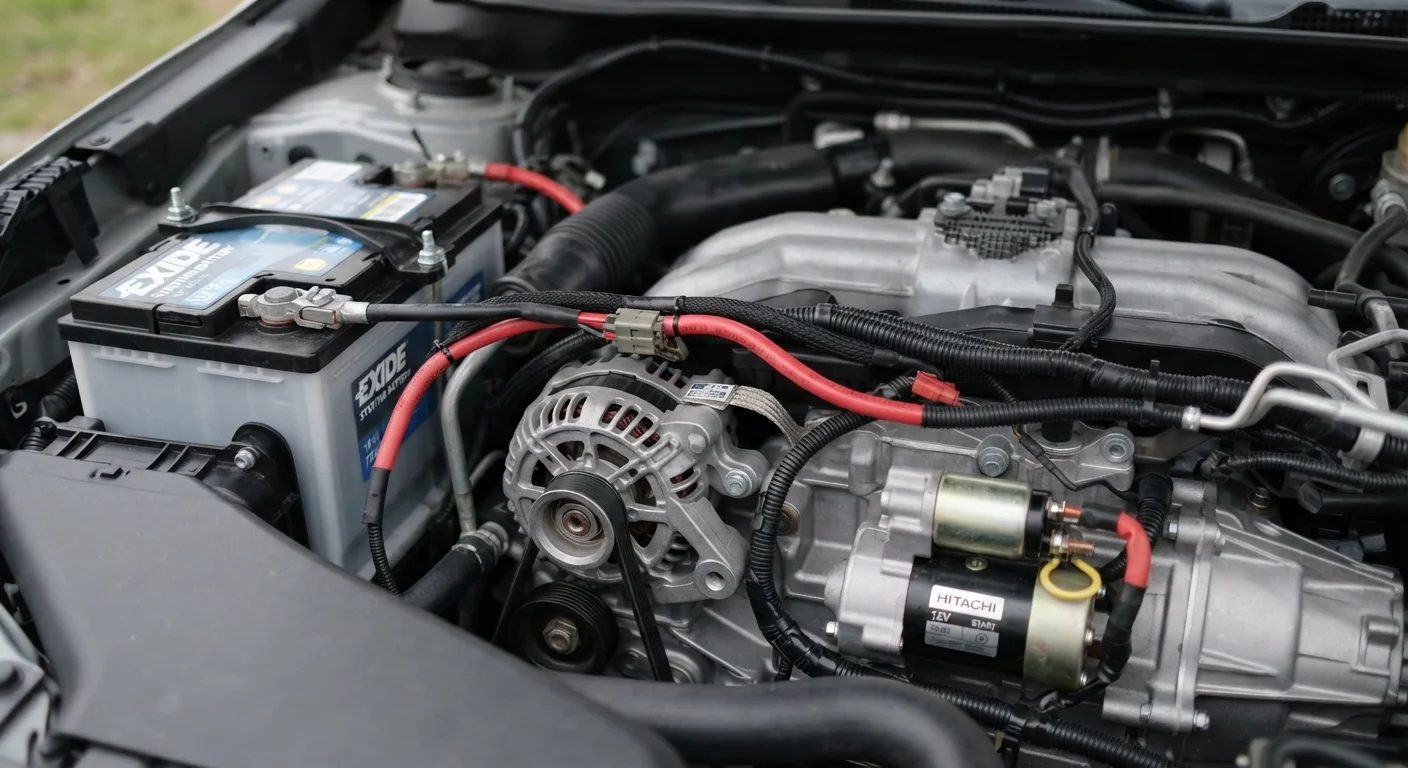
What Each Component Actually Does
Think of the three components as a relay team. Each one hands off responsibility to the next, and the system only works when all three perform their role.
The Battery
The battery is your car's stored energy reservoir. It provides the burst of electrical power needed to start the engine and powers accessories - radio, lights, clock - when the engine is off. Most passenger vehicles use a 12-volt lead-acid battery. Batteries don't last forever; chemical degradation is inevitable, and extreme temperatures accelerate it. For a broader look at how this fits into routine upkeep, see your car's maintenance schedule, decoded.
The Alternator
Once the engine is running, the alternator takes over. Driven by a belt connected to the engine, it generates electricity and continuously recharges the battery while powering the vehicle's electrical systems. Without the alternator doing its job, your battery would deplete within minutes of starting. A healthy alternator typically outputs between 13.5 and 14.5 volts.
The Starter
The starter is an electric motor with one very specific job: spin the engine fast enough for combustion to begin. When you turn the ignition key or push the start button, the battery sends power to the starter, which engages a small gear with the engine's flywheel (a large spinning disc) to crank it. Once the engine fires, the starter disengages automatically.
3-5 years
Typical car battery lifespan
Industry estimates from automotive service organizations consistently place average battery life in this range under normal driving conditions.
~70%
Of no-start calls involving the battery
Roadside assistance data from various fleet and automotive organizations indicates battery-related failures are the leading cause of vehicle no-starts.
13.5-14.5V
Healthy alternator output range
A properly functioning alternator should maintain this voltage range at the battery terminals while the engine is running at moderate RPM.
How the Three Components Depend on Each Other
These parts don't operate in isolation - each one's health directly affects the others. A weak battery forces the starter to work harder, shortening its lifespan. A failing alternator means the battery never fully recharges, causing it to wear out prematurely. And a starter that draws excessive current can strain a battery that would otherwise be perfectly functional.
This interdependence is why diagnosing an electrical issue requires looking at the whole system, not just the most obvious symptom. A battery that keeps dying, for example, might actually be a sign of an alternator problem rather than the battery itself being defective.
Corroded Terminals Can Mimic Component Failure
Before assuming the battery, alternator, or starter has failed, a mechanic will often inspect the battery terminals and cable connections first. Corrosion - the white or greenish buildup around battery posts - increases electrical resistance and can produce symptoms identical to a failing battery or starter. Cleaning corroded terminals is inexpensive and sometimes resolves the issue entirely.
For context on how temperature swings affect these components specifically, seasonal car care preparation covers what to check before summer heat or winter cold arrives.
Warning Signs That Something Is Wrong
Each failing component tends to produce distinct symptoms. Knowing what to listen and look for helps you communicate clearly with a mechanic and avoid being caught off guard.
Battery Warning Signs
- Engine cranks slowly, especially in cold weather
- Headlights appear dim when starting the car
- Electrical accessories behave erratically with the engine off
- The battery is more than three to four years old
Alternator Warning Signs
- Battery warning light illuminates on the dashboard
- Headlights dim noticeably at idle or fluctuate while driving
- Electrical systems (power windows, infotainment) behave inconsistently
- A burning rubber smell near the engine (can indicate a slipping belt driving the alternator)
Starter Warning Signs
- A single loud click or rapid clicking when turning the key, with no cranking
- Grinding noise during startup
- Intermittent failure - sometimes starts, sometimes doesn't
- Starter motor continues running briefly after the engine fires
Test Your Battery Before Winter Arrives
Cold weather is the most common trigger for battery failure, but the battery was usually already weakened before temperatures dropped. Having your battery load-tested at the end of summer - ideally if it's three or more years old - gives you time to replace it on your schedule rather than in an emergency. Many auto parts stores and repair shops offer this test at low or no cost.
If you're unfamiliar with where these components sit in your engine bay, a first-timer's orientation to your car's engine bay can help you get oriented before speaking with a mechanic.
When to See a Mechanic
Electrical system diagnosis typically requires a load tester and a multimeter - tools that give accurate readings of battery capacity and alternator output. While visual inspections and basic voltage checks can be informative, definitive diagnosis is best left to a qualified mechanic, particularly because a symptom like slow cranking could point to the battery, the starter, or even corroded cable connections.
If your car won't start at all, avoid repeated cranking attempts. Excessive cranking can overheat the starter motor, turning a manageable repair into a more costly one. Instead, get the vehicle towed for proper diagnosis. Addressing these components proactively - as part of a regular maintenance routine - is nearly always less expensive than emergency roadside repairs.
Frequently Asked Questions
Technically yes, but only briefly. Without a working alternator, the battery drains rapidly and your car will eventually stall - often within 30 minutes. It's safer to pull over and address the issue rather than risk losing power to critical systems like power steering or brakes.
A failing battery often shows as slow cranking, especially in cold weather, or a vehicle that needs frequent jump-starts. A failing alternator typically produces dimming headlights, a battery warning light on the dashboard, or electrical accessories behaving erratically while the engine runs.
Most automotive batteries last between three and five years under normal conditions. Heat accelerates battery degradation more than cold does, so drivers in hot climates may see shorter battery life. Having the battery load-tested annually after the three-year mark is a practical precaution.
A failing starter often produces a single loud click or rapid clicking when you turn the key, with no engine cranking. You may also hear a grinding noise if the starter gear isn't engaging properly with the engine's flywheel.
A jump-start restores enough charge to start the engine but does not repair a failing battery, alternator, or starter. If your car requires frequent jump-starts, it's a sign that one of these components needs to be inspected by a qualified mechanic.
The content on this site is for informational purposes only and is not a substitute for professional advice. Always consult a qualified professional for guidance specific to your situation.