

Start here
Why Every Driver Should Know Their Engine Bay
Next
How to Open the Hood Safely
Core knowledge
The Major Components and What They Do
Put it into practice
What You Can Check Yourself
Know your limits
When to Call a Mechanic
Why Every Driver Should Know Their Engine Bay
Most drivers spend years behind the wheel without ever looking under the hood. That's understandable - modern cars are complex, and the assumption is that mechanics handle everything. But familiarity with your engine bay isn't about becoming a DIY technician. It's about knowing your vehicle well enough to spot something unusual, communicate clearly with a mechanic, and avoid being caught off guard on the side of the road.
Think of it the way you might think about knowing your home's main water shutoff or breaker panel. You don't need to be a plumber or electrician to benefit from that basic orientation - just as a homeowner's systems overview helps you respond to problems faster, knowing your engine bay makes you a more capable car owner.
Understanding a handful of components - what they look like, where they are, and roughly what they do - gives you a foundation for everything from routine maintenance to roadside problem-solving. It also helps you interpret dashboard warning lights with more confidence, since many alerts tie directly to components visible under the hood.
How to Open the Hood Safely
Before anything else: the engine must be off and cooled down. If you've been driving, wait at least 30 minutes. Hot engines, pressurized coolant systems, and spinning components make an active engine bay genuinely dangerous.
- Locate the interior release lever. In most vehicles, it's a small lever or pull handle beneath the dashboard on the driver's side. Pulling it releases the primary latch.
- Find the secondary safety latch. Step to the front of the car, slide your hand under the front edge of the hood, and feel for a small lever or catch - push or pull it to fully release the hood.
- Prop the hood open. Many vehicles have a built-in prop rod that slots into a hole to hold the hood up. Others use a hydraulic hood strut that stays open automatically. Confirm it's secure before leaning in.
Don't Touch Unfamiliar Components
Even with the engine off, some components remain hazardous - the cooling fan can activate automatically on many vehicles, and battery terminals carry live electrical current. If you're unsure what something is, leave it alone and consult a mechanic or your owner's manual before touching it.
Once the hood is open, don't touch anything unfamiliar. The battery terminals, cooling fan (which can activate even with the engine off on some vehicles), and any belt-driven component can cause injury if contacted incorrectly.
The Major Components and What They Do
Engine bay
The compartment under the hood that houses the engine and most major mechanical and fluid systems of the vehicle.
Dipstick
A long, thin metal rod used to measure the level and condition of a fluid - most commonly engine oil - without opening a sealed system.
Coolant
A liquid (also called antifreeze) that circulates through the engine and radiator to regulate temperature and prevent overheating or freezing.
Firewall
The metal barrier separating the engine bay from the passenger cabin, designed to block heat, noise, and fire from reaching occupants.
Serpentine belt
A single continuous rubber belt that transfers power from the engine's crankshaft to components like the alternator, air conditioning compressor, and power steering pump.
Alternator
A generator driven by the engine belt that recharges the battery and powers the vehicle's electrical systems while the engine is running.
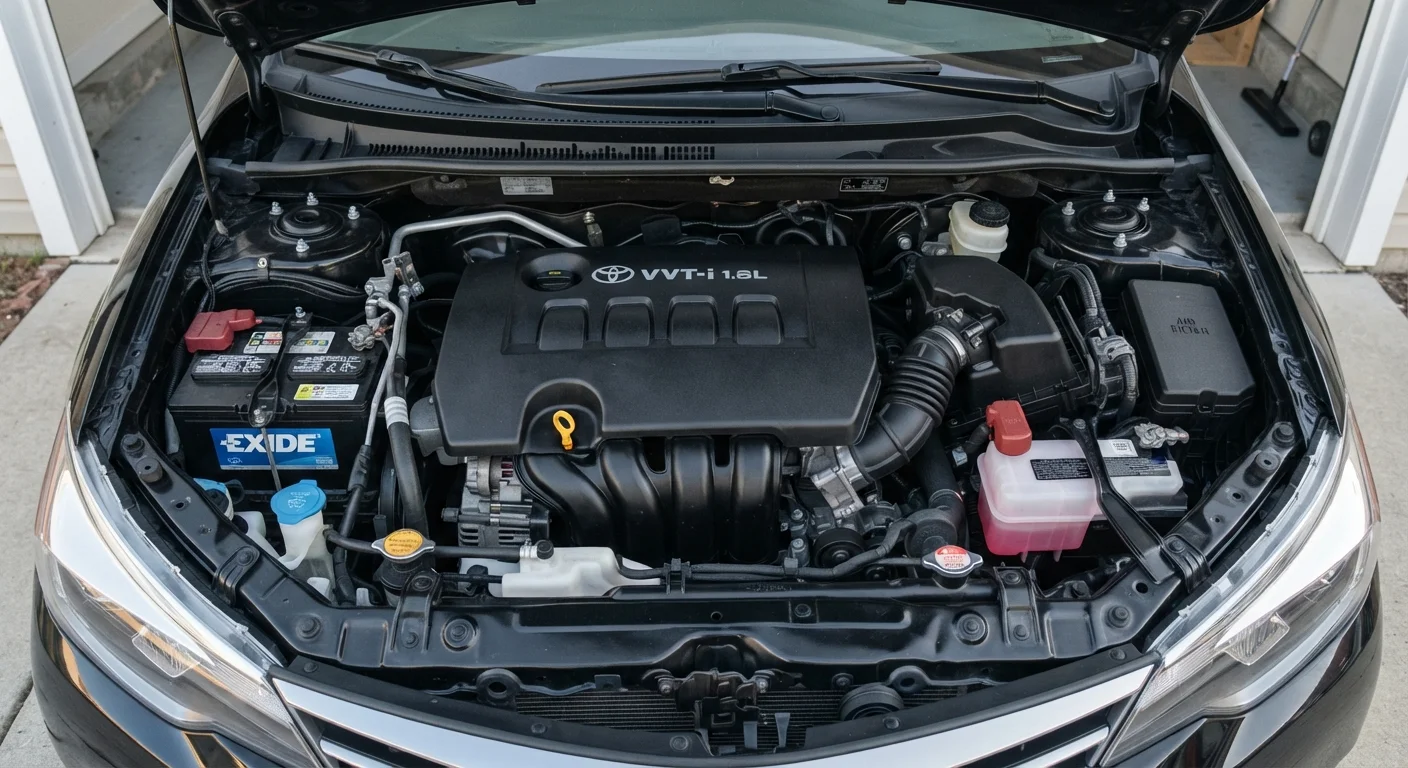
With the hood propped open, you'll see a dense arrangement of parts. Focus on the components most relevant to routine awareness:
- Engine block
- The large central mass - usually metal-colored or covered by a plastic engine cover. This is the heart of the powertrain, housing the cylinders where fuel combustion occurs.
- Oil dipstick
- A brightly colored loop or handle (often yellow or orange) attached to a long metal rod. Pulling it out and wiping it lets you check oil level and condition - one of the most useful checks any driver can do.
- Engine oil fill cap
- A screw-off cap on top of the engine, labeled with an oil can icon. This is where you add oil when the level is low.
- Coolant reservoir
- A translucent plastic tank - usually near a corner of the engine bay - filled with brightly colored liquid (typically green, orange, or pink). It feeds the radiator and prevents the engine from overheating.
- Battery
- A rectangular box, often black, with two cable terminals (positive and negative). The battery supplies electrical power to start the engine and run onboard systems.
- Brake fluid reservoir
- A small, semi-translucent plastic container near the firewall (the wall separating the engine bay from the passenger cabin), usually labeled clearly. Low brake fluid can indicate wear or a leak - important to monitor for safety.
- Air filter housing
- A large plastic box connected to a wide duct. It houses the air filter, which cleans incoming air before it enters the engine.
- Serpentine or drive belt
- A long, ribbed rubber belt looping around multiple pulleys. It drives the alternator, power steering pump, and other accessories. Visible cracking or fraying warrants prompt attention from a mechanic.
For a deeper look at fluid locations and how to read each reservoir, see the fluid checks every driver should know.
What You Can Check Yourself
You don't need tools or training to perform these basic checks. Do them monthly or before any long trip - and always on a cool engine on a level surface.
Keep Your Owner's Manual Handy
Your vehicle's owner's manual includes a labeled diagram of the engine bay specific to your make, model, and year. It's the most reliable reference for locating components and identifying the correct fluid specifications. Most manuals are also available as free PDF downloads from the manufacturer's website if you don't have a physical copy.
- Engine oil: Pull the dipstick, wipe it clean, reinsert fully, then pull again. The oil level should fall between the MIN and MAX marks. Fresh oil is amber; very dark or gritty oil signals it's due for a change. See your car's maintenance schedule decoded for service intervals.
- Coolant level: Check the side markings on the coolant reservoir - do not open the radiator cap on a warm engine. Level should be between LOW and FULL.
- Windshield washer fluid: The only fluid where using the wrong type won't damage anything - but top it up regularly, especially before winter driving.
- Battery terminals: Look for white or blue-green corrosion buildup around the terminal posts. A small amount is common, but heavy buildup can affect starting reliability.
- Belts and hoses: Visually inspect for obvious cracking, fraying, or bulging. Don't manipulate hoses or belts yourself - if something looks worn, have a mechanic assess it.
Before any longer drive, pairing an engine bay check with a pre-trip safety walkthrough gives you a complete picture of your vehicle's readiness.
When to Call a Mechanic
Knowing your limits is just as important as knowing your components. The following situations go beyond a visual check and require a qualified mechanic:
- Any fluid that appears to be actively leaking (spots under the car, wet areas in the engine bay)
- A burning smell - from oil, rubber, or plastic - after driving
- Unusual engine noises: knocking, ticking, hissing, or grinding
- Dashboard warning lights that don't clear, especially the oil pressure, temperature, or check engine indicators - see what those warning lights mean for guidance
- Visible damage to belts, hoses, or wiring
- A battery that repeatedly loses charge
Routine engine bay familiarity is about early detection - noticing that something looks or smells different before it becomes an emergency. The goal isn't to fix problems yourself, but to catch them early and describe them accurately when you bring the car in. That alone can save time, money, and stress.
For a full picture of your vehicle's long-term maintenance needs, explore vehicle ownership resources covering costs, service planning, and more.
Frequently Asked Questions
No. Always let the engine cool for at least 30 minutes after driving before opening the hood. Hot components - especially the radiator cap - can release pressurized steam and cause burns. If your temperature warning light is on, pull over safely and wait before investigating.
A monthly check is a reasonable habit for most drivers. Engine oil, coolant level, and windshield washer fluid are the easiest to inspect and among the most important. Your owner's manual will specify recommended intervals for each fluid type.
The check engine light can signal anything from a loose gas cap to a serious sensor or emission issue. It doesn't always mean something visible is wrong in the engine bay. Have the fault code read by a mechanic or auto parts store to understand the cause before drawing conclusions.
Topping off engine oil or coolant is generally straightforward for most drivers - locate the correct reservoir, use the fluid specified in your owner's manual, and do not overfill. However, if you find yourself refilling frequently, that signals a leak or other issue that warrants a professional inspection.
Engine oil is widely considered the single most critical fluid to monitor. Running an engine with low or dirty oil causes accelerated wear and can lead to irreversible damage. Checking it takes under two minutes and requires nothing more than a clean rag and the dipstick.
No - engine bay layouts vary significantly between front-wheel-drive, rear-wheel-drive, and all-wheel-drive vehicles, and between manufacturers. Use your owner's manual or a labeled diagram specific to your vehicle's make, model, and year to locate components accurately.
The content on this site is for informational purposes only and is not a substitute for professional advice. Always consult a qualified professional for guidance specific to your situation.