

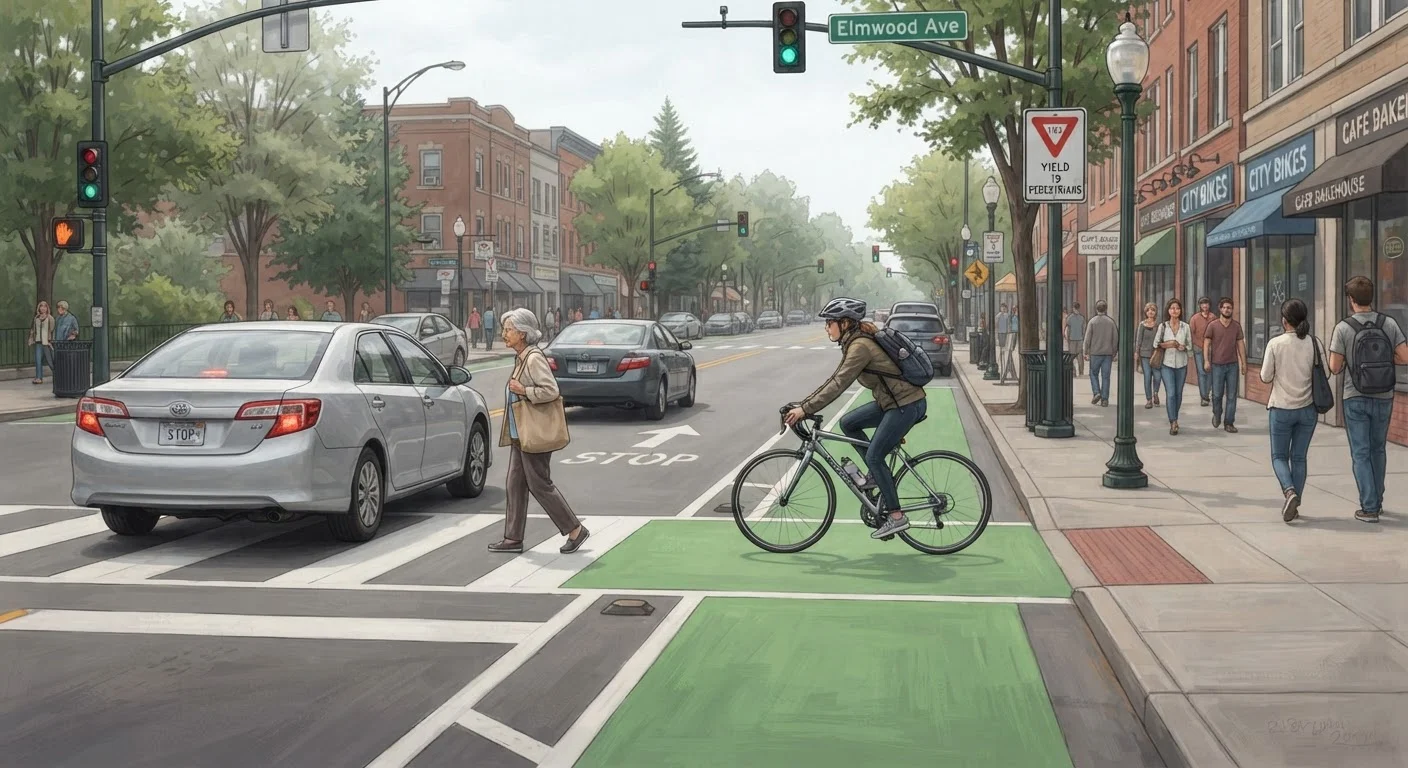
The Misunderstandings That Lead to Conflict
Most drivers consider themselves reasonably safe on the road. Yet study after study shows that conflicts between motorists, cyclists, and pedestrians frequently trace back to genuine misunderstandings of the rules - not recklessness. When a driver honks at a cyclist riding in the middle of a lane, or rolls slowly through a crosswalk while a pedestrian waits, the driver may sincerely believe they are in the right. Often they are not.
Understanding where these gaps occur is the first step toward closing them. For a broader look at how perception shapes driving behavior, see our guide to defensive driving fundamentals.
How to Share the Road More Safely
The practices below address the most common and consequential mistakes drivers make around cyclists and pedestrians. Each reflects established traffic law and widely accepted road safety guidance.
Why Perception and Speed Matter
A recurring factor in pedestrian and cyclist fatalities is vehicle speed. Even modest increases in speed dramatically reduce a driver's reaction time and worsen injury outcomes for anyone struck. Research consistently shows that a pedestrian struck at 40 mph faces a far higher fatality risk than one struck at 20 mph.
Drivers also tend to misjudge their own speed, particularly in low-traffic environments where there are fewer reference points. Our article on why drivers underestimate speed explores this perceptual blind spot in depth. Slowing down near schools, residential streets, and bike lanes isn't timid driving - it's accurate risk assessment.
Building Better Habits Behind the Wheel
Sharing the road well is ultimately a practice built through consistent small decisions: checking mirrors before opening a door, pausing an extra beat at crosswalks, leaving more space when passing a cyclist. None of these require extraordinary effort - they require awareness of rules that many drivers were simply never taught clearly.
Traffic laws governing cyclist and pedestrian rights vary somewhat by state, so it's worth reviewing the specific rules in your jurisdiction if you're uncertain. You can also strengthen your overall road awareness by exploring common road signs drivers frequently misread - many of which directly affect vulnerable road users.
This article is for general informational purposes only and does not constitute legal advice. Traffic laws vary by state and locality; consult official state motor vehicle resources or a qualified professional for guidance specific to your situation.
The content on this site is for informational purposes only and is not a substitute for professional advice. Always consult a qualified professional for guidance specific to your situation.