

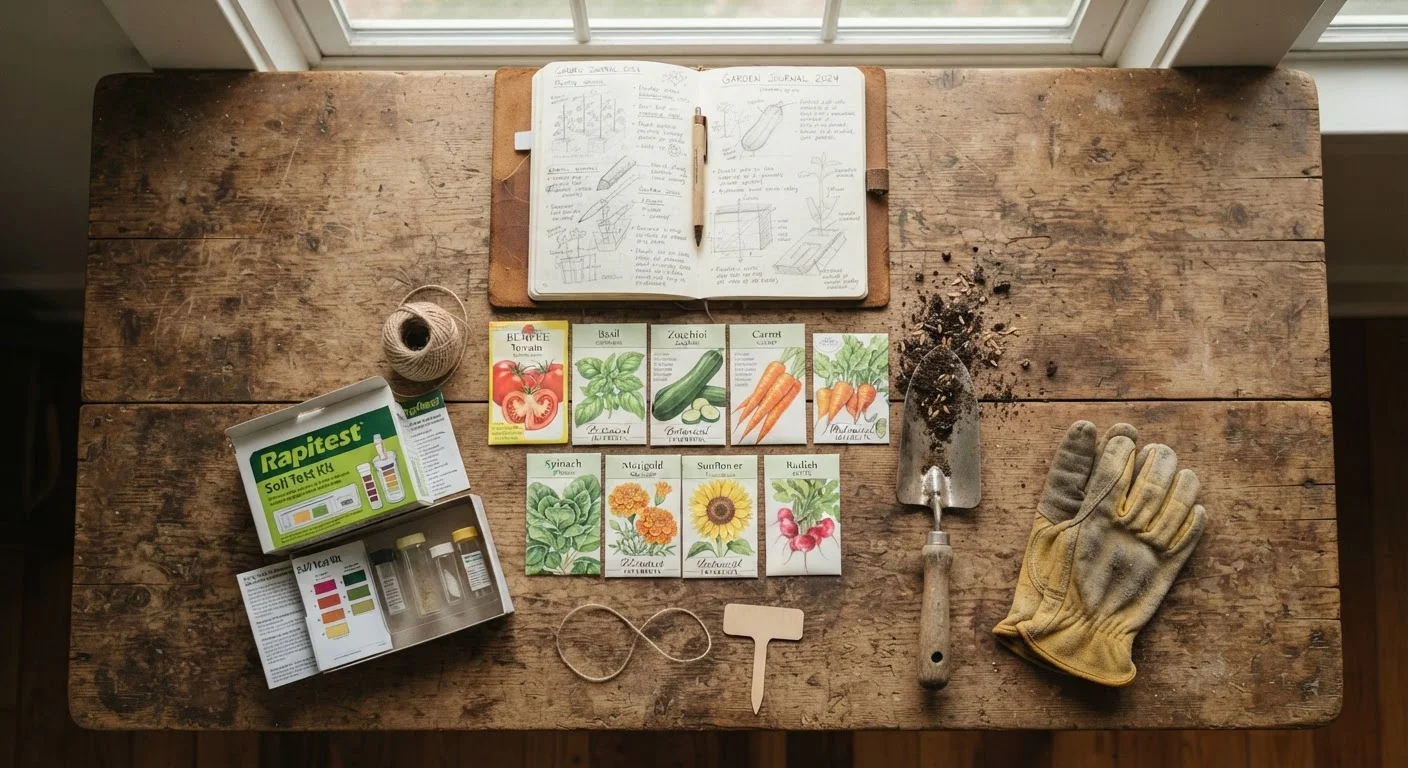
Summary
22 items · 30-90 minutes
Why Pre-Season Prep Makes Every Garden More Productive
Rushing to plant the moment temperatures warm up is one of the most common mistakes home gardeners make. A few hours spent preparing your garden space before the first seed goes in can prevent weeks of troubleshooting later in the season. Think of this checklist as a tune-up - the kind that catches small issues before they become expensive problems.
Whether you're tending a small raised bed or managing a sprawling backyard plot, the fundamentals are the same: assess your soil, inspect your tools, clear your beds, and plan your layout with intention. For a broader view of what each season demands, see our year-round garden planning reference - it pairs well with this pre-season checklist.
Soil Test Kit or Extension Service
Reveals your soil's pH and nutrient levels so you can amend it precisely before planting.
Garden Fork or Broadfork
Loosens compacted soil and works in compost without disrupting soil structure.
Sharpening Stone or Hand File
Restores a working edge to hoes, spades, and pruning shears dulled over the previous season.
Compost or Aged Manure
Top-dresses and enriches garden beds, improving both fertility and soil texture.
Measuring Tape
Helps you accurately map your beds for crop rotation planning and spacing.
Garden Notebook or Planning App
Records last year's layout, this year's plans, and observations you'll want to reference mid-season.
The Pre-Season Checklist
Work through each group below in order. Some tasks - like soil testing - should happen several weeks before you plan to plant so you have time to act on the results. Others, like tool sharpening and bed clearing, can be done the weekend before you start.
Soil Assessment
Bed Preparation
Tool Inspection and Maintenance
Planning and Seed Sourcing
Don't Skip Crop Rotation
Planting the same crop family in the same bed year after year invites soil-borne diseases and allows pest populations to build up over time. Keep notes on what grew where each season, and aim to move each plant family to a different bed on a three- to four-year cycle. Even in small gardens, some rotation is better than none.
Putting It All Together
Once you've worked through this checklist, you'll have a clear picture of your garden's current state and a concrete plan for the season ahead. Healthy soil, clean tools, well-prepped beds, and a thoughtful layout are the foundation every productive garden is built on.
Keep an eye on your plants through the season, too. Early pest detection matters - our guide on identifying common garden pests by their damage patterns can help you spot problems before they spread. And if you're tackling other home projects alongside your garden prep, our home maintenance hub covers the broader picture of keeping your property in good shape year-round.
Act on Soil Test Results Before Planting
Adding lime or sulfur to adjust soil pH takes time to work - often four to eight weeks before effects are measurable. If you wait until planting day to amend your soil, your plants will go in before conditions have improved. Test early in the pre-season so amendments have time to take effect and your crops can start strong.
The content on this site is for informational purposes only and is not a substitute for professional advice. Always consult a qualified professional for guidance specific to your situation.