

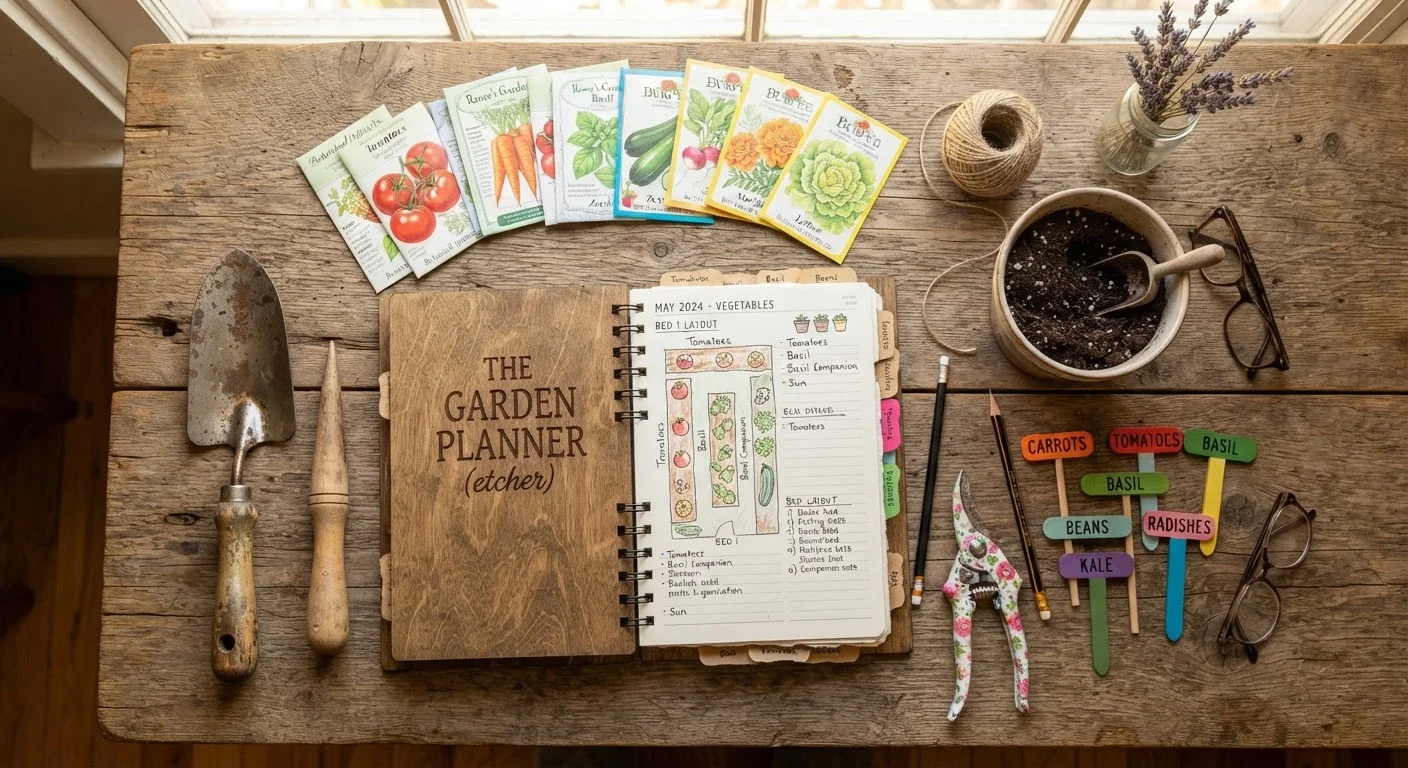
How to Use This Seasonal Reference
Garden timing isn't one-size-fits-all - what you do in February in Georgia looks very different from what a Minnesota gardener does in the same month. This reference organizes key tasks by season rather than calendar month, so you can apply it to your local climate and USDA hardiness zone rather than following rigid dates.
Use the quick facts and glossary to orient yourself, then work through each season's priorities. Whether you're managing an in-ground vegetable plot, a flower border, or a container garden on a balcony, the same seasonal logic applies. Before your first planting day arrives, consider running through a pre-season garden checklist to make sure your tools, soil, and beds are ready.
| Cool-season crop planting window | 4-6 weeks before last spring frost; again 6-8 weeks before first fall frost (General horticultural guidance) |
| Typical weekly water need (established plants) | 1 inch per week (University cooperative extension consensus) |
| Recommended mulch depth | 2-3 inches |
| Best time to plant spring bulbs | After first hard frost, before ground freezes solid |
| Vegetable bed rotation cycle | Move plant families to a different bed each year (3-4 year cycle ideal) (Standard integrated pest management guidance) |
| Soil pH range for most vegetables | 6.0-7.0 |
Spring: Prepare, Plant, and Establish
Soil prep comes first. As soon as the ground is workable - meaning it crumbles rather than clumps when squeezed - incorporate compost into beds. Avoid working compacted, saturated soil, which damages structure.
- Test soil pH and amend as needed (most vegetables prefer 6.0-7.0).
- Direct-sow cool-season crops: lettuce, spinach, peas, radishes, and carrots.
- Start warm-season transplants (tomatoes, peppers, squash) indoors 6-8 weeks before your last expected frost date.
- Divide and replant overcrowded perennials before new growth exceeds a few inches.
- Apply a balanced, slow-release fertilizer to ornamental beds after new growth emerges.
Spring is also the time to prune spring-flowering shrubs after they bloom - pruning before removes the flower buds. Summer-blooming shrubs, however, can be pruned in early spring.
Frost Dates Vary Significantly by Location
Average last-spring and first-fall frost dates can differ by weeks or even months across the United States. Your county's cooperative extension service - part of the USDA's national network - is the most reliable source for local frost date data. Search online for "[your state] cooperative extension frost dates" to find region-specific information.
Summer: Maintain, Water, and Harvest
Summer gardening shifts from planting to sustaining. Heat and drought stress are the primary challenges for most American gardeners during this period.
- Water deeply and infrequently - most established plants prefer 1 inch of water per week, delivered at the root zone to reduce evaporation and leaf disease.
- Mulch beds with 2-3 inches of organic material to retain soil moisture and suppress weeds.
- Deadhead spent flowers on annuals and repeat-blooming perennials to encourage continued flowering.
- Harvest vegetables regularly; leaving overripe produce on plants signals them to stop producing.
- Watch for common pests (aphids, Japanese beetles, squash vine borers) and address early using the least disruptive method available.
Mid-summer is also the time to start a second planting of fast-maturing cool-season crops for fall harvest - count back from your first expected fall frost date to determine timing. Understanding how perennials and annuals behave differently helps you prioritize which plants need the most summer attention.
2-3 inches
Mulch depth that meaningfully reduces soil moisture loss
Research from multiple university extension programs consistently cites this range as effective for moisture retention and weed suppression.
6-8 weeks
Lead time to start warm-season seedlings indoors before last frost
Standard horticultural guidance for crops like tomatoes, peppers, and eggplant across most U.S. growing regions.
Fall and Winter: Wind Down, Restore, and Plan Ahead
Fall is a gardener's second spring. Cooler temperatures reduce transplant stress, and soil still holds warmth - ideal conditions for establishing new perennials, trees, and shrubs before winter.
- Plant spring-flowering bulbs (tulips, daffodils, alliums) after the first hard frost has cooled the soil.
- Cut back spent annuals and diseased foliage; leave ornamental grasses and seed heads that provide winter wildlife habitat.
- Apply a layer of compost over vegetable beds as a mulch - it breaks down over winter and enriches the soil for spring.
- Drain and store hoses, irrigation lines, and clay pots before hard freezes arrive.
Winter planning tasks:
- Review this season's successes and failures while they're fresh - note what worked and what didn't.
- Order seeds from catalogs early; popular varieties sell out by late winter.
- Sketch next year's layout, rotating vegetable families to different beds to reduce disease and pest buildup.
- Service and sharpen tools before storing them for the season.
A productive garden fits naturally into broader year-round home maintenance routines. If you're growing your own food, the planning you do in winter can also support goals like eating more plant-based foods on a realistic budget.
Last frost date
The average calendar date after which freezing temperatures are unlikely in your area. Used to determine when it's safe to plant tender crops outdoors. Local cooperative extension offices publish these dates by region.
Deadheading
Removing spent or faded flowers from a plant before seeds form. This encourages the plant to redirect energy into producing more blooms rather than setting seed.
Direct sowing
Planting seeds directly into the ground or a container where they will grow to maturity, rather than starting them indoors and transplanting later.
Crop rotation
The practice of moving vegetable plant families to different garden beds each season. It helps prevent the buildup of soil-borne diseases and pests that target specific plant families.
Slow-release fertilizer
A fertilizer formulated to break down gradually over weeks or months, delivering nutrients steadily rather than all at once. It reduces the risk of over-fertilizing and nutrient runoff.
The content on this site is for informational purposes only and is not a substitute for professional advice. Always consult a qualified professional for guidance specific to your situation.