

Our Verdict
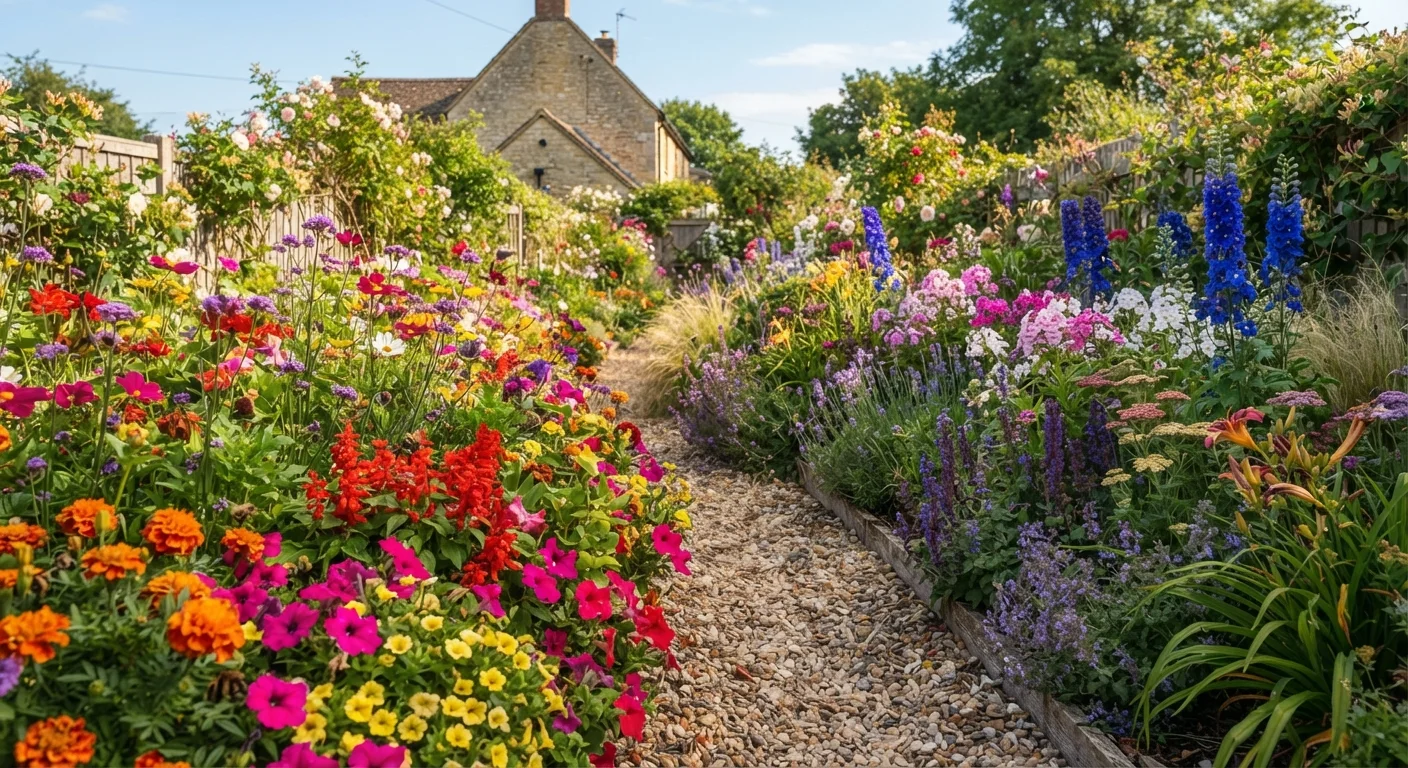
Neither perennials nor annuals are universally superior - they serve different purposes and work best in combination. Perennials build the garden's bones over time, while annuals fill gaps and provide continuous color through the season. Understanding each plant type's strengths lets you design a garden that looks good every year without starting from scratch each spring.
| Best for | Recommended |
|---|---|
| Gardeners who want low long-term cost and minimal replanting | Perennials |
| Those who want bold, season-long color or grow in containers | Annuals |
| New gardeners building a garden from the ground up | A mix of both |
| Gardeners in harsh winter climates who want reliable spring structure | Hardy perennials as a foundation |
What Sets Perennials and Annuals Apart
The distinction comes down to life cycle. Annuals germinate, flower, set seed, and die - all within a single growing season. Common examples include marigolds, zinnias, impatiens, and petunias. They put enormous energy into producing flowers and seeds, which is why they tend to bloom prolifically and for a long stretch of the season.
Perennials, by contrast, persist. Their above-ground growth dies back in fall, but the root system survives winter and sends up new growth the following spring. Coneflowers, black-eyed Susans, hostas, and daylilies are familiar examples. Some perennials bloom for only a few weeks each year, so placement and companion planting matter more with them than with annuals.
A third category - biennials - complete their cycle over two seasons, typically forming foliage the first year and flowering the second. Foxglove and hollyhock are common biennials worth knowing, though they're a smaller slice of the typical home garden.
If you're just getting started, our beginner's guide to starting a garden covers plant selection alongside soil preparation and layout basics.
Comparing Perennials and Annuals Side by Side
Choosing between - or combining - these plant types depends on what you're optimizing for. The table below summarizes the key trade-offs across criteria that matter most to home gardeners.
| Perennials | Annuals | |
|---|---|---|
| Life span | Return each year from roots | One growing season only |
| Bloom duration | Often 2-6 weeks per season | Most of the growing season |
| Upfront cost | Higher per plant | Lower per plant |
| Long-term cost | Lower - no annual repurchase | Higher - repurchase every year |
| Time to establish | 1-2 seasons for full effect | Immediate impact after planting |
| Maintenance | Divide every few years | Replant or reseed each spring |
| Design flexibility | Fixed placement, harder to move | Easy to change each season |
| Best use | Structural backbone of garden | Seasonal color and gap-filling |
One pattern stands out: annuals reward you immediately, while perennials reward patience. A new perennial planting often follows the old gardener's saying - "First year sleeps, second year creeps, third year leaps." That's a genuine investment horizon to plan around.
Planning a Garden That Uses Both Wisely
The most resilient and visually appealing home gardens typically use perennials as the structural foundation and annuals as seasonal accents. Here's how to think through the layering:
- Start with perennials for structure. Choose plants that bloom at different times - early spring bulbs, summer coneflowers, late-season sedums - so something is always in its peak window. This staggered bloom approach is sometimes called a "succession planting" strategy for perennials.
- Fill gaps with annuals. In the first one to two years while perennials establish, bare soil is both an aesthetic problem and a weed invitation. Annuals fill that space affordably and beautifully.
- Match plants to your zone. A perennial in one USDA Hardiness Zone may behave as an annual in another. Canna lilies, for example, are perennial in warm southern zones but must be dug up and stored each fall in colder climates.
- Consider container plantings separately. Containers favor annuals because they can be refreshed each season. Our container gardening guide walks through soil mixes and plant choices suited to pots and small spaces.
Use Annuals to Test New Color Combinations
Before committing expensive perennials to a bed, use one season of annuals to experiment with color pairings, heights, and spacing. Since annuals don't return, there's no long-term consequence to changing your mind. This trial-and-error approach is especially useful in a new or redesigned garden area where you haven't settled on a final vision.
For ongoing seasonal guidance - what to plant, divide, or cut back month by month - see our year-round garden planning reference.
Cost, Maintenance, and Long-Term Value
Annuals have a lower upfront price per plant but add up over time because you're repurchasing every season. Perennials cost more initially but can be divided every few years to propagate free new plants, gradually expanding your garden at no additional cost.
Maintenance patterns also differ. Annuals need deadheading (removing spent flowers) regularly to keep blooms coming, and their beds need replanting or reseeding each spring. Perennials require dividing every three to five years when clumps become crowded, and some need cutting back in fall or early spring - but day-to-day upkeep is generally lighter once they're established.
From a sustainability perspective, perennials typically require less water once established, support more consistent habitat for pollinators and beneficial insects, and reduce the soil disturbance that comes with annual replanting. If those factors matter to your gardening goals, weighting your design toward perennials makes sense.
When it comes to starting plants from seed versus buying transplants, annuals and perennials present different considerations - annuals from seed are often fast and inexpensive, while perennial seedlings can take longer to reach blooming size.
The content on this site is for informational purposes only and is not a substitute for professional advice. Always consult a qualified professional for guidance specific to your situation.