

Why Container Gardening Works
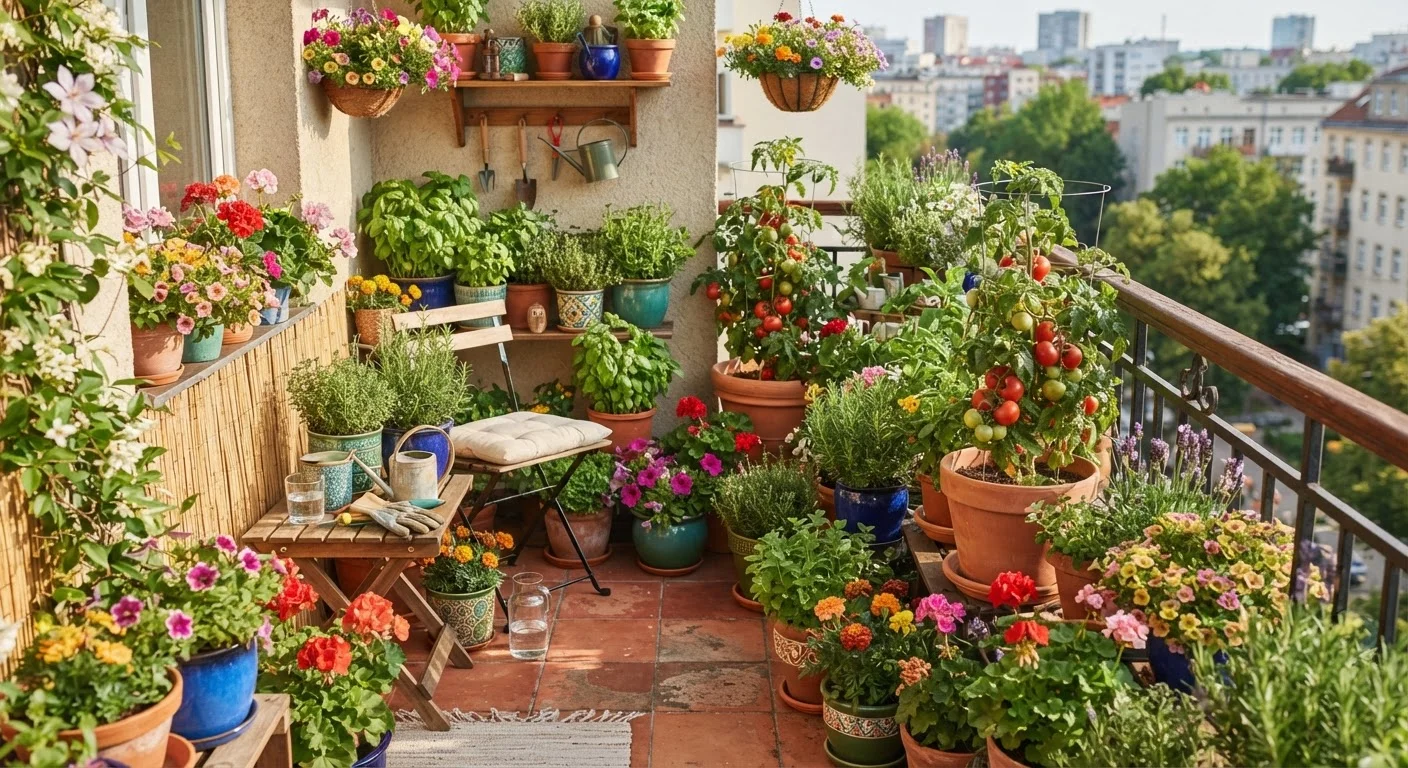
You don't need a backyard - or even a patch of ground - to grow your own food and flowers. Container gardening lets you turn a patio, balcony, stoop, or sunny windowsill into a productive garden space. It's one of the most flexible approaches to growing plants, and it's genuinely accessible to beginners.
The appeal goes beyond space. Containers give you direct control over soil quality, drainage, and placement. You can move plants to follow sunlight, bring tender plants indoors before frost, and keep invasive herbs like mint neatly contained. For anyone just starting out with gardening, containers lower the barrier significantly - you're working with a manageable volume of soil and a defined space.
80%
Americans without adequate outdoor garden space
Urban and suburban population data consistently shows the majority of U.S. households live in environments where outdoor growing space is limited or absent.
5-15 gal
Recommended container size for most vegetables
Horticultural extension resources from U.S. land-grant universities recommend this range for common food crops like tomatoes, peppers, and eggplant.
6+ hours
Daily sunlight needed for most fruiting vegetables
Full-sun vegetables like tomatoes and peppers require at least six hours of direct sun; less produces foliage but few fruits.
Choosing the Right Containers
Container choice affects everything from root development to how often you'll need to water. Here's what to look for:
- Size: Bigger containers hold more soil, which retains moisture longer and gives roots room to grow. A 5-gallon container is a practical minimum for tomatoes or peppers; herbs can manage in smaller 6-8 inch pots.
- Drainage: Every container must have drainage holes. Without them, water pools at the bottom, roots suffocate, and plants decline quickly. If you love a decorative pot without holes, use it as a cachepot - slip a functional container inside it.
- Material: Terracotta is breathable and attractive but dries out fast. Plastic and resin retain moisture longer and weigh less, making them practical for balconies. Fabric grow bags offer excellent aeration and drainage. Glazed ceramic falls in between.
- Color: Dark containers absorb more heat. In hot climates, light-colored pots help keep roots from overheating in summer.
When in doubt, choose one size larger than you think you need. Cramped roots produce stressed plants and lower yields.
Test Weight Before You Fill
If you're gardening on a balcony or elevated deck, check the load rating before filling large containers. A 15-gallon container filled with moist soil can weigh 80-100 pounds or more. Lightweight potting mixes and fabric grow bags help reduce the load. When in doubt, consult a contractor or your building's property manager about structural limits.
The Right Soil Mix Makes All the Difference
One of the most common beginner mistakes is filling containers with soil dug from the yard. Garden soil compacts in pots, blocks drainage, and can introduce pests or disease. Always use a quality potting mix - it's formulated to stay loose, drain well, and support root growth in a confined space.
Look for mixes that include ingredients like perlite or coarse sand (for drainage), and peat moss or coco coir (for moisture retention and structure). Some mixes include slow-release fertilizer, which gives new plants a head start.
To understand why soil composition matters so deeply, the principles covered in soil health fundamentals apply just as much to containers as to in-ground beds. In a pot, you're building a miniature soil ecosystem, so what goes in matters enormously.
You can also amend your potting mix with a portion of finished compost - typically no more than 20-25% of the total volume - to add nutrients and beneficial microbial activity. See how to make compost at home for a practical starting point.
Never Reuse Old Potting Mix Without Refreshing It
Potting mix breaks down over time, losing structure and nutrients. Reusing last year's mix without amendment often leads to compaction and poor plant performance. At the start of each season, top up containers with fresh potting mix and work in a small amount of compost or slow-release fertilizer to replenish what was depleted.
What to Grow: Food, Herbs, and Flowers
The range of plants that thrive in containers is broader than most people expect. The key is matching plant size to container size and ensuring adequate sunlight.
Vegetables
- Tomatoes: Bush and determinate varieties (such as patio or dwarf types) perform well in large containers (10-15 gallons). They need full sun - at least 6 hours daily.
- Peppers: Both sweet and hot peppers adapt well to containers. A 5-gallon pot per plant works well.
- Lettuce and salad greens: Shallow-rooted and fast-growing, these are ideal for window boxes and smaller containers. They tolerate partial shade, making them good for less sunny balconies.
- Radishes and beets: Compact root crops that do well in containers at least 10-12 inches deep.
Herbs
Basil, parsley, chives, cilantro, and thyme are all highly productive in small pots on a sunny sill or patio. Keep mint in its own container - it spreads aggressively and will crowd out neighbors. Rosemary thrives in terracotta with excellent drainage.
Flowers
Marigolds, petunias, calibrachoa, nasturtiums, and zinnias bloom prolifically in containers, adding color and often attracting pollinators that benefit nearby vegetable pots. Nasturtiums are also edible, making them doubly useful. For seasonal timing guidance, the year-round garden planning reference is a helpful resource.
Group your containers together rather than spacing them widely apart. Clustered pots create a shared microclimate that retains humidity and reduces moisture stress on individual plants.
Isolated containers lose moisture faster to wind and ambient heat. Grouping mimics the buffering effect of a planted bed and can meaningfully reduce how often you need to water.
Elevate containers slightly off the ground or deck surface using pot feet or bricks - just enough to allow unrestricted drainage and airflow under the base.
Containers sitting flat can seal their drainage holes against a surface, causing water to back up. Even a small gap improves drainage and reduces the risk of overwatering.
Watering, Feeding, and Ongoing Care
Container plants dry out significantly faster than in-ground plants because the limited soil volume can't hold as much moisture. In summer, many containers need watering daily - sometimes twice daily in extreme heat. The reliable test: push your finger about an inch into the soil. If it feels dry at that depth, it's time to water. Water thoroughly until it drains freely from the bottom holes.
Because frequent watering leaches nutrients from the soil, container plants need regular fertilizing. A balanced, water-soluble fertilizer applied every one to two weeks during the growing season keeps plants productive. If your potting mix came with slow-release fertilizer, you can start supplemental feeding after about six weeks.
Deadhead flowering plants (remove spent blooms) regularly to encourage continuous flowering. For vegetables, harvesting frequently - especially with beans, zucchini, and cucumbers - encourages the plant to keep producing.
Self-Watering Containers Can Help
Self-watering containers include a built-in reservoir at the base that allows plants to draw water upward through capillary action. They can extend the time between waterings significantly, making them practical for busy gardeners or those who travel. They work especially well for moisture-loving crops like lettuce and herbs, but are not ideal for plants that prefer drier conditions, such as rosemary.
Common Mistakes and How to Avoid Them
Even attentive gardeners run into problems with containers. Here are the most frequent pitfalls and straightforward ways to sidestep them:
- Underwatering - or inconsistent watering
- Allowing soil to dry out completely stresses plants and can cause flower drop or blossom end rot in tomatoes. Consistency matters more than perfection.
- Overcrowding
- Planting too many plants in one container creates competition for water, nutrients, and light. Follow spacing guidelines on seed packets or plant tags. One large tomato per 15-gallon container is the right scale.
- Skipping fertilizer
- Potting mixes don't contain enough nutrients to sustain plants for an entire season. A plant that looks healthy in June but produces nothing by August is often just hungry.
- Wrong container for the plant
- Deep-rooted plants like carrots need at least 12 inches of depth. Shallow containers cause root crowding and stunted growth.
If you're weighing containers against other growing options, the comparison of raised beds and in-ground planting can help you decide which approach fits your space best. For questions about starting plants, seeds vs. seedlings covers the trade-offs clearly.
“Container gardening is not a consolation prize for people without yards - it is a precise, highly controllable form of horticulture that rewards attention to the fundamentals of soil, water, and light.”
— Cooperative Extension Horticulture Program, U.S. Land-Grant University Extension Service
The content on this site is for informational purposes only and is not a substitute for professional advice. Always consult a qualified professional for guidance specific to your situation.