

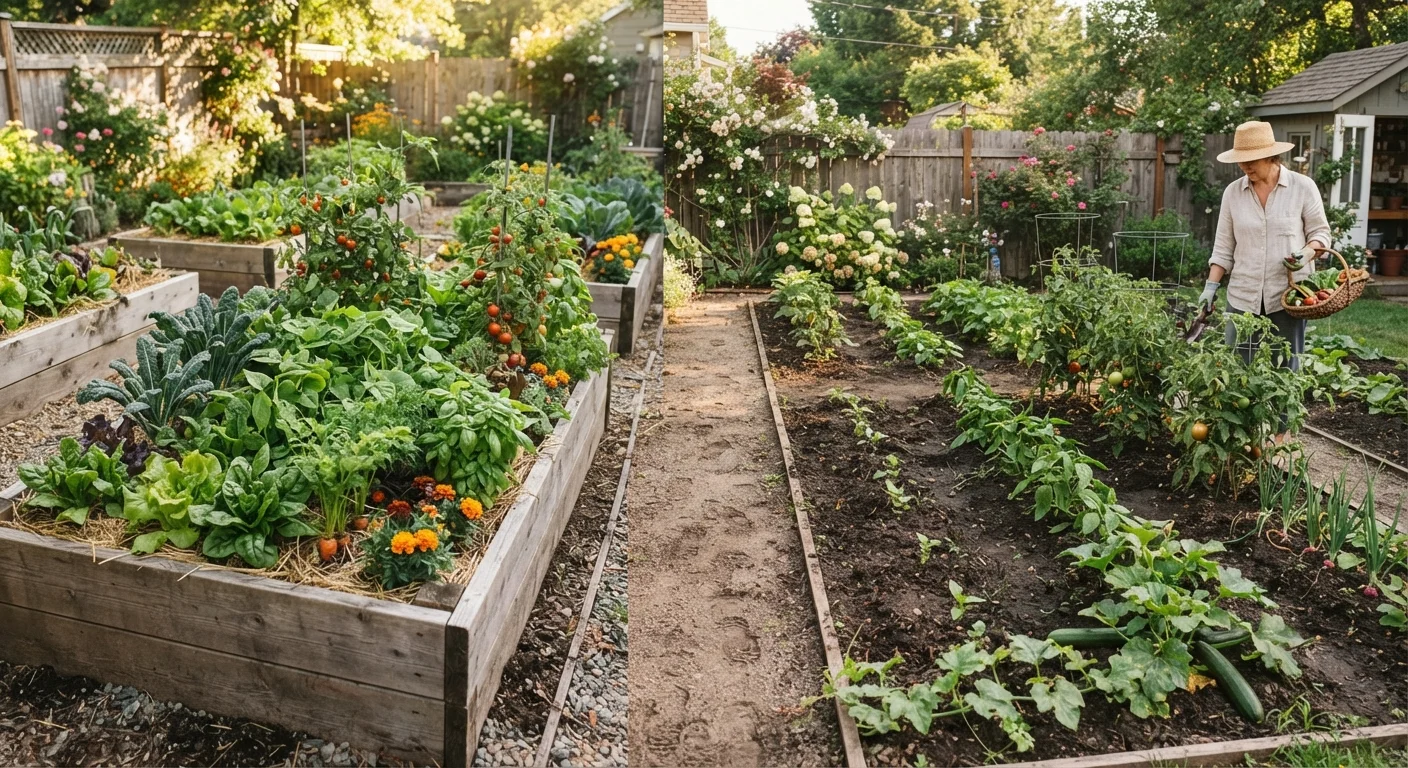
Option A
Raised Beds
The controlled, high-performance growing environment.
Best for: Gardeners dealing with poor native soil, limited mobility, or wanting faster spring starts and precise drainage.
Option B
In-Ground Planting
The traditional, low-cost path to a productive garden.
Best for: Homeowners with healthy native soil and larger planting areas who want minimal setup investment.
What Each Approach Actually Involves
Before comparing the two methods, it helps to understand what each one really means in practice. Raised beds are enclosed growing areas - typically framed with wood, stone, or metal - filled with a custom soil mix sitting above the surrounding ground level. In-ground planting means working directly with your existing native soil, amending it as needed and planting into it.
If you're still figuring out the basics of setting up a growing space, the beginner's garden guide covers planning and first-season essentials. Once you've chosen your method, you'll also want to review the pre-season checklist before anything goes in the ground.
Neither approach is inherently superior - the right choice depends on your soil, your budget, your physical needs, and what you plan to grow.
Head-to-Head: Key Differences at a Glance
These two methods diverge across several practical dimensions. Compare them directly before digging deeper into each factor.
| Criterion | Raised Beds | In-Ground Planting |
|---|---|---|
| Startup Cost | Moderate to high ($150-$400+) | Low ($50-$100 or less) |
| Soil Control | Full - you choose the mix | Limited - depends on native soil |
| Drainage | Excellent by default | Varies with native soil type |
| Spring Warm-Up | 2-4 weeks earlier | Standard seasonal timing |
| Weed Pressure | Lower, especially early on | Higher, particularly first seasons |
| Scalability | Moderate - cost adds up | Easy - expand with minimal cost |
| Deep-Root Crops | Limited by bed depth | Unrestricted root depth |
| Accessibility | High - customizable height | Lower - bending/kneeling required |
| Long-Term Maintenance | Minimal structural work | Ongoing soil amendment needed |
Soil Control, Drainage, and Seasonal Timing
Soil quality is where raised beds hold their clearest advantage. You fill them with a blend you choose - typically a mix of topsoil, compost, and amendments - so you're not at the mercy of clay-heavy, sandy, or compacted native ground. This control also means better drainage by default, since water moves freely through a loose, well-structured mix rather than pooling in dense native soil.
Raised beds also warm up earlier in spring. Because the soil mass is elevated and exposed on multiple sides, it absorbs heat faster than ground-level earth - sometimes giving gardeners a two- to four-week head start, depending on the climate. That's meaningful for cool-season crops and short growing seasons.
In-ground gardens, by contrast, retain moisture more evenly during summer heat, which can actually benefit plants in hot, dry regions. The larger thermal mass of native soil buffers against both late-spring cold snaps and midsummer heat spikes. Applying a layer of mulch over in-ground beds amplifies this effect significantly, keeping roots cooler and reducing watering frequency.
6-8 inches
Minimum recommended raised bed depth
Most cooperative extension services suggest at least 6 inches of quality soil depth for vegetables; 12 inches is preferred for root crops.
~$0.05/sq ft
Estimated in-ground prep cost (compost only)
Basic in-ground soil prep using bulk compost is one of the most affordable ways to start growing, assuming native soil is workable.
2-4 weeks
Earlier spring planting in raised beds
Raised beds absorb heat faster due to elevated positioning, giving gardeners a meaningful head start over in-ground plots in similar climates.
Cost, Scale, and Long-Term Maintenance
Startup cost is where in-ground planting wins decisively. Prepping a native-soil bed requires tools you likely already own, amendments like compost, and a soil test - a total investment that rarely exceeds $50 to $100 for a modest plot. A single 4×8-foot raised bed, by comparison, can cost $150-$400 or more when you factor in lumber or metal framing, hardware cloth for pest barriers, and enough bulk soil to fill it adequately.
Over time, the equation shifts somewhat. Raised beds - particularly those built with rot-resistant wood or galvanized metal - can last 10 to 20 years with minimal structural attention. In-ground plots require more consistent soil maintenance: annual compost additions, periodic aeration, and ongoing weed pressure that tends to be heavier than in the contained environment of a raised bed.
Weed control deserves special mention. Because raised beds are filled with purchased soil (not the surrounding weed seed bank), they typically start with far fewer weed problems. In-ground gardens, especially newly converted lawn areas, can require significant weeding effort in the first few seasons. Whichever method you use, deciding whether to start from seeds or seedlings will also shape how much time and effort your first season demands.
Note: Costs mentioned here are general estimates and will vary by region, material choice, and garden size. Always gather local quotes before budgeting a project.
Choosing What Fits Your Yard - and You
The most honest guidance: let your conditions lead the decision. If a soil test reveals heavy clay, high lead levels (common in older urban properties), or poor drainage, a raised bed removes those problems from the equation entirely. If you have generous, loamy native soil and a large footprint to plant, in-ground growing is practical, cost-effective, and capable of excellent yields.
Physical accessibility matters too. Gardeners managing back pain, joint issues, or limited mobility often find raised beds transformative - particularly those built at counter height. For others, kneeling in a traditional garden row is no obstacle at all.
Some gardeners combine both: raised beds for vegetables and herbs that benefit from controlled conditions, and in-ground planting for larger crops, perennial flowers, or fruit trees where deep, unrestricted roots are an advantage. If your space is extremely limited - a balcony or patio, for example - it's worth knowing that container gardening offers a third path that works without any traditional ground space at all.
Whichever direction you go, preparation is the foundation of a productive garden. Matching your method to your actual conditions - rather than following a trend - gives you the best start.
The content on this site is for informational purposes only and is not a substitute for professional advice. Always consult a qualified professional for guidance specific to your situation.