

Why Mulching Deserves a Place in Every Garden Routine
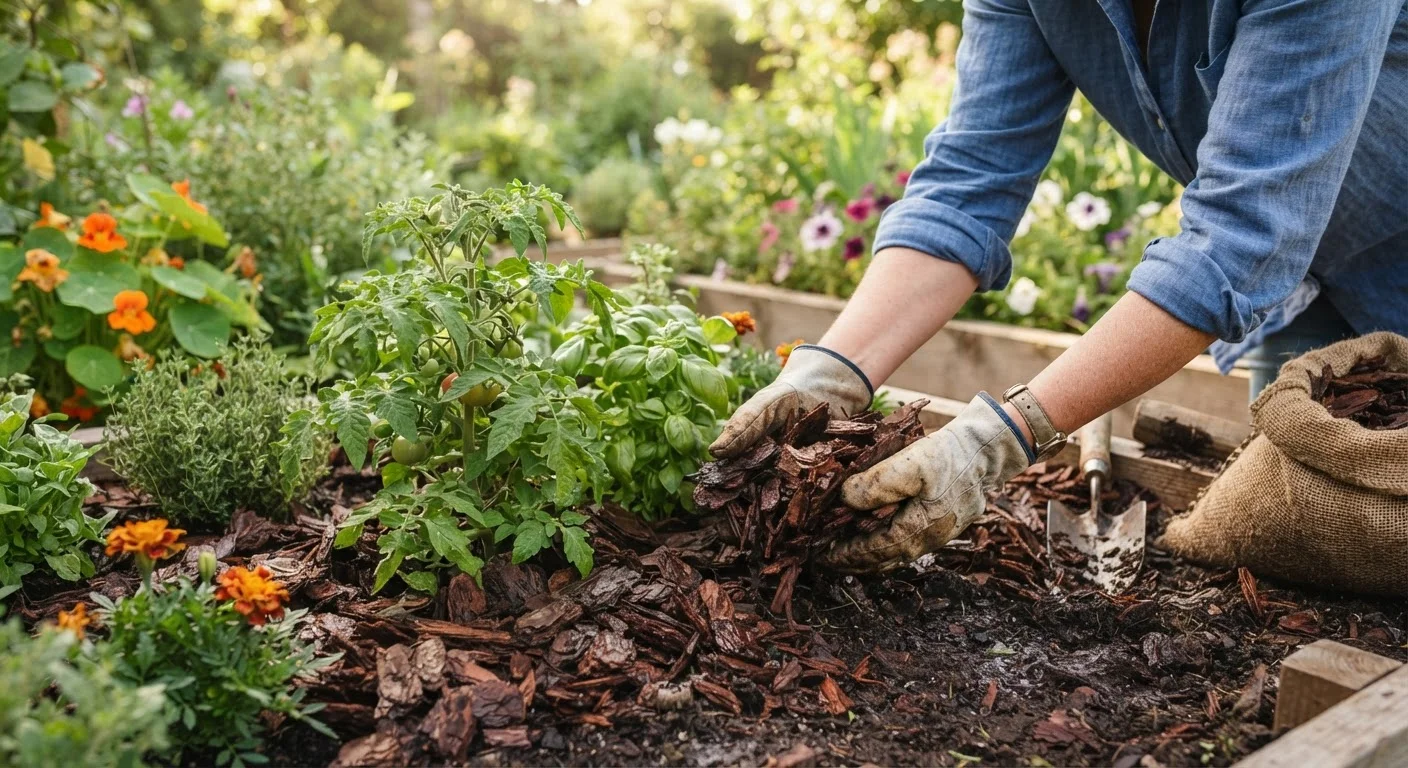
Mulching is one of the easiest high-return habits in gardening. A single afternoon of work - spreading a layer of material over your garden beds - pays dividends all season long. It slows water evaporation from soil, moderates root-zone temperature swings, and blocks the light that weed seeds need to germinate.
Mulch also connects to broader garden health. Healthy, well-structured soil is the foundation everything else depends on - as our guide to soil health explains - and organic mulches actively contribute to that foundation as they decompose. If you're already thinking carefully about how and when you water, adding mulch makes that effort go further by reducing the rate at which surface soil dries out.
Choosing the Right Mulch for Your Situation
Mulches fall into two broad categories: organic (wood chips, shredded bark, straw, grass clippings, fallen leaves) and inorganic (gravel, landscape fabric, rubber chips). Each has trade-offs.
- Wood chips and shredded bark are durable, widely available, and break down slowly - ideal for trees, shrubs, and perennial beds.
- Straw is lightweight and affordable, popular in vegetable gardens. It decomposes faster and may need replenishing mid-season.
- Shredded leaves (run over with a lawn mower) are a free, nutrient-rich option that earthworms love. Whole leaves can mat and repel water, so shredding is important.
- Grass clippings work in thin layers; piled thick, they compact, heat up, and can form a smelly barrier.
- Gravel and stone don't break down, so they won't improve soil - but they work well around drought-tolerant plants and in areas where you want a permanent, low-maintenance look.
For container gardens, a thin layer of gravel or fine bark can help retain moisture; see our container gardening guide for more on adapting these principles to pots and planters.
Match Mulch Color to Your Garden Goals
Dark-colored mulches (such as dark bark or compost) absorb heat, which can help warm soil in spring - useful for vegetable gardens. Light-colored materials like straw reflect more heat, which can be helpful in very hot climates to keep root zones cooler in summer. Neither is universally better; think about your local climate and the plants you're growing.
How to Apply Mulch Correctly
Application technique matters as much as material choice. Done poorly, mulch can create the very problems it's meant to prevent.
For most garden beds, a depth of 2-4 inches hits the sweet spot: enough to suppress weeds and retain moisture, but not so deep that it prevents water and air from reaching roots. Vegetable gardens generally do well with 2-3 inches; permanent shrub and tree beds can handle 3-4 inches.
Whether you're mulching a traditional in-ground bed or a raised bed, the same principles apply. Our raised beds vs. in-ground planting comparison covers how the two setups differ in drainage and soil management - both benefit from consistent mulching.
Fresh Wood Chips and Nitrogen: A Clarification
You may have heard that fresh wood chips "rob" nitrogen from the soil as they decompose. Research suggests this effect occurs primarily at the soil surface interface and has limited impact on established plants when mulch is applied correctly on top of soil rather than tilled in. As a precaution, consider using aged or composted wood chips in vegetable beds where nitrogen demand is high, or supplement with a balanced organic fertilizer if you notice yellowing leaves.
Maintaining Your Mulch Through the Season
Mulch isn't a one-and-done task. Organic materials break down over time - which is a benefit for soil, but it means you'll need to replenish depth as the season progresses. A quick check in midsummer and again in early fall helps you stay ahead of weed pressure.
Replenishing mulch also connects naturally to composting. Finished compost can itself be used as a mulch layer, or worked lightly into the soil before fresh mulch is applied on top - an effective one-two punch for long-term soil improvement.
25-50%
Reduction in soil water loss with mulch
Extension horticulture programs at several land-grant universities consistently cite mulching as capable of reducing surface evaporation by roughly 25-50% compared to bare soil, depending on mulch type and depth.
~6x
Fewer weed seedlings in mulched beds
University cooperative extension research has found that a 3-inch organic mulch layer can dramatically reduce weed emergence - in some trials by as much as 80-90% - compared to unmulched control plots.
Before winter, adding a fresh layer of mulch over perennial beds protects roots from hard freezes and temperature fluctuations. In spring, rake it back slightly from plant crowns to allow soil to warm and new growth to emerge freely. Small adjustments like these, done consistently, add up to measurably healthier plants year after year.
The content on this site is for informational purposes only and is not a substitute for professional advice. Always consult a qualified professional for guidance specific to your situation.