

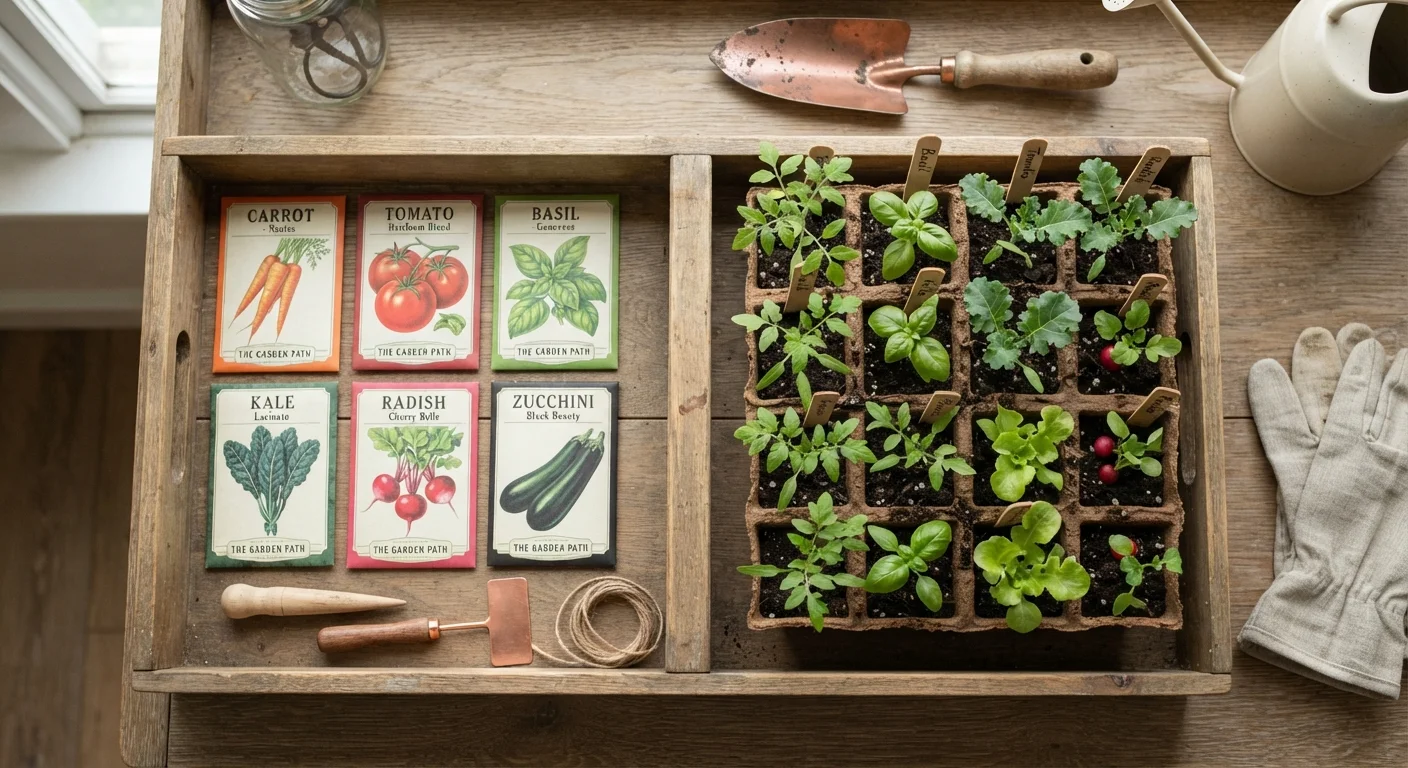
Option A
Starting from Seed
The patient, cost-effective path with the widest variety.
Best for: Gardeners who want more plant variety, enjoy the full growing process, and have time to start indoors before the season begins.
Option B
Buying Seedlings
The faster, beginner-friendly approach for quicker results.
Best for: Gardeners who want to skip germination, work with a shorter growing window, or are just getting started with minimal setup.
What You're Actually Deciding
Choosing between seeds and seedlings isn't just about convenience - it's about matching your starting method to your plants, your schedule, and your setup. Both approaches work well when applied in the right context. The mistake most new gardeners make is assuming one is simply better than the other.
If you're just beginning to plan your space, our beginner garden planning guide covers the foundational decisions that come before this one. And before either seeds or seedlings go in, it's worth running through a pre-season checklist to make sure your beds, soil, and tools are ready.
The core question: how much time, equipment, and flexibility do you have? Seeds require a longer runway and some indoor setup. Seedlings compress that timeline but limit your variety options and cost more per plant.
| Criterion | Starting from Seed | Buying Seedlings |
|---|---|---|
| Upfront cost | Low (packets are inexpensive) | Higher per plant |
| Variety selection | Very wide - hundreds of options | Limited to nursery stock |
| Time to planting outdoors | 6-10 weeks longer | Ready when purchased |
| Indoor setup required | Yes - lights, trays, germination mix | None |
| Beginner difficulty | Moderate to high | Low |
| Best crop types | Root veg, beans, peas, high-volume crops | Tomatoes, peppers, brassicas |
| Risk of early failure | Higher (germination, damping off) | Lower |
The Case for Starting from Seed
Seeds give you access to the full spectrum of what a plant species can be. While a local garden center might stock three or four tomato varieties, seed catalogs commonly list dozens - including heirlooms, paste types, and unusual colors you won't find pre-started anywhere nearby. The same applies to herbs, peppers, squash, and flowers.
Cost is another meaningful advantage. A packet of 50 seeds often costs less than a single four-pack of seedlings. If you're planting a large vegetable garden or growing annuals in volume, that difference adds up quickly.
~$3-5
Average seed packet cost
A single packet often yields 25-100+ plants, compared to $4-6 or more per individual seedling at a garden center.
6-10 weeks
Typical indoor seed-starting lead time
Warm-season crops like tomatoes and peppers generally need this head start before the last expected frost date in most U.S. regions.
65-75°F
Ideal soil temperature for germination
Most common vegetable seeds germinate most reliably within this temperature range, according to general horticultural guidance.
The trade-off is time and setup. Most warm-season crops need to be started indoors 6 to 10 weeks before your last frost date. That means grow lights or a very sunny south-facing window, seed-starting trays, a suitable germination mix, and consistent attention to moisture and temperature. Not every home setup supports this easily.
Some crops, however, are actually better started from seed directly in the garden - no indoor phase needed. Carrots, beets, radishes, beans, peas, and most salad greens resent being transplanted and perform best when sown straight into prepared soil.
The Case for Buying Seedlings
Purchasing seedlings - also called transplants or starts - from a garden center or nursery means someone else has already done the hardest part. Germination rates, damping off (a fungal condition that kills seedlings at the soil line), and the delicate early weeks of growth are no longer your problem.
For crops like tomatoes, peppers, eggplant, and broccoli that require long lead times indoors, buying starts can save 6 to 10 weeks of effort. In regions with short growing seasons, that head start isn't just convenient - it may be necessary to get a full harvest before frost returns.
Seedlings are also the practical choice if you don't have space or light for indoor seed-starting, or if you're planting a small garden where buying six tomato plants makes more sense than germinating a whole packet. The variety selection will be narrower, but for many home gardeners, the plants available locally are more than sufficient.
One thing to watch: seedling quality varies. Look for compact, dark green plants with no yellowing, no visible pests, and stems that aren't stretched or leggy. Overgrown or root-bound starts - where roots circle the bottom of the container - can be slower to establish after transplanting.
This approach pairs naturally with other space-efficient strategies. If you're working with limited ground, our guide to container gardening shows how seedlings can go directly into pots and planters with minimal fuss.
Making the Call for Your Garden
Most experienced gardeners don't choose one approach exclusively - they use both. Tomatoes and peppers might come from a nursery while lettuce, beans, and squash are direct-sown from seed. The plant itself, not habit or assumption, should drive the decision.
A few questions that clarify the choice quickly:
- How long is your growing season? Short seasons push you toward seedlings for warm-season crops.
- Do you have indoor seed-starting space and light? Without it, seeds for long-season crops become impractical.
- Are you growing at scale? Seeds become far more economical as volume increases.
- Is the variety you want available as a start locally? If not, seeds may be your only option.
Whatever you choose, understanding how your crops fit into the broader garden - whether they're annuals completing one season or perennials returning for years - shapes how much effort to invest in each plant's start. Our perennials vs. annuals guide is a useful companion to this decision.
Direct Sowing vs. Transplanting: Know the Difference
Not every crop belongs in a tray. Root vegetables like carrots, parsnips, and beets develop taproots that don't tolerate being moved - direct sowing into your garden bed is the right method for them. Beans, peas, and corn also prefer to go straight into the ground. When in doubt, check the seed packet: it will indicate whether a plant should be direct-sown or started indoors for transplanting.
The content on this site is for informational purposes only and is not a substitute for professional advice. Always consult a qualified professional for guidance specific to your situation.