

Start here
Choosing Your Garden Spot
Next
Understanding and Preparing Your Soil
Then
Picking the Right Plants to Start
When you're ready
Watering, Feeding, and Keeping Things Alive
Finish strong
Planning Your First Season
Choosing Your Garden Spot
Before you buy a single seed or shovel a bit of soil, spend a few days watching your yard. The most important factor in a new garden's success is sunlight - most vegetables and flowering plants require at least six hours of direct sun daily. Morning sun is preferable because it dries dew quickly, reducing disease risk.
Beyond light, consider proximity to a water source. Dragging a hose across a large property gets old fast, and convenience is a real factor in whether you'll water consistently. Also avoid low spots in the yard where water pools after rain - waterlogged roots suffocate plants.
Use What You Have First
Before investing in raised beds or specialty tools, try container gardening or an in-ground patch using whatever space you already have. Even a single 5-gallon container on a sunny porch can produce cherry tomatoes or herbs. Starting simple lowers the barrier and lets you build confidence before committing more resources.
If your yard is mostly shaded, don't give up. Leafy greens like lettuce and spinach tolerate partial shade better than most crops. Container gardening on a sunny deck or patio is another practical workaround.
Understanding and Preparing Your Soil
Soil is the engine of your garden. Poor soil produces poor plants, no matter how carefully you tend them. Before planting anything, get a basic soil test. Many county cooperative extension offices - part of the land-grant university system in your state - offer inexpensive testing that reveals soil pH and nutrient levels. Most vegetables prefer a pH between 6.0 and 7.0.
Soil pH
A measure of how acidic or alkaline your soil is, on a scale of 0-14. Most vegetables grow best in a slightly acidic to neutral range of 6.0-7.0.
Compost
Decomposed organic matter - food scraps, leaves, yard waste - that improves soil structure, fertility, and drainage when mixed in.
USDA Hardiness Zone
A geographic designation based on average minimum winter temperatures that helps gardeners determine which plants are likely to survive in their area.
Amended soil
Soil that has been improved by mixing in materials like compost, sand, or fertilizer to correct deficiencies or improve texture.
Transplant
A young plant started indoors or in a nursery, then moved into the garden - as opposed to direct-seeding into the ground.
Mulch
A layer of material - wood chips, straw, shredded leaves - spread over bare soil to retain moisture, regulate temperature, and suppress weeds.
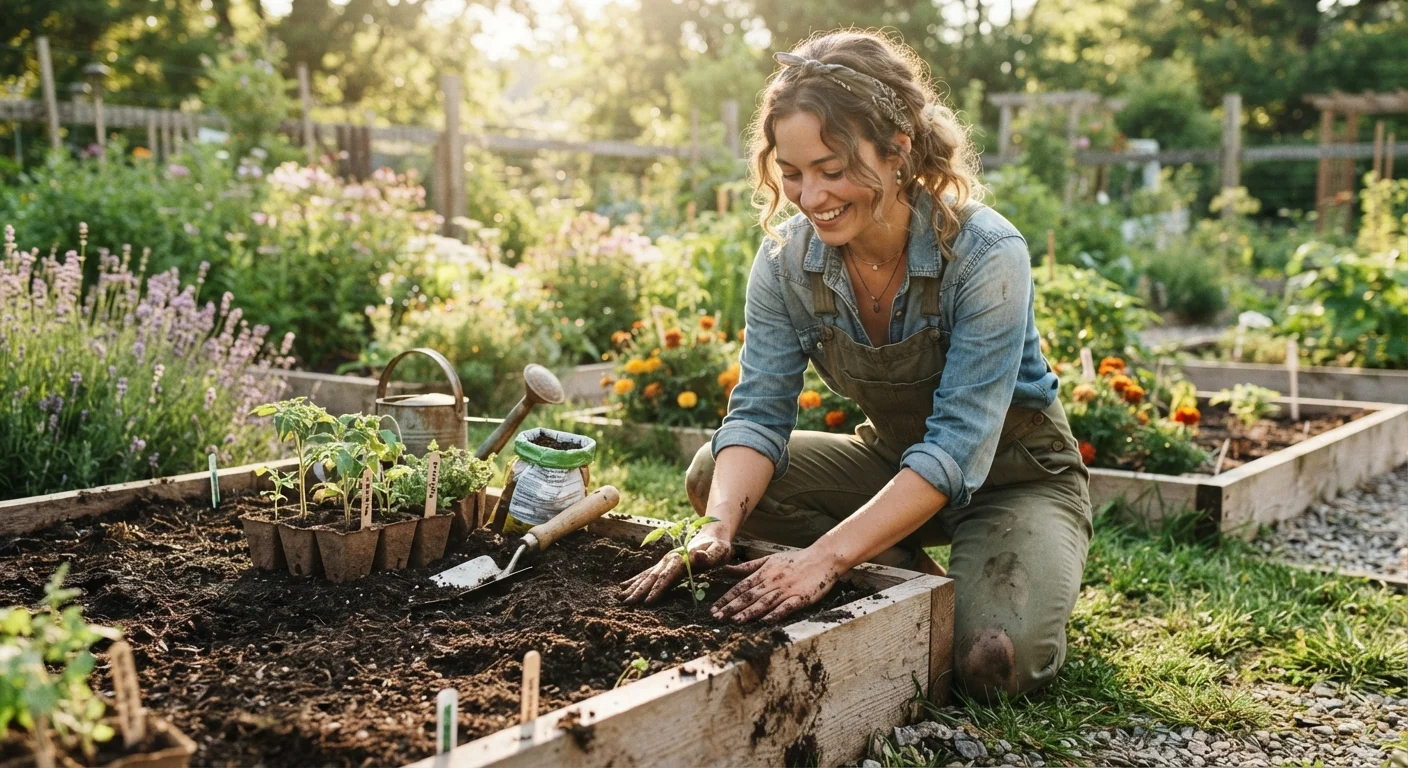
Once you know what you're working with, amend accordingly. Compost is the single most versatile improvement you can make: it loosens clay-heavy soils, adds water retention to sandy soils, and feeds soil microorganisms. Work 2-3 inches of compost into the top 8-10 inches of your bed before planting. If you want to build your own compost over time, see our guide on composting kitchen and yard waste.
For a truly clean start, a raised bed filled with a quality soil mix gives you total control over what your plants grow in - a major advantage if your native soil is heavily compacted or contaminated.
Picking the Right Plants to Start
The fastest path to discouragement is choosing plants that don't suit your region or season. Look up your USDA Plant Hardiness Zone - a free lookup tool is available at the USDA website using your ZIP code. This tells you your average minimum winter temperature, which determines what can survive in your garden.
For a first food garden, stick to crops with a reputation for reliability: bush beans, zucchini, cherry tomatoes, lettuce, herbs, and radishes. These give visible results quickly and tolerate beginner-level care. Avoid starting with notoriously fussy crops like artichokes or melons until you have a season or two of experience.
Seeds vs. Seedlings: A Real Decision
Starting from seed is less expensive and offers far more variety, but requires more lead time and some indoor setup. Buying transplants from a nursery is faster and reduces early failure risk. The right choice depends on your goals, your season length, and how much time you want to invest before anything goes in the ground.
Deciding whether to start from seed or buy transplants from a nursery is a meaningful early choice. Each approach has real trade-offs depending on your timeline, budget, and the crops you want to grow. Our article on seeds vs. seedlings walks through both options in detail.
You might also explore companion planting - placing certain plants near each other to deter pests or improve growth - once your basics are in place.
Watering, Feeding, and Keeping Things Alive
New gardeners often water too lightly and too often. A quick surface sprinkle may look sufficient but doesn't reach deeper roots, making plants dependent on frequent watering and vulnerable to drought. Aim for about one inch of water per week, applied in one or two deep sessions rather than daily sprinkles. Stick your finger two inches into the soil - if it's dry at that depth, it's time to water.
Fertilizing is less critical in well-amended soil, but most vegetables benefit from a mid-season boost once they're actively growing. A balanced, slow-release granular fertilizer worked into the soil at planting, or a diluted liquid fertilizer applied later, covers most situations. Avoid over-fertilizing with nitrogen, which produces lush leaves at the expense of fruit and root development.
Don't Let Weeds Get a Head Start
A single weed left to flower can release hundreds or thousands of seeds into your garden bed. Address weed growth early and consistently, especially in the first few weeks after planting when your crops are still small. Once established plants fill in, they naturally shade out many weeds on their own.
Weeds compete directly with your plants for water and nutrients. Deal with them when they're small - young weeds pull out easily and haven't yet set seed. A 2-3 inch layer of mulch over bare soil dramatically reduces weed pressure and helps retain moisture between waterings.
Planning Your First Season
A little planning before you plant pays off all season. Sketch your bed on paper noting which plants need the most space, grow tallest, or need support structures like cages or trellises. Tall plants placed on the north side of a bed won't shade shorter neighbors. Spacing matters too - crowded plants compete for light and air circulation, inviting disease.
Use our pre-season garden checklist to confirm you've covered the essentials before your first seeds go in. And once your garden is underway, the year-round seasonal planting reference will help you stay on track through each growing period.
Keep notes as you go - what you planted, when it germinated, what worked, and what didn't. That record becomes your most valuable asset heading into year two. Gardening improves steadily with experience, and even a modest first-year garden teaches you more than any guide can.
USDA Plant Hardiness Zone Map
Enter your ZIP code on the USDA website to find your official hardiness zone. This is the essential first reference for understanding what plants can realistically survive in your region.
Cooperative Extension Service
Every U.S. state has a land-grant university extension service offering free or low-cost gardening guidance, soil testing, and local planting calendars tailored to your region.
Pre-Season Garden Checklist
A structured checklist covering tools, soil prep, bed layout, and planning steps to complete before your first seeds go in - ideal for first-year gardeners.
Frequently Asked Questions
You can grow meaningful food or flowers in as little as a 4×4-foot raised bed or even a few large containers on a patio. Starting small lets you learn without being overwhelmed. You can always expand once you've had a successful first season.
Leafy greens like lettuce and spinach, radishes, and herbs like basil or chives are forgiving, fast-growing, and satisfying for beginners. Tomatoes and zucchini are also popular first crops but need more space and attention. Match your choices to your climate and season.
Most garden plants need about one inch of water per week, either from rain or irrigation. Water deeply and less frequently to encourage roots to grow downward. Check soil moisture a few inches below the surface rather than going by surface appearance.
A basic soil test is highly recommended for any new garden. It reveals your soil's pH and nutrient levels so you can make targeted amendments rather than guessing. Many county extension offices offer low-cost testing, and home test kits are widely available.
Both are valid approaches with different trade-offs. Seeds cost less and give you more variety, while nursery-grown seedlings save time and reduce early-season risk. See our <a href="/home/gardening-basics/seeds-vs-seedlings-choosing-the-right-starting-point-for-your-garden">guide to seeds vs. seedlings</a> for a detailed comparison.
At minimum, you need a hand trowel, a garden fork or spade, a watering can or hose with an adjustable nozzle, and a pair of gloves. You don't need a full tool shed on day one. Quality over quantity matters more than having every specialty tool.
The content on this site is for informational purposes only and is not a substitute for professional advice. Always consult a qualified professional for guidance specific to your situation.