

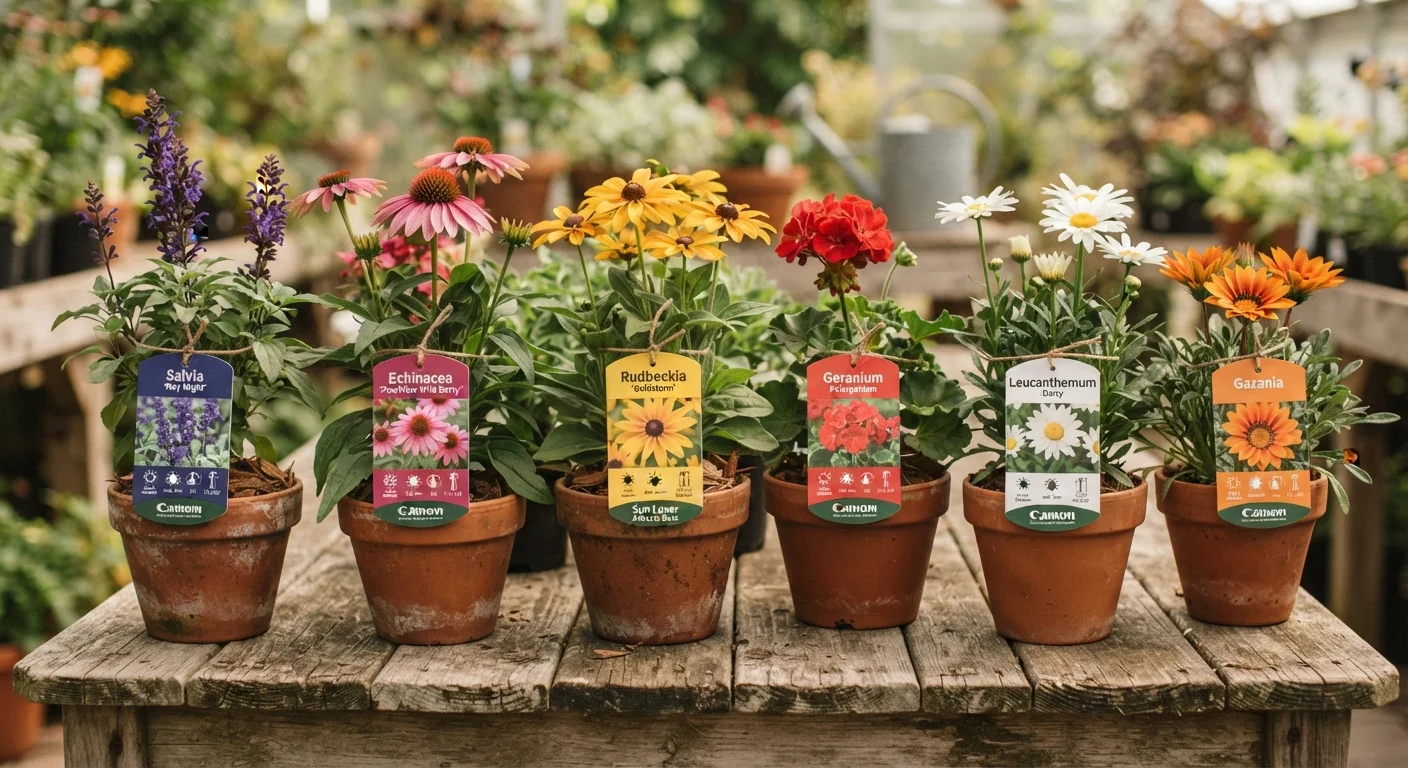
Why Plant Labels Matter More Than You Think
That small plastic tag tucked into a pot at the garden center is doing a lot of work. It carries the plant's full name, care requirements, size at maturity, and environmental preferences - all the data you need to decide whether a plant belongs in your yard and exactly where to put it. Skipping past the label is one of the most common reasons plants end up in the wrong spot, fail to thrive, or outgrow their space within a season or two.
Think of a plant tag the same way you'd think about any other information-dense label. Just as a nutrition panel tells you what's actually in your food, a plant tag tells you what you're actually bringing home. This reference decodes each element so you can shop and plant with confidence.
| Sun symbol - solid circle | Full sun (6+ hours direct light/day) |
| Sun symbol - half circle | Part sun or part shade (3-6 hours/day) |
| Sun symbol - hollow/shaded circle | Full shade (fewer than 3 hours/day) |
| Zones listed (e.g., 4-9) | USDA hardiness zone range the plant tolerates (USDA Plant Hardiness Zone Map) |
| H: and W: measurements | Expected height and width at full maturity |
| Cultivar name (in single quotes) | A specifically bred or selected variety of the species |
The Plant Name: Common vs. Botanical
Nearly every label lists two names. The common name (e.g., Black-eyed Susan) is the everyday word most people recognize. The botanical name, printed in italics below it (e.g., Rudbeckia hirta), is the internationally standardized Latin identifier. Always note the botanical name before buying - common names vary by region and can refer to entirely different plants.
Botanical names follow a two-part system: genus (capitalized) and species (lowercase). A third term in single quotes - the cultivar name (e.g., Rudbeckia hirta 'Indian Summer') - identifies a specific variety bred for particular traits like flower color, disease resistance, or compact size.
Cultivar
A plant variety that has been intentionally bred or selected for specific characteristics, such as flower color, disease resistance, or compact size. Cultivar names appear in single quotes on the label.
Hardiness Zone
A geographic area defined by its average annual minimum winter temperature, as mapped by the USDA. Plants listed for a zone range are expected to survive winters within those zones.
Full Sun / Part Shade / Full Shade
Standardized light-level categories based on daily hours of direct sunlight. Full sun requires 6 or more hours; part shade is 3-6 hours; full shade is fewer than 3 hours.
Perennial
A plant that lives for more than two years, returning each season from the same root system within its hardiness zone range.
Mature Spread
The expected width of a plant at full growth, measured from drip edge to drip edge. Used to determine proper spacing between plants at planting time.
Well-Drained Soil
Soil that allows water to pass through at a moderate pace rather than pooling or staying saturated. Most plants perform best in well-drained conditions unless otherwise specified.
Hardiness Zones, Sun, Water, and Size
Hardiness Zone: Usually listed as a range, such as Zones 4-9. This refers to the USDA Plant Hardiness Zone Map, which divides the country by average annual minimum winter temperature. If your zone falls within the listed range, the plant can typically survive your winters. For a fuller picture of what zone data does - and doesn't - predict, see our guide to hardiness zones.
Light Symbols: Tags use standardized sun icons. A solid sun means full sun (6+ hours of direct light daily); a half-filled sun means part sun/part shade (3-6 hours); a hollow or shaded circle means full shade (fewer than 3 hours). Placing a sun-lover in shade - or a shade plant in direct afternoon sun - is a fast path to poor performance.
Water Needs: Symbols vary by brand, but most use one to three water-droplet icons: one droplet signals drought-tolerant, three signals consistently moist soil. Written terms like average moisture or well-drained soil describe the ideal soil condition, not just how often to water.
Mature Height and Spread: Listed in feet (e.g., H: 2-3 ft / W: 1-2 ft). These are the plant's expected dimensions at full growth, not at purchase. Use these numbers to plan spacing so plants aren't crowded - and so a shrub doesn't eventually block a window. Use this alongside seasonal garden planning to map out your beds before you buy.
Mature Size Is Not Current Size
The height and spread on a plant label describe where the plant is headed, not where it is now. A shrub sold in a 1-gallon pot may be just 8 inches tall at purchase but reach 5 feet wide within a few years. Always plant based on mature dimensions, not the size of what you're holding at the nursery. When in doubt, give plants more room than you think they'll need.
Annual, Perennial, Biennial - and What It Means for You
The plant's life cycle is one of the most practically important details on the tag and one of the most overlooked.
- Annual: Completes its entire life - germination, flowering, seed production - in one growing season. You replant each year. Examples: marigolds, zinnias, petunias.
- Perennial: Returns from the same root system year after year within its hardiness zone. Examples: coneflowers, hostas, daylilies.
- Biennial: Grows foliage in year one, flowers and sets seed in year two, then dies. Examples: foxglove, hollyhock.
Tags may also list bloom time (e.g., Summer-Fall) and growth rate (slow, moderate, fast). Fast-growing plants can be an asset or a liability depending on your space - factor in both mature size and pace of spread.
The content on this site is for informational purposes only and is not a substitute for professional advice. Always consult a qualified professional for guidance specific to your situation.