

Why Electrical Myths Are Genuinely Dangerous
Electrical work sits in a unique category among home improvement tasks. Unlike painting a room or replacing a faucet, mistakes in electrical work are largely invisible until something goes wrong - and when something goes wrong, it can mean a house fire, serious injury, or worse. Yet confident misinformation circulates freely in DIY communities, passed along as practical wisdom.
Understanding where the line is between a manageable DIY task and work that genuinely requires a licensed electrician is one of the most valuable things a homeowner can learn. For a broader look at where that line falls across home projects generally, see our guide to DIY vs. hiring a pro.
Myth
If I flip the light switch off, it's safe to work on that outlet or fixture.
Fact
A light switch only interrupts one conductor. The circuit remains energized unless you turn off the correct breaker and verify with a non-contact voltage tester.
Switches in a standard residential circuit break only the hot (live) wire going to the fixture - but the wiring in the box is still carrying voltage back to the panel. Working on a switch-controlled fixture without cutting power at the breaker panel leaves live wires accessible. Always use a non-contact voltage tester to confirm power is off before touching any wiring, and never assume based on a switch position alone.
Myth
Small jobs like replacing an outlet don't need a permit.
Fact
Permit requirements vary by municipality, but many jurisdictions require permits even for outlet replacements, especially when upgrading from two-prong to three-prong or adding GFCI protection.
Local building codes govern what work requires inspection, and they differ significantly from city to city. Some areas exempt like-for-like replacements; others do not. The consequences of skipping a required permit include failed home sale inspections, insurance claim denials, and potential liability if the unpermitted work causes a fire or injury. Check with your local building department before starting any electrical work, no matter how minor it appears.
Myth
If the breaker doesn't trip, the circuit is handling the load fine.
Fact
Breakers protect against immediate overloads but do not indicate whether wiring is being chronically stressed. Circuits can run warm and degrade over time without ever tripping.
A circuit breaker is a last-resort safety device, not a real-time monitor of circuit health. Wiring running near its rated capacity for extended periods can heat repeatedly, degrading insulation and increasing fire risk. This is particularly common in older homes where modern appliances draw more current than the original wiring was designed for. Symptoms like warm outlet covers, flickering lights, or a faint burning smell should prompt a professional evaluation - don't wait for a breaker to trip.
Myth
Aluminum wiring is just as safe as copper if the connections look tight.
Fact
Aluminum wiring requires specific devices rated for aluminum connections. Standard copper-rated outlets and switches can loosen over time with aluminum, creating a serious fire hazard.
Aluminum expands and contracts at a different rate than copper, which causes connections to loosen gradually. Homes built primarily in the late 1960s and 1970s may have aluminum branch-circuit wiring. If yours does, all outlets, switches, and fixtures must use devices rated CO/ALR or connections must be made through approved pigtailing methods using listed connectors. This is not a visual inspection job - a licensed electrician familiar with aluminum wiring should assess the system.
Myth
You only need GFCI outlets in the bathroom.
Fact
Current electrical codes require GFCI protection in kitchens, garages, basements, outdoor areas, crawl spaces, and anywhere near a water source - not just bathrooms.
GFCI protection is designed to cut power in milliseconds when a ground fault is detected - the type of fault that causes electrocution near water. Modern codes (National Electrical Code) have expanded GFCI requirements significantly over the decades. Older homes may lack GFCI protection in areas that now legally require it. When renovating or selling, it's worth having an electrician audit which circuits meet current code, since requirements are often triggered during renovation permits.
The Real Risks Behind Common Assumptions
Many electrical accidents at home don't happen because homeowners are careless - they happen because a widely repeated assumption turns out to be wrong. Faulty wiring that passes visual inspection can still arc internally and ignite insulation inside walls. Extension cords used as permanent wiring solutions degrade over time without any obvious outward sign.
Never Work on a Panel Without a Qualified Electrician
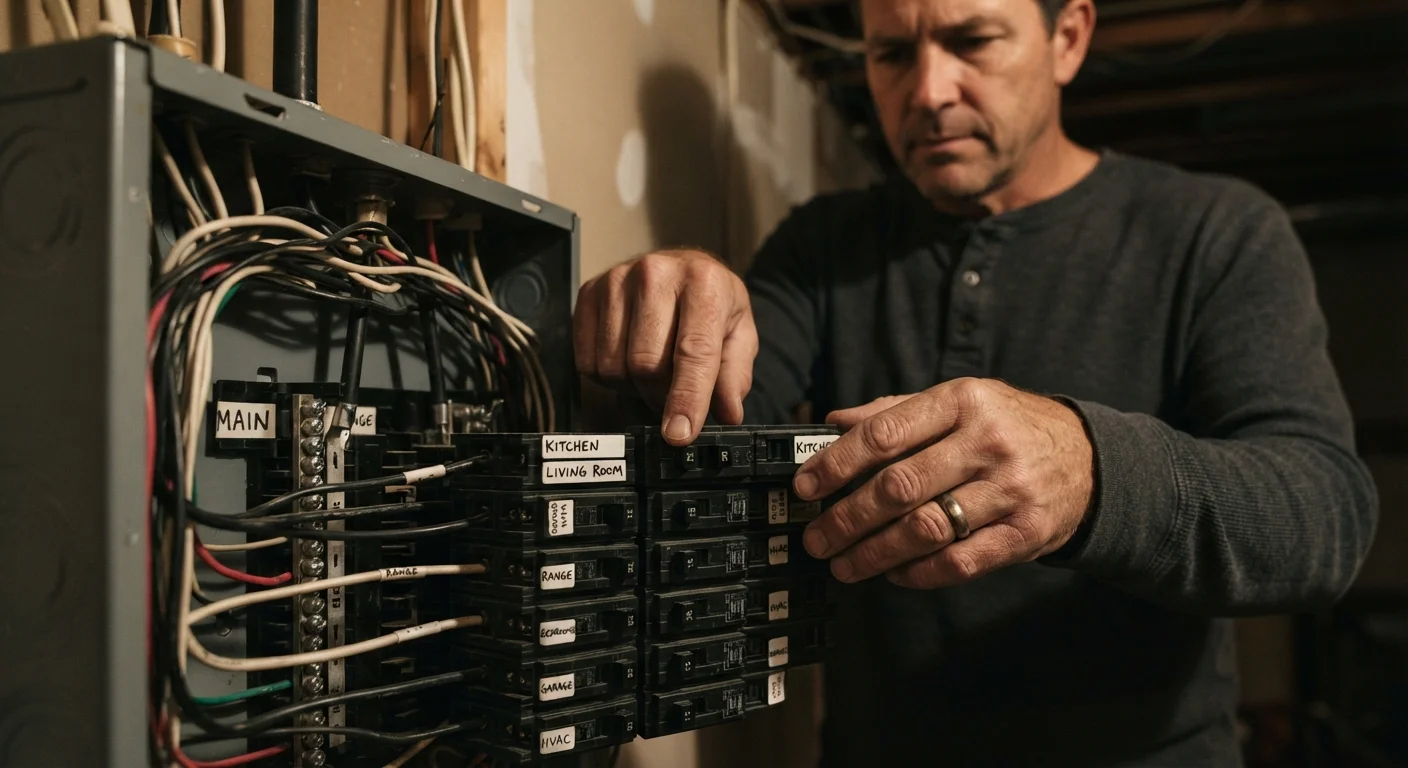
Even experienced DIYers should not open the main electrical panel beyond resetting a tripped breaker. The main lugs - the entry point where utility power enters the panel - remain energized even when the main breaker is off, and contact can be fatal. Any work involving adding circuits, upgrading capacity, or inspecting panel wiring must be done by a licensed electrician. This is a firm safety boundary, not a guideline.
Skipping permits is another area where the financial and safety consequences compound quietly. Unpermitted electrical work may not be discovered until you sell your home - at which point it can stall or kill a sale, or require expensive remediation. Your homeowner's insurance provider may also deny a claim tied to unpermitted work. As our article on deferred maintenance costs explains, small ignored problems have a way of becoming expensive structural ones.
~51,000
Home electrical fires per year in the U.S.
According to the Electrical Safety Foundation International (ESFI), roughly 51,000 home electrical fires occur annually, causing nearly 500 deaths and more than $1.3 billion in property damage.
~$3,000
Average cost of unpermitted electrical remediation
Home inspection professionals commonly cite remediation costs in the thousands of dollars when unpermitted electrical work must be brought up to code before a home sale can proceed.
The safest approach is to treat electrical work with appropriate caution: confirm the scope of the job, research local permit requirements, and be honest about whether it falls within safe DIY territory.
The content on this site is for informational purposes only and is not a substitute for professional advice. Always consult a qualified professional for guidance specific to your situation.